Shandong Fengtu IOT Technology Co., Ltd
Sales Manager:Ms. Emily Wang
Cel,Whatsapp,Wechat:+86 15898932201
Email:info@fengtutec.com
Add:No. 155 Optoelectronic Industry Accelerator, Gaoxin District, Weifang, Shandong, China


Sales Manager:Ms. Emily Wang
Cel,Whatsapp,Wechat:+86 15898932201
Email:info@fengtutec.com
Add:No. 155 Optoelectronic Industry Accelerator, Gaoxin District, Weifang, Shandong, China
time:2026-02-26 11:24:25 source:Weather Station viewed:324 time
Based on the principle of charge induction, the Lightning Warning System provides localized short-term lightning warnings through atmospheric electric field detection. Primarily designed for applications in aerospace, defense, oil and petrochemical, power grid, oil depots, and mining, it can continuously monitor approaching thunderstorm activity within a 15km radius, ensuring personnel safety and production scheduling.
Lightning Warning System is a specialized instrument for monitoring changes in the atmospheric electric field and issuing early lightning warnings. Its core function is based on the principle of charge induction, using a high-precision electric field probe to measure the electric field strength and polarity changes between the ground and clouds in real time. When thunderclouds form and approach, the atmospheric electric field undergoes significant changes. The device analyzes the electric field strength and its rate of change, combined with a built-in lightning identification algorithm, to predict potential lightning activity.
The system mainly consists of a lightning warning probe, a data processing host, a solar power supply system, a direct lightning strike protection system, a surge protection system, a grounding system, and an audible and visual alarm. Some models also integrate air temperature, humidity, and atmospheric pressure sensors for multi-source data fusion analysis. The equipment supports wired communication interfaces such as RS485-Modbus-RTU and is equipped with a 4G wireless transmission module, enabling real-time data upload to a cloud platform for remote monitoring and data retrieval.
In terms of technical principles, Lightning Warning System utilizes MEMS (Micro-Electro-Mechanical Systems) technology to develop the electric field detection structure. It eliminates easily worn moving mechanical parts such as motors, resulting in small size, low power consumption, and high reliability. The system employs an optimized early warning algorithm combining electric field differentiation and threshold values. Compared to conventional threshold methods, this effectively avoids false alarms caused by environmental factors such as rain, strong winds, and dust, improving early warning accuracy.
This equipment primarily addresses the atmospheric electric field detection and localized short-term lightning warning needs in aerospace, defense, meteorology, petrochemical, power grid, scenic areas, mines, oil depots, and military fields. For high-risk operations such as flammable and explosive sites, port loading and unloading, oil depot tank areas, and chemical industrial parks, the equipment can continuously monitor the activity of approaching thunderstorms within a 15-kilometer radius of the local area, providing data support for protective measures such as personnel evacuation and equipment power outages, and effectively reducing the risk of lightning disasters.
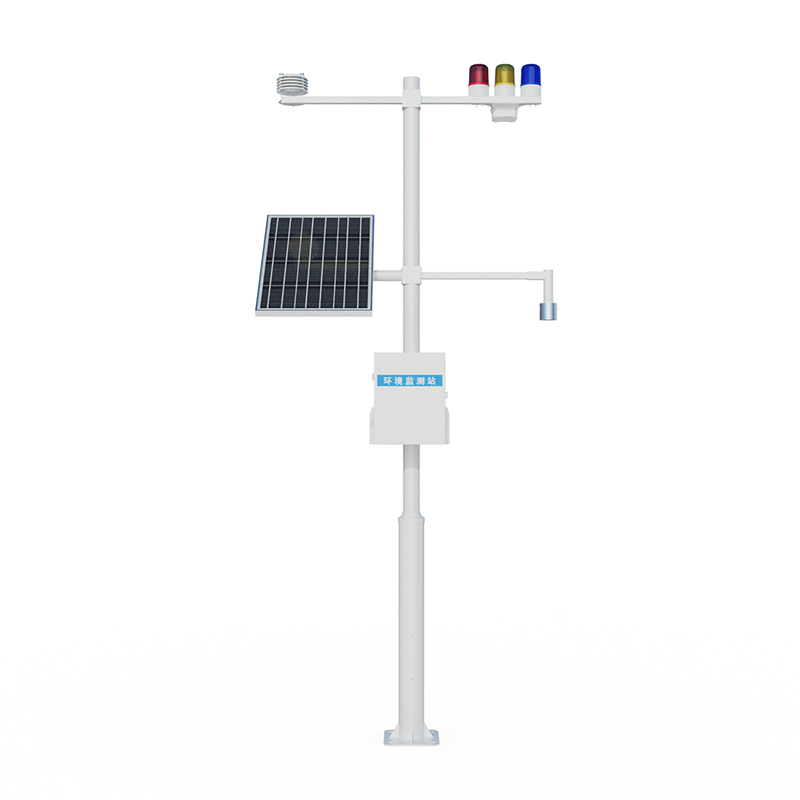
On the rooftops of distributed photovoltaic power stations and between small photovoltaic arrays, a compact and sophisticated monitoring device is often seen – this is the PV Weather Station. With its small size, flexible deployment, and precise monitoring capabilities, it provides reliable data fo...
In the field of meteorology, six key elements—temperature, air pressure, humidity, wind direction, wind speed, and precipitation—serve as the foundation of meteorological observations. Their significance extends beyond meteorological forecasting; they play a crucial role in various important areas...
Powered by solar energy, these suction-type insect traps utilize a light source to attract pests, while an integrated fan generates a negative-pressure airflow that draws the insects in, effectively eliminating them through dehydration. Designed for use in agriculture, forestry, and horticulture, th...
In the field of modern agriculture, with the popularization of precision agriculture and smart agriculture concepts, there is an increasing demand for quantitative management and scientific decision-making in agricultural production environments. Agrometeorological stations have emerged as automated...


 Skype
 whatsapp
 mail