Shandong Fengtu IOT Technology Co., Ltd
Sales Manager:Ms. Emily Wang
Cel,Whatsapp,Wechat:+86 15898932201
Email:info@fengtutec.com
Add:No. 155 Optoelectronic Industry Accelerator, Gaoxin District, Weifang, Shandong, China


Sales Manager:Ms. Emily Wang
Cel,Whatsapp,Wechat:+86 15898932201
Email:info@fengtutec.com
Add:No. 155 Optoelectronic Industry Accelerator, Gaoxin District, Weifang, Shandong, China
time:2026-02-27 10:47:01 source:Weather Station viewed:312 time
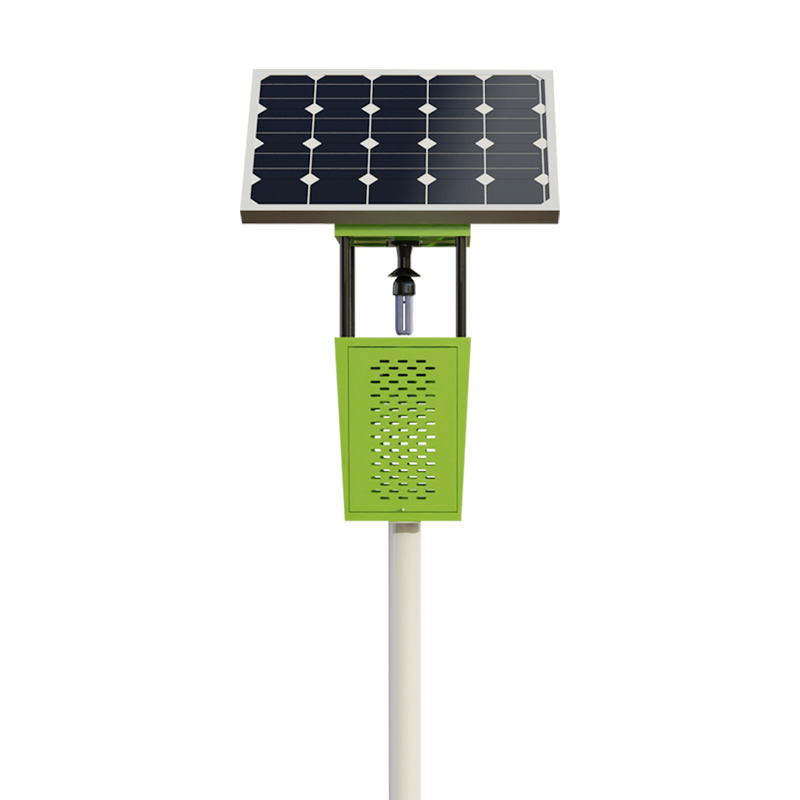
Tea garden insecticidal lamps is solar-powered and uses an insect-attracting light source to attract and kill pests. It is primarily used to trap and kill tea garden pests such as the tea green leafhopper, lepidopteran pests, leafhoppers, and inchworms. It is also suitable for pest control in agriculture, horticulture, forestry, and animal husbandry, making it a green pest control device.
Tea garden insecticidal lamps is a plant protection device specifically designed for green pest control in tea gardens. Its core function is to attract pests using a specific wavelength of insect-attracting light source and then capture or eliminate them through physical mechanisms. The device uses a solar-powered system and consists of solar panels, a battery, a controller, an insect-attracting light source, and an insect-killing device. It can automatically operate at night and automatically shut off during the day, requiring no external power supply or manual operation. It is energy-saving, environmentally friendly, and easy to install.
In terms of light source design, Tea garden insecticidal lamps typically uses LED frequency-vibration lamps or black lights with a wavelength range of 320nm to 400nm. This wavelength band has a strong phototactic attraction effect on major tea pests such as tea green leafhoppers, inchworms, leafrollers, and tussock moths. A high-voltage electric grid or rotating insect-catching net is installed around the light source. When pests fly close to the light source, they are instantly killed by a high-voltage electric shock upon contact with the grid, or fall into the collection bag. Some models use a suction structure, where the negative pressure generated by a fan draws pests into the collection box for physical extermination. The insecticidal device is equipped with a protective cover to effectively prevent leakage during rain and accidental injury to beneficial insects.
For pests specific to tea gardens, such as the tea green leafhopper (only 3-4 mm in length), ordinary insecticidal lamps are difficult to effectively attract and kill. Tea garden-specific insecticidal lamps use a high-density electric grid and optimized light source wavelengths, enabling them to kill small pests of all sizes. Test data shows that one Tea garden insecticidal lamps can cover 15 to 20 acres of tea garden, trapping and killing hundreds of insects each night, significantly reducing pest density in the field. Long-term use can reduce the frequency of chemical pesticide application and improve the quality and safety of tea.
The solar power system is a key component of the Tea garden insecticidal lamps, including a polycrystalline silicon solar panel (typically 20W to 50W) and a set of lithium or lead-acid batteries (capacity 12V/12Ah to 24Ah). Under sufficient sunlight, a single charge can support normal operation for 3 to 5 consecutive cloudy or rainy days. The controller has light, time, and rain control functions: it automatically turns on when the light intensity is below the set value and automatically turns off when it gets light; the operating time period can be set as needed; and it automatically stops working in the event of rain to protect the circuit.
The application of Tea garden insecticidal lamps helps improve the level of green pest control. Compared with chemical control, physical trapping does not produce pesticide residues, does not kill natural enemies, and is environmentally friendly. By strategically placing the equipment within tea gardens and combining it with integrated pest management measures such as pheromone traps and color-coded barriers, an effective pest control system can be established. This equipment is not only suitable for tea gardens but can also be extended to farmland, orchards, vegetable gardens, forestry nurseries, and pastures for targeted control of major pests affecting different crops.
When installing and using the equipment, the insecticidal lamp should be fixed in a high, unobstructed location within the tea garden, ensuring the solar panel receives ample sunlight. The bottom of the lamp should be approximately 1.5 meters above the ground, slightly above the tea tree canopy. Regularly clean the insect collection bags or electric grid to maintain its effectiveness. During winter or when not in use for extended periods, remove the battery for maintenance to extend its lifespan. Through scientific use and management, Tea garden insecticidal lamps can effectively control pests, providing technical support for green agricultural production.
Tunnels are enclosed spaces with poor air circulation, and due to complex traffic structures and heavy traffic volumes, poor ventilation can easily lead to the accumulation of harmful gases such as smoke particles and carbon monoxide (CO). This significantly reduces visibility inside the tunnel and...
The accuracy of environmental monitoring data directly affects the scientificity of decision-making in various industries and the reliability of living security. Fengtu Technology's Small Automatic Weather Station, with its high-precision monitoring capability and free cloud platform service, pr...
Transmission Line Online Monitoring System was developed specifically to address the localized meteorological environments within transmission line corridors. Designed for installation on power transmission towers, it is capable of monitoring six key meteorological parameters in real-time: win...
The COVI Detector is a dedicated sensor designed specifically for tunnel environments to detect carbon monoxide (CO) and visibility. Installed on the wall on one side of the tunnel, it continuously and stably monitors the internal environment of the tunnel, providing the tunnel central control room...


 Skype
Skype
 whatsapp
 mail
mail