Shandong Fengtu IOT Technology Co., Ltd
Sales Manager:Ms. Emily Wang
Cel,Whatsapp,Wechat:+86 15898932201
Email:info@fengtutec.com
Add:No. 155 Optoelectronic Industry Accelerator, Gaoxin District, Weifang, Shandong, China


Sales Manager:Ms. Emily Wang
Cel,Whatsapp,Wechat:+86 15898932201
Email:info@fengtutec.com
Add:No. 155 Optoelectronic Industry Accelerator, Gaoxin District, Weifang, Shandong, China
time:2025-12-11 10:55:37 source:Weather Station viewed:469 time
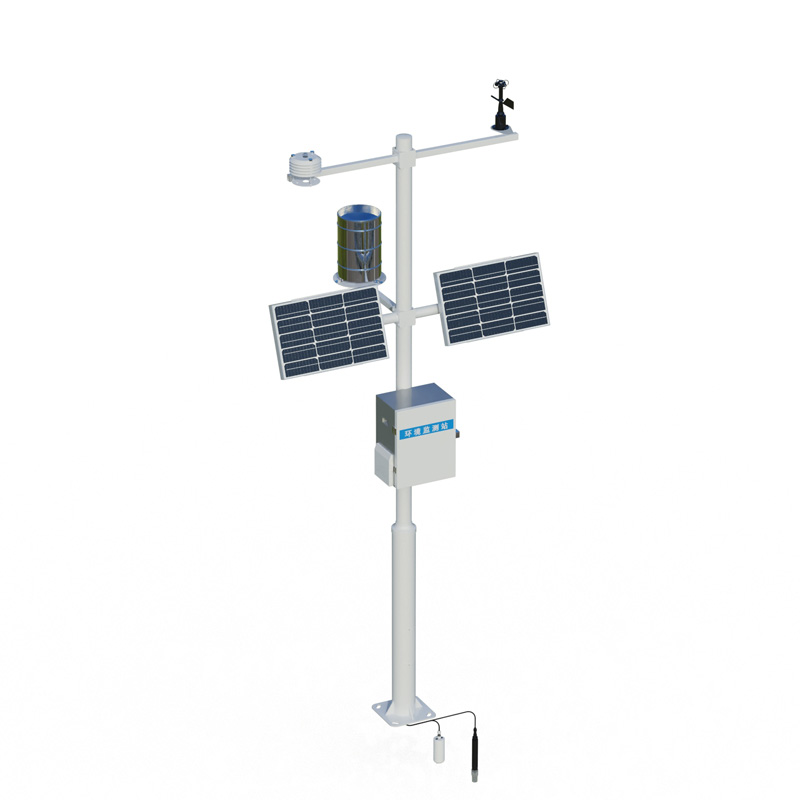
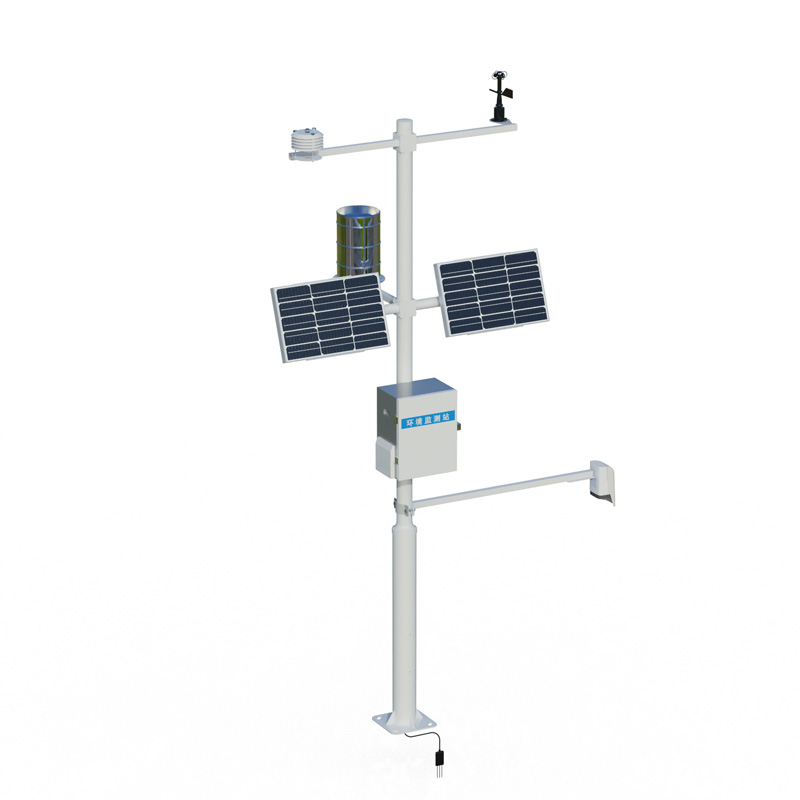
Agricultural Environment Monitoring System is a field environmental monitoring equipment composed of five parts: meteorological sensors, data collector, solar power supply system, pole support, and cloud platform. This system features easy installation and rapid deployment, automatically collecting and remotely transmitting environmental data such as temperature and humidity. It is widely used in agriculture, forestry, and scientific research.
Agricultural Environment Monitoring System is an integrated system for automated collection and transmission of field environmental data. Its core function is to replace traditional manual observation, enabling continuous, remote monitoring of various meteorological and environmental factors in farmlands, forests, and research bases, providing data support for production management and scientific research.
The system consists of five standardized physical and software components, which work together. The first part is the meteorological sensor array, which is the sensing layer of the system. It typically includes air temperature sensors, air humidity sensors, wind speed sensors, wind direction sensors, rainfall sensors, photosynthetically active radiation sensors, and soil temperature and humidity sensors. These sensors are responsible for converting physical environmental parameters into standard electrical signals.
The second part is the data collector, which is the local control core of the system. The collector connects to each sensor via cables, automatically reading the electrical signals from the sensors at fixed time intervals (e.g., every 5 minutes) and converting them into specific numerical data (e.g., temperature 25.6℃). The collector has a built-in storage chip to temporarily store data when the network is interrupted, and is also responsible for managing the power consumption of the entire station.
The third part is the solar power supply system, which provides energy for long-term unattended operation in the field. This system usually consists of one or more solar panels, a charge controller, and a set of batteries. The solar panels convert light energy into electrical energy during the day, providing real-time power to the equipment and storing excess energy in the batteries to ensure continuous operation during cloudy days or at night.
The fourth part is the pole support, which provides physical support and an installation framework for the entire equipment. The support is usually made of high-strength metal materials with anti-rust treatment on the surface, and its height is adjustable between 3 and 10 meters to meet the installation height requirements of different sensors. The support design must ensure structural stability under strong winds and other harsh weather conditions.
The fifth part is the cloud platform, which is the data hub and application interface of the system. The data collector transmits packaged data to the cloud server via wireless communication methods such as 4G, NB-IoT, or LoRa. Users can log in to their dedicated account via a computer web page or mobile app to access the cloud platform, view real-time data, download historical data curves, and set parameter threshold alarms (such as high-temperature alarms).
The system's significant technical features are "no debugging required" and "rapid deployment." Before leaving the factory, the equipment undergoes sensor calibration, data collector program burning, and overall linkage testing. Upon arrival at the site, users only need to complete physical installation and power connection to begin operation, greatly reducing the reliance on on-site debugging by professional technicians. The entire system adopts a modular design, with standardized connection interfaces for each component, allowing on-site deployment to be completed within a few hours.
At the application level, Agricultural Environment Monitoring System offers widespread value. In agricultural production, it helps farmers and agricultural enterprises accurately obtain crop growth environment information, guiding irrigation, fertilization, and pest and disease control, serving smart agriculture and water-saving agriculture. In forestry, it is used to monitor forest microclimate and soil moisture, providing a basis for fire warning and ecological research. Furthermore, the system is often used in field scientific investigations and long-term ecological monitoring projects by universities and research institutions, serving as a stable and reliable data acquisition infrastructure.
In summary, Agricultural Environment Monitoring System, through its highly integrated hardware design and cloud-based software services, simplifies complex environmental monitoring tasks into a rapidly deployable, standardized product. It effectively solves traditional problems such as dispersed monitoring points, difficulty in obtaining power, and inconvenient maintenance, making it an important tool for promoting the development of agriculture, forestry, and environmental science research towards digitalization and intelligence.
As a special section in the transportation network, tunnels, with their enclosed environment, are susceptible to factors such as vehicle exhaust, air flow changes, and light differences. Professional monitoring equipment is therefore needed to ensure traffic safety. The following introduces four key...
The Visibility detector is an intelligent meteorological monitoring device, mainly used for real-time monitoring of low visibility meteorological conditions, and is widely applied in fields such as transportation, meteorology, and environmental monitoring. This system, through the front-end visibili...
An atmospheric electric field meter is a remote sensing device for lightning detection that monitors lightning activity in real-time by measuring changes in the strength of the atmospheric electrostatic field. It can issue warnings 5 to 30 minutes prior to a lightning strike, providing a basis...
The high-altitude monitoring lamp is specifically designed for tracking high-altitude migratory pests, such as the Fall Armyworm (*Spodoptera frugiperda*). By leveraging the pests' phototactic behavior—their natural attraction to light—the device lures migratory insects flying at altitud...


 Skype
Skype
 whatsapp
 mail
mail