Shandong Fengtu IOT Technology Co., Ltd
Sales Manager:Ms. Emily Wang
Cel,Whatsapp,Wechat:+86 15898932201
Email:info@fengtutec.com
Add:No. 155 Optoelectronic Industry Accelerator, Gaoxin District, Weifang, Shandong, China


Sales Manager:Ms. Emily Wang
Cel,Whatsapp,Wechat:+86 15898932201
Email:info@fengtutec.com
Add:No. 155 Optoelectronic Industry Accelerator, Gaoxin District, Weifang, Shandong, China
time:2026-03-11 10:12:28 source:Weather Station viewed:336 time
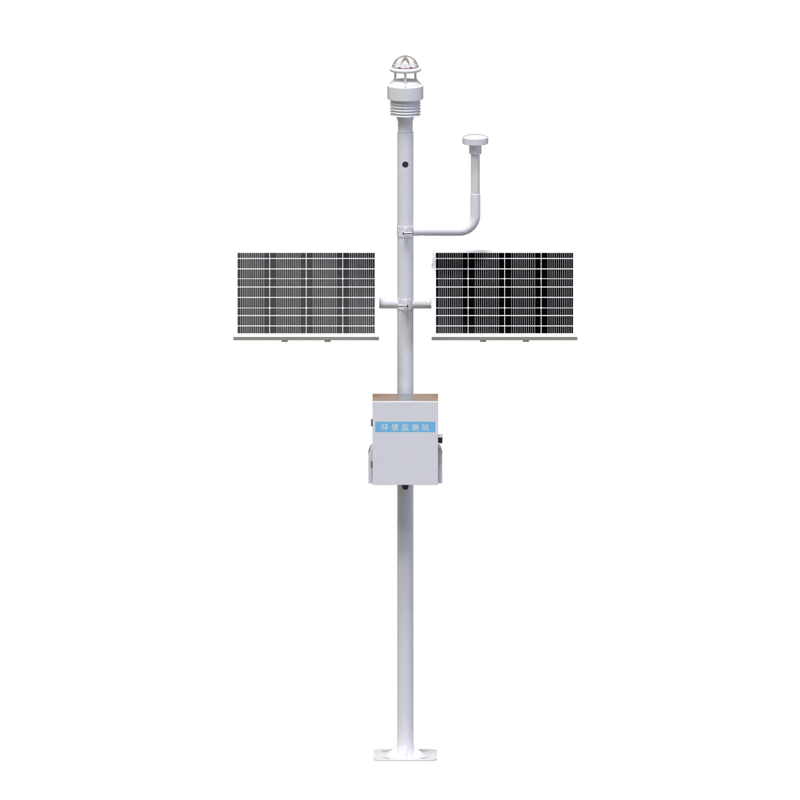
The Beidou Weather Station is an automated device that integrates the regional short-message communication technology of the Beidou-3 Navigation Satellite System with meteorological and environmental monitoring technologies. It enables the real-time observation of various meteorological elements—including ultrasonic wind speed and direction, temperature, humidity, atmospheric pressure, optical precipitation, total radiation, and negative oxygen ions—thereby ensuring stable meteorological monitoring and data transmission.
The core design of the Beidou Weather Station lies in the deep integration of communication and monitoring technologies. By leveraging the regional short-message communication capabilities of Beidou-3, the device possesses distinct advantages in the data transmission phase. Unlike traditional weather stations that rely on public networks, Beidou short-message communication is not constrained by network coverage limitations. Consequently, the station can maintain stable data transmission even in areas with weak signals or no network coverage—such as remote mountainous regions and remote field sites—thereby guaranteeing the continuity of meteorological monitoring operations. This capability is the key reason why the device is well-suited for deployment in a wide variety of complex outdoor environments.
In terms of meteorological monitoring capabilities, the Beidou Weather Station facilitates integrated, multi-element observation. It covers fundamental meteorological parameters—such as ultrasonic wind speed and direction, temperature, humidity, and atmospheric pressure—while also incorporating additional monitoring categories, including optical precipitation, total radiation, and negative oxygen ions. The ultrasonic wind speed and direction monitoring module utilizes ultrasonic principles to measure wind parameters; as it contains no mechanical moving parts, it minimizes wear and tear as well as the probability of mechanical failure, demonstrating exceptional performance in terms of measurement accuracy and response speed. The temperature, humidity, and atmospheric pressure sensors employ high-precision sensing elements to ensure stable data acquisition, accurately reflecting the fundamental meteorological conditions of the surrounding environment. The optical precipitation sensor identifies rainfall conditions using optical principles; its measurements are highly resistant to external interference, allowing for the accurate recording of precipitation data. The total radiation sensor effectively captures solar radiation energy, providing essential data support for applications such as solar energy utilization and agricultural lighting research. Finally, the negative oxygen ion monitoring module fills a specific gap in environmental monitoring capabilities, making it applicable to scenarios such as ecological environment assessment.
The device features a fully automated meteorological monitoring architecture; once powered on, it enters a continuous monitoring mode without requiring any manual intervention. All sensors collect data synchronously, and this data is transmitted back in real-time via the Beidou-3 short-message communication technology. Regarding data storage, the device is equipped with a built-in local storage module that serves as a backup for historical monitoring data, thereby preventing data loss in the event of transmission interruptions. Furthermore, the system supports remote viewing and retrieval of data, thereby enhancing overall data utilization efficiency. Its structural design prioritizes outdoor adaptability; the housing features waterproof, dustproof, and corrosion-resistant properties, enabling it to withstand complex environments characterized by high temperatures, high humidity, and heavy wind and sand, thereby ensuring the device's long-term, stable operation.
The Beidou Weather Station boasts a wide range of application scenarios, proving effective in diverse settings such as wilderness ecological monitoring stations, mountain weather stations, agricultural cultivation bases, and ecological conservation zones. For meteorological monitoring in remote areas, its capability for independent data transmission—without reliance on external networks—resolves the deployment challenges typically associated with traditional equipment. In the agricultural sector, by monitoring multi-element meteorological data, it provides a scientific basis for crop growth management and disaster early warning systems. Furthermore, in the field of ecological and environmental research, data points such as total radiation and negative oxygen ion levels facilitate comprehensive ecological quality assessments.
As an automated meteorological monitoring device, the Beidou Weather Station leverages technological integration and functional expansion to achieve multi-element, comprehensive, and highly reliable weather monitoring. It provides robust support for meteorological data acquisition, environmental monitoring, and analysis, thereby driving the evolution of meteorological monitoring toward broader geographical coverage and greater levels of precision.
Agricultural production has been closely linked to the weather since ancient times. Farmers need to arrange their farming activities according to the changes in the weather. However, the weather is unpredictable, and extreme weather events such as heavy rain, drought, blizzards, and hailstorms occur...
Park air quality monitoring station is an important part of urban garden construction in my country, and its main function is to monitor the concentration and distribution of air pollutants in parks. With the continuous acceleration of urbanization and the rapid growth of urban population, the probl...
A farmland meteorological monitoring station is a highly integrated, low-power, and rapidly deployable high-precision meteorological observation device. It consists of five parts: meteorological sensors, a data logger, a solar power system, a pole support, and a cloud platform. It is widely us...
In the fields of meteorological observation and environmental monitoring, visibility is a key indicator. Although traditional ground visibility monitoring stations can provide certain data, they have shortcomings such as limited monitoring range and difficulty in covering complex terrain. With the d...


 Skype
Skype
 whatsapp
 mail
mail