Shandong Fengtu IOT Technology Co., Ltd
Sales Manager:Ms. Emily Wang
Cel,Whatsapp,Wechat:+86 15898932201
Email:info@fengtutec.com
Add:No. 155 Optoelectronic Industry Accelerator, Gaoxin District, Weifang, Shandong, China


Sales Manager:Ms. Emily Wang
Cel,Whatsapp,Wechat:+86 15898932201
Email:info@fengtutec.com
Add:No. 155 Optoelectronic Industry Accelerator, Gaoxin District, Weifang, Shandong, China
time:2026-03-16 13:18:55 source:Weather Station viewed:273 time
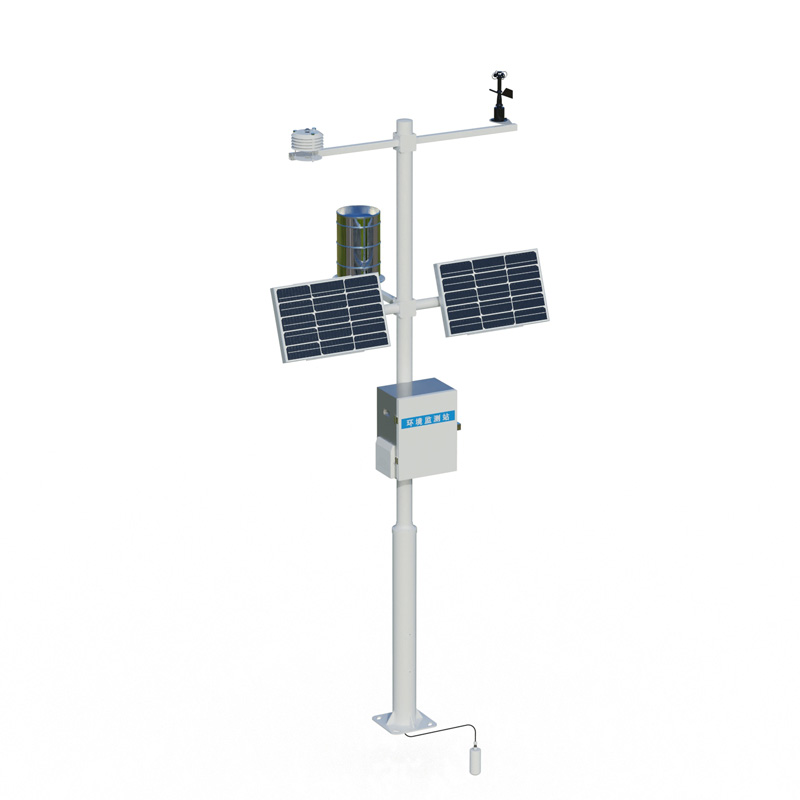
Field Microclimate Monitor is a monitoring device specifically designed for agriculture. It enables real-time monitoring of microclimate conditions within agricultural fields—including data on temperature, humidity, and light intensity—and features a highly integrated, low-power design that facilitates easy field deployment. It serves as a scientific foundation for agricultural production and related research.
Field Microclimate Monitor is a specialized monitoring device developed specifically for targeted agricultural scenarios. Its primary function is to monitor and record microclimate conditions within agricultural fields. Unlike standard meteorological observation equipment, its design is tailored to the unique characteristics of the agricultural environment, allowing it to precisely capture subtle variations in local field climates and meet the specific requirements of agricultural production and research. The device features a highly integrated design that consolidates multiple monitoring modules into a single unit. Its compact structure requires no complex assembly, enabling rapid installation and deployment, thereby significantly reducing the operational difficulty associated with outdoor use.
The device boasts low-power consumption capabilities, making it ideally suited for long-term field monitoring scenarios. It operates continuously and stably without the need for frequent battery replacements or recharging, thereby ensuring the continuity and integrity of agricultural microclimate data. Its core monitoring functions focus on critical climatic elements within the field, providing real-time data on fundamental parameters such as temperature, humidity, and light intensity. These data points are directly linked to key aspects of agricultural production—such as crop growth and the incidence of pests and diseases—and provide precise data support for subsequent production management decisions.
As a core component of agricultural microclimate monitoring systems, the device's applications span the entire agricultural production lifecycle as well as related research fields. In agricultural production, the monitored data assists growers in rationally adjusting management practices—such as irrigation, fertilization, and shading—and in optimizing planting strategies based on climatic changes to enhance both crop yield and quality. In agricultural environmental research, the device facilitates the long-term recording of microclimate variation patterns within fields, providing foundational data for agro-ecological studies. Furthermore, in the contexts of crop improvement and phenological monitoring, it precisely captures the impact of climatic conditions on crop growth, serving as a basis for variety improvement and phenological forecasting.
Additionally, the data generated by this device supports pest and disease control efforts. By monitoring climatic conditions—such as temperature and humidity—it enables the prediction of potential pest and disease outbreaks, thereby assisting growers in taking proactive preventive and control measures to mitigate losses caused by such threats. Compared to traditional manual monitoring, Field Microclimate Monitor eliminates the need for on-site human supervision, automatically handling data acquisition and recording. This not only enhances monitoring efficiency but also eliminates errors associated with manual operations, thereby ensuring the accuracy and reliability of the data.
Distinguished by its high degree of integration, low power consumption, ease of installation, and suitability for field deployment—coupled with high-precision monitoring capabilities—Field Microclimate Monitor has become an indispensable auxiliary tool in the agricultural sector. It provides scientific data and a basis for decision-making to support various activities, including agricultural production, environmental research, and crop improvement. By facilitating the transition of agriculture toward greater precision and scientific rigor, it effectively resolves critical pain points inherent in traditional farming—such as the inconvenience of climate monitoring and data inaccuracies—thereby offering robust support for enhancing both the quality and efficiency of agricultural production.
The Insect Monitoring Light integrates modern optoelectronic, numerical control, and other technologies in its working principle. It utilizes a specific light source, typically a 20W blacklight tube with a main wavelength of 365nm, which emits light highly attractive to pests, causing them to approa...
Since its establishment in 2017, Fengtu Technology has been dedicated to the field of meteorological instruments and equipment. Equipped with a complete production chain and a professional technical team, its products are widely used in various fields and have received numerous positive reviews. Bel...
Installed on power transmission towers, this system collects real-time data on wind speed and direction, temperature, humidity, air pressure, and rainfall. This data is wirelessly transmitted to the monitoring center, and alerts are sent to mobile phones in case of anomalies. It is suitable fo...
The fall armyworm, also known as the autumn armyworm, is an agricultural pest native to the tropical and subtropical regions of the Americas. The adult has a wingspan of 32 - 40 mm. The forewings are gray to dark brown, and the hindwings are white with a narrow brown band along the edge. The larvae...


 Skype
Skype
 whatsapp
 mail
mail