Shandong Fengtu IOT Technology Co., Ltd
Sales Manager:Ms. Emily Wang
Cel,Whatsapp,Wechat:+86 15898932201
Email:info@fengtutec.com
Add:No. 155 Optoelectronic Industry Accelerator, Gaoxin District, Weifang, Shandong, China


Sales Manager:Ms. Emily Wang
Cel,Whatsapp,Wechat:+86 15898932201
Email:info@fengtutec.com
Add:No. 155 Optoelectronic Industry Accelerator, Gaoxin District, Weifang, Shandong, China
time:2025-04-15 09:06:20 source:Weather Station viewed:676 time
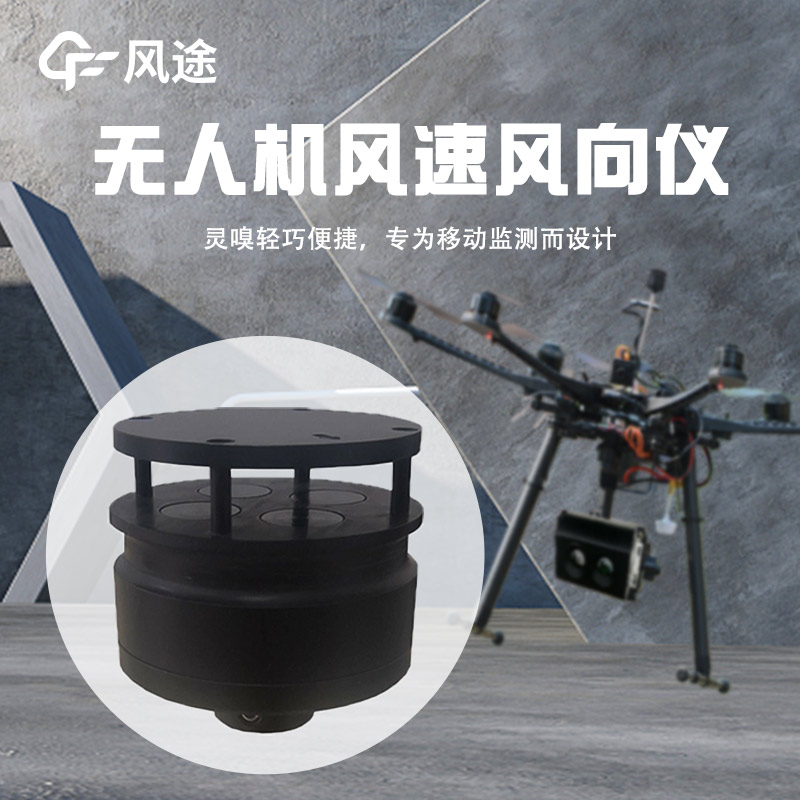
Drones are capable of accurately measuring wind, and the FT-F1 Anemometer for drones achieves this by utilizing the principle of ultrasonic resonance.
Specifically, the instrument emits two fixed-frequency ultrasonic waves in the direction of the wind. Due to the influence of the wind speed, there will be a time difference between the two ultrasonic waves, and the wind speed value can be calculated based on this time difference. At the same time, based on the Doppler effect, the time shift of the echo of the particles blown by the wind within the short flight range is counted, and the echo spectrum is analyzed to obtain the wind direction information.
In order to ensure the accuracy of the measurement, the FT-F1 has adopted a variety of measures in its design. It uses a low-power consumption chip and has functions such as electromagnetic interference resistance, water resistance, and dust resistance. It can operate normally in an environment with a temperature range from -40°C to +70°C and an altitude of 4000 meters, adapting to various complex environments. Its wind speed measurement range is 0 - 60m/s, with an accuracy of up to 3% and a resolution of 0.1m/s; the wind direction measurement range is 0 - 359°, with an accuracy of ±3° and a resolution of 1°. Moreover, it can be installed on the drone either by vertical installation on the top or by hanging installation at the bottom, minimizing the interference of the drone's fuselage on the air current to obtain more accurate wind speed and wind direction data.
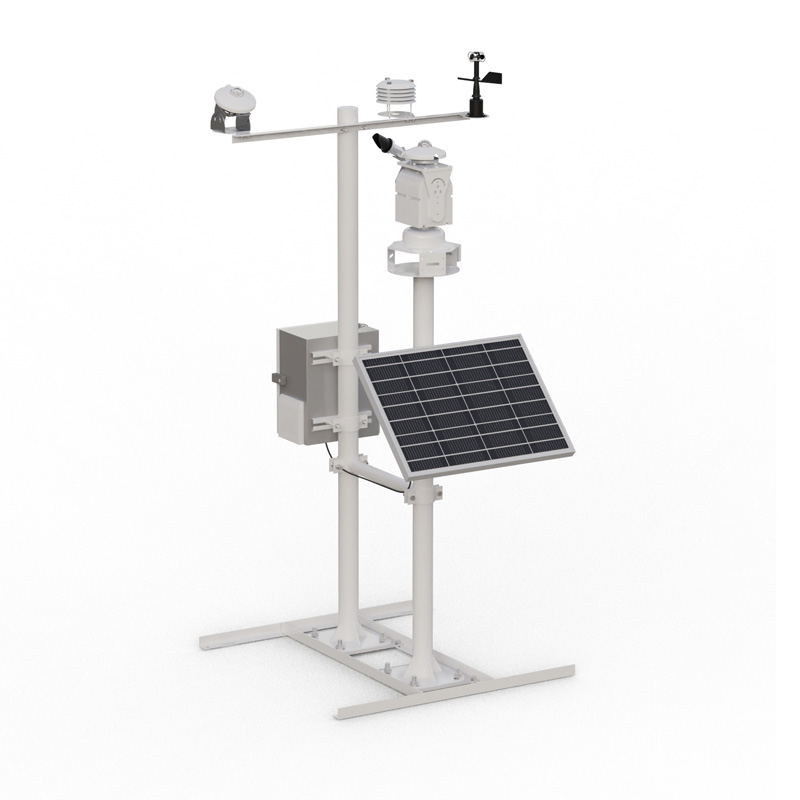
Plant Growth Monitoring System comprehensively utilizes Internet of Things (IoT), cloud computing, and video streaming technologies to collect real-time video images of crop growth, pests, diseases, and disasters through field monitoring equipment. Combined with meteorological and soil moisture data, it provides visual monitoring and management decision support for agricultural planting....
Rodent infestation has long been a major problem plaguing farmland. According to relevant statistical data, since the 1980s, the annual area affected by farmland rodent infestation in some regions has accounted for 20%-30% of the total area of food crops. The rodent density is generally 10%-20%, and...
Microclimate refers to the small-scale, low-level climate on the surface, which is closely related to human activities. There are mainly air temperature, air humidity, atmospheric pressure, light radiation, rainfall, soil temperature, soil moisture, soil conductivity, soil PH, carbon dioxide and oth...
Small automatic weather stations are an important part of the meteorological monitoring and management platform, and they play a crucial role especially in the information release subsystem. Before the arrival of meteorological disasters, small automatic weather stations can quickly release early wa...


 Skype
 whatsapp
 mail