Shandong Fengtu IOT Technology Co., Ltd
Sales Manager:Ms. Emily Wang
Cel,Whatsapp,Wechat:+86 15898932201
Email:info@fengtutec.com
Add:No. 155 Optoelectronic Industry Accelerator, Gaoxin District, Weifang, Shandong, China


Sales Manager:Ms. Emily Wang
Cel,Whatsapp,Wechat:+86 15898932201
Email:info@fengtutec.com
Add:No. 155 Optoelectronic Industry Accelerator, Gaoxin District, Weifang, Shandong, China
time:2026-03-18 13:29:30 source:Weather Station viewed:257 time
Scenic Area Lightning Warning System utilizes deployed atmospheric electric field meters to detect real-time fluctuations in electric field intensity. By integrating data from weather radar and lightning location systems, it enables localized, short-term warnings regarding lightning activity. This provides scenic areas with advance warning information, serving as a core security facility essential for maintaining normal operations and offering a specialized solution for outdoor lightning protection.
Scenic Area Lightning Warning System is a specialized security device designed specifically for monitoring lightning activity and issuing advance warnings. At its core, the system relies on atmospheric electric field detection technology. By continuously monitoring changes in electric field intensity—and integrating this data with multi-source inputs such as weather radar echoes and lightning location data—it achieves localized, short-term forecasting of lightning events. As a critical component of a scenic area's lightning protection infrastructure, the system can detect anomalous electric field signals in a timely manner *before* lightning strikes occur. This provides scenic areas with invaluable lead time for warnings, prompting visitors and staff to implement necessary lightning safety measures; thus, it serves as a vital technical pillar for ensuring the safe operation of the scenic area.
The primary detection instrument within the Scenic Area Lightning Warning System system is the atmospheric electric field meter. This instrument continuously collects atmospheric electric field data within the monitored zone; when the electric field intensity exceeds a pre-set critical threshold, the system automatically analyzes the developing trends of potential lightning activity. Taking the Mount Tai Scenic Area as an example: meteorological authorities have deployed multiple electric field meters in key locations—such as cable car stations—to construct a comprehensive, multi-dimensional monitoring network integrating space-based, air-based, and ground-based assets. This network enables the real-time monitoring and precise localization of lightning activity. The system consistently delivers refined lightning warnings and forecasts with a lead time of 0 to 2 hours, thereby providing robust safety assurance for cable car operations as well as for the lives and property of visitors. At the Shilin (Stone Forest) Scenic Area in Yunnan Province, the lightning disaster prevention system—operational since its completion in 2012—has demonstrated remarkable effectiveness; achieving a lightning warning accuracy rate exceeding 90%, it has successfully prevented the occurrence of lightning-related disasters within the scenic area.
In terms of technical architecture, the Scenic Area Lightning Warning System system typically comprises four distinct layers: the Perception Layer, the Transmission Layer, the Analysis Layer, and the Application Layer. The Perception Layer consists of various monitoring devices—including atmospheric electric field meters, lightning location sensors, and automated weather stations—and is responsible for the real-time collection of diverse meteorological data. The transmission layer relays real-time monitoring data from the front-end back to the data center via 4G, 5G, or fiber-optic networks. The analysis layer is equipped with specialized data processing software; utilizing algorithms to perform pattern recognition on historical thunderstorm data—and integrating this with real-time monitoring inputs—it automatically generates preliminary assessments regarding the severity level of potential hazards. The application layer then disseminates these early warning messages to visitors and staff through various channels, including on-site LED displays, public address systems, and mobile text messages. When the system detects a lightning risk, it automatically triggers alerts through multiple methods—such as on-site audible and visual alarms, remote wireless notifications, and cloud-based backend warnings—thereby establishing a closed-loop management system that spans the entire process from monitoring and early warning to emergency response.
Addressing the unique requirements of outdoor environments, the Scenic Area Lightning Warning System system is designed with a keen focus on adaptability within complex settings. Certain system components utilize solar power solutions—equipped with energy storage batteries—enabling stable operation even during prolonged periods of overcast or rainy weather, thereby completely eliminating any reliance on the municipal power grid. This design is particularly well-suited for mountainous scenic areas and remote tourist destinations where establishing a reliable power supply infrastructure is challenging. A prime example is the Shuangtong Mountain Scenic Area in Lishui, Zhejiang Province. Characterized by rugged terrain, unpredictable weather conditions at its summit, a wide array of outdoor activities, and a dispersed visitor population—and facing difficulties in laying municipal power lines—the scenic area installed a solar-powered lightning early warning system at the summit. This installation has effectively safeguarded both the area's operations and visitor safety during lightning-prone weather conditions. Furthermore, the system's sensor probes typically meet the IP65 protection standard and feature an inverted design; this configuration prevents falling leaves, bird droppings, and rainwater from compromising detection accuracy, thereby ensuring stable performance even under adverse meteorological conditions.
The early warning dissemination mechanism of the Scenic Area Lightning Warning System system constitutes a critical component in fulfilling its security and safety functions. At the Shilin (Stone Forest) Scenic Area, the system automatically broadcasts real-time weather updates and tourism information daily between 08:00 and 18:00 via 11 LED display screens strategically positioned throughout the site. In the event of hazardous weather conditions—such as lightning, strong winds, or torrential rain—the system automatically issues preliminary warnings based on real-time monitoring data and predefined warning thresholds. Upon receiving such alerts, duty officers conduct a comprehensive analysis—incorporating data from radar maps, satellite cloud imagery, and other sources—to determine the precise warning level. They then promptly disseminate these meteorological hazard warnings through channels such as mobile text messages and the on-site LED screens, thereby facilitating the timely activation of emergency response protocols. At the Sanjiaoshan Scenic Area in Xishui, a digitized lightning protection system has established real-time connectivity with meteorological authorities. Warning alerts are instantly broadcast throughout the entire park via public address systems and electronic displays, enabling visitors and staff to take timely action. This multi-tiered information dissemination network ensures that warning messages are efficiently conveyed to every relevant individual, thereby securing precious time for visitor evacuation and emergency response.
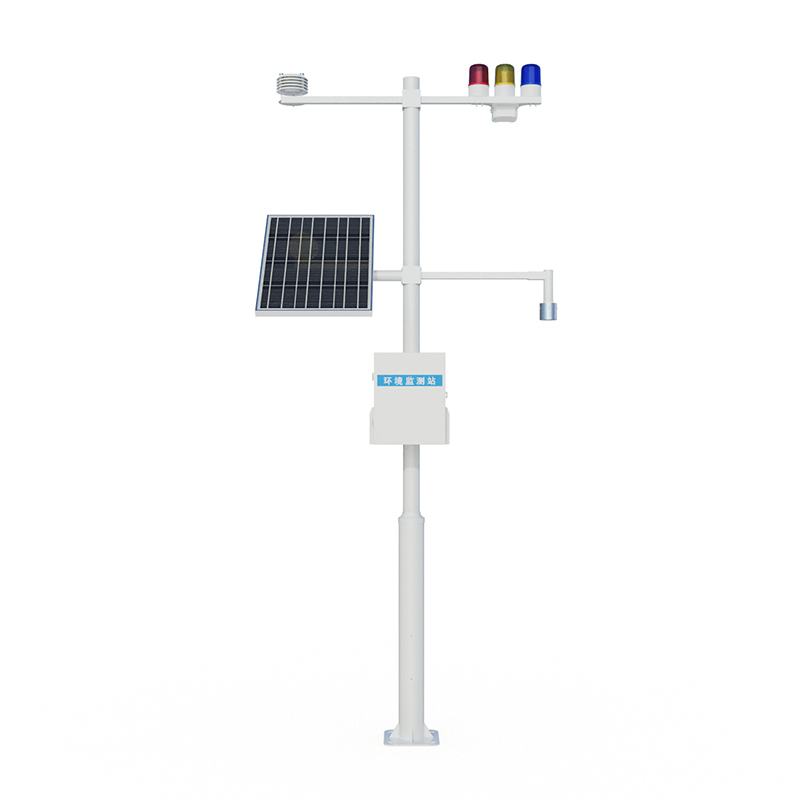
The online micro-meteorological monitoring system for transmission lines is a multi-element meteorological monitoring device installed on power transmission towers. It integrates sensors for temperature and humidity, wind speed and direction, rainfall, air pressure, and light intensity, transm...
Agricultural Environment Monitoring System is a professional device developed for greenhouse and similar scenarios. It integrates meteorological sensors, a data logger, a solar power system, a pole support, and a cloud platform. It can monitor air temperature and humidity, light intensity, CO₂...
For a long time, agricultural production has largely relied on experience and the observation of the weather. When it comes to sowing, irrigation and dealing with extreme weather conditions, decisions often depend on traditional wisdom passed down orally. Nowadays, agricultural meteorological statio...
The Wireless Weather Station not only enables high-precision meteorological monitoring but also flexibly adapts to different application scenarios. Its core highlight lies in the integrated composite meteorological sensor it is equipped with. This sensor has undergone professional calibration and op...


 Skype
Skype
 whatsapp
 mail
mail