Shandong Fengtu IOT Technology Co., Ltd
Sales Manager:Ms. Emily Wang
Cel,Whatsapp,Wechat:+86 15898932201
Email:info@fengtutec.com
Add:No. 155 Optoelectronic Industry Accelerator, Gaoxin District, Weifang, Shandong, China


Sales Manager:Ms. Emily Wang
Cel,Whatsapp,Wechat:+86 15898932201
Email:info@fengtutec.com
Add:No. 155 Optoelectronic Industry Accelerator, Gaoxin District, Weifang, Shandong, China
time:2025-11-27 10:28:45 source:Weather Station viewed:468 time
Hydrological and environmental monitoring station is an automated monitoring device integrating Beidou-2 and Beidou-3 regional short message communication technologies. This device continuously monitors key hydrological parameters such as water level, flow velocity, flow rate, and rainfall, enabling hydrological data acquisition and disaster warning functions, and ensuring reliable real-time data transmission even in extreme environments.
Hydrological and environmental monitoring station is an important technical equipment in modern hydrological monitoring systems. It combines the short message communication function of the Beidou satellite navigation system with professional hydrological sensing technology, forming a complete automated monitoring solution. This monitoring station is particularly suitable for remote areas with weak or completely absent communication infrastructure and can operate stably under various harsh environmental conditions.
In terms of technical architecture, Hydrological and environmental monitoring station consists of several core modules. The hydrological sensor unit is responsible for collecting basic parameters such as water level, flow velocity, flow rate, and rainfall. The data processing unit performs preliminary analysis and storage of the collected raw data. The power system typically uses a solar power supply combined with batteries to ensure continuous operation. The most distinctive feature is the communication module, which supports both Beidou-2 and Beidou-3 short message services, enabling satellite transmission of monitoring data.
Beidou short message communication technology plays a crucial role in this type of monitoring station. Unlike communication methods that rely on ground base stations, satellite communication is not limited by terrain and can still function normally in signal blind spots such as mountainous areas and river valleys. Compared to Beidou-2, the Beidou-3 system offers higher transmission rates and lower power consumption, allowing the monitoring station to transmit larger amounts of data while extending the device's operating time in the field. This dual-system compatible design also improves communication reliability.
The monitoring station employs various professional technical methods for measuring hydrological parameters. Water level monitoring typically uses pressure-type or radar-type water level gauges, which can accurately record water level changes. Flow velocity measurement may use Doppler principle flow meters, which infer water flow velocity through acoustic signals. Flow rate data is generally calculated based on water level and flow velocity data using mathematical models. Rainfall monitoring uses a tipping bucket rain gauge to record precipitation processes and cumulative amounts.
In terms of data acquisition and transmission, the monitoring station follows an intelligent workflow. Sensors automatically collect data at preset time intervals, and after quality control, the data is stored in local memory. Data transmission can be set to timed or triggered transmission modes as needed. When the monitored values exceed the warning threshold, the system immediately activates the emergency transmission procedure, prioritizing the sending of alarm information to the monitoring center.
The significant application value of this monitoring station lies in disaster early warning. By real-time monitoring of water level and rainfall trends, potential flood risks can be detected promptly. Continuous observation data of flow velocity and discharge provides a basis for assessing the river's flood carrying capacity. During heavy rainfall, the real-time data provided by the monitoring station helps flood control departments make accurate decisions, gaining valuable emergency preparation time for downstream areas.
The deployment and site selection of the monitoring station require consideration of multiple factors. The installation location should be representative of the hydrological characteristics of the water body, avoiding areas with abnormal flow patterns such as backflow and eddies. The equipment needs to be securely installed on a stable foundation to prevent it from being washed away by floods. The angle of the solar panels and surrounding obstructions also need to be carefully planned to ensure the stability of the power supply.
Reliability in extreme environments is a prominent advantage of this type of monitoring station. The equipment casing adopts an anti-corrosion and waterproof design, capable of withstanding prolonged immersion and exposure to sun and rain. Key components are specially reinforced to resist flood impact and collisions with floating objects. The wide temperature range design allows the equipment to operate normally under severe cold or extreme heat conditions. These features ensure that the monitoring station can continue to provide critical data during major disasters.
With the continuous improvement of the Beidou satellite navigation system, the technical performance of the Hydrological and environmental monitoring station system is also continuously improving. The new generation of equipment is developing towards low power consumption and high integration, with a gradually expanding range of monitoring parameters and continuously enhanced data analysis capabilities. These technological advancements will further promote the coverage density and data processing efficiency of the hydrological monitoring network, providing stronger technical support for flood disaster prevention and water resource management.
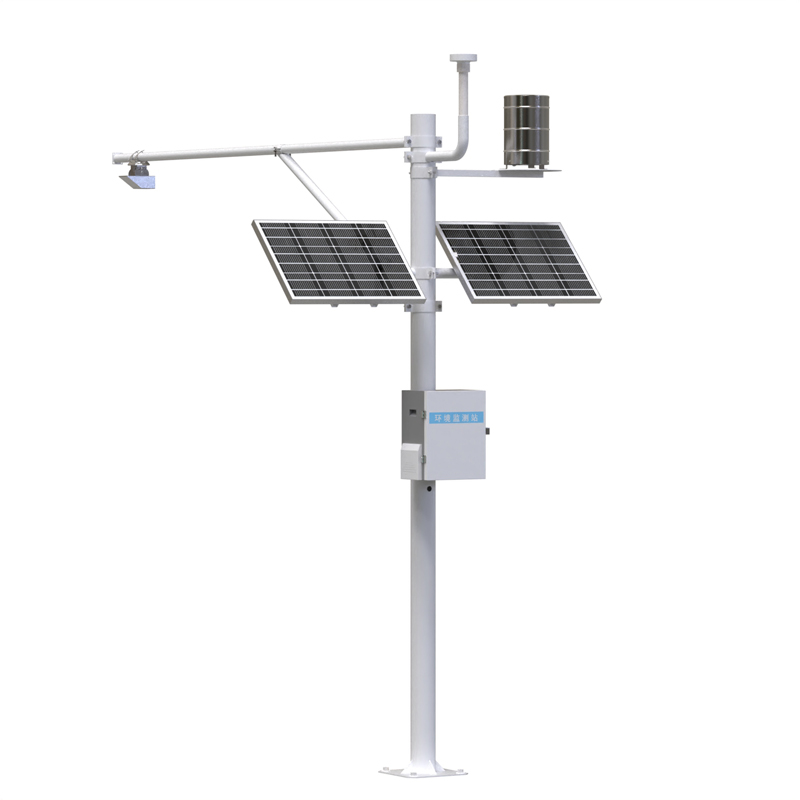
Emergency meteorological monitoring refers to the rapid and accurate monitoring and analysis of relevant meteorological parameters during sudden meteorological disasters or emergency events. Its purpose is to provide timely and reliable meteorological evidence for emergency decision-making, so as to...
In our daily life, we often encounter severe weather such as haze and patchy fog. During these times, the atmospheric visibility is extremely low, just like a veil covering our eyes. It's a very unpleasant feeling, and such conditions are also prone to causing traffic accidents. So, is there a w...
As a special section in the transportation network, tunnels, with their enclosed environment, are susceptible to factors such as vehicle exhaust, air flow changes, and light differences. Professional monitoring equipment is therefore needed to ensure traffic safety. The following introduces four key...
The Mechanical weather station is called "fixed" because this type of equipment is usually installed at specific locations, such as meteorological observation fields, airports, ports, high mountains, or remote areas, and will be permanently fixed at that position for meteorological observa...


 Skype
Skype
 whatsapp
 mail
mail