Shandong Fengtu IOT Technology Co., Ltd
Sales Manager:Ms. Emily Wang
Cel,Whatsapp,Wechat:+86 15898932201
Email:info@fengtutec.com
Add:No. 155 Optoelectronic Industry Accelerator, Gaoxin District, Weifang, Shandong, China


Sales Manager:Ms. Emily Wang
Cel,Whatsapp,Wechat:+86 15898932201
Email:info@fengtutec.com
Add:No. 155 Optoelectronic Industry Accelerator, Gaoxin District, Weifang, Shandong, China
time:2026-03-19 11:04:23 source:Weather Station viewed:311 time
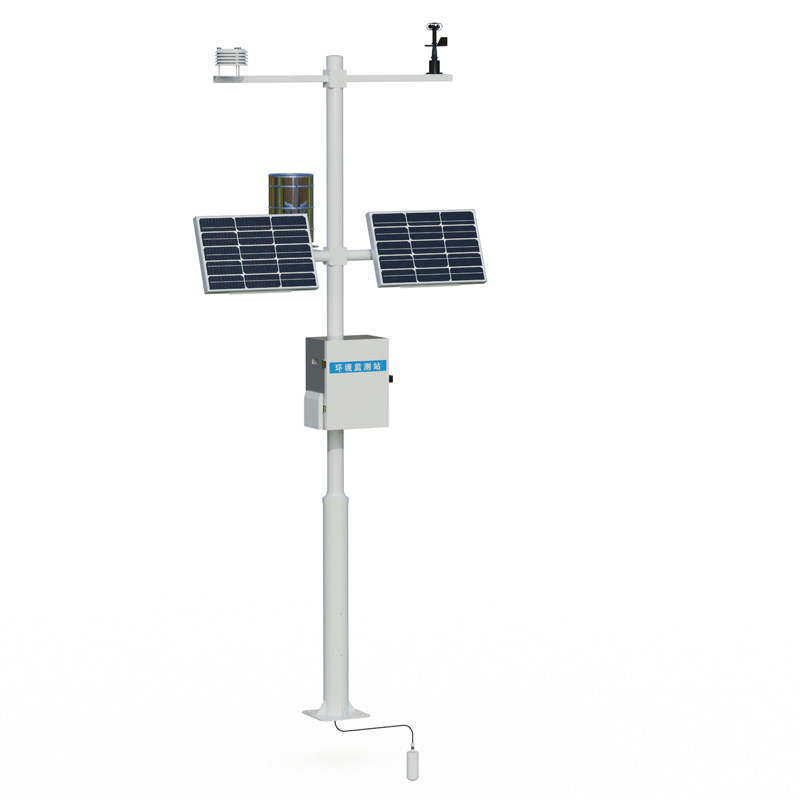
Agricultural Weather Station is a highly integrated, low-power, and rapidly deployable high-precision meteorological observation device designed specifically for farmland monitoring scenarios. Compliant with the requirements for high-standard farmland construction, the device comes bundled with a complimentary cloud platform and comprehensive technical solutions. It is becoming increasingly common in farmlands across the country and has emerged as standard equipment for large-scale growers, family farms, and agricultural bases.
Agricultural Weather Station is a meteorological observation device engineered specifically to meet the demands of agricultural production; its core features include high integration, low power consumption, and rapid installation capabilities. Compared to traditional meteorological observation facilities, this device integrates various sensors, data collectors, wireless transmission modules, and power supply systems into a single unit. The complete assembly typically weighs around 4 kilograms and utilizes a modular assembly method, making the installation process exceptionally convenient. The device consists of five main components: meteorological sensors, a data collector, a solar power system, a mounting pole, and a cloud platform. On-site installation requires no complex construction work; the three-meter carbon steel mounting pole features a two-section threaded connection design, allowing for rapid deployment. This design enables Agricultural Weather Station to be widely applied in fields such as meteorology, agriculture, forestry, and scientific research, making it particularly suitable for use by small-scale farmers and elderly growers who may lack access to professional technical personnel.
The technical architecture of Agricultural Weather Station has been designed with full consideration for the unique environmental challenges of outdoor farmland deployment. The device comes standard with a solar power system featuring a built-in rechargeable lithium battery; under sunny conditions, solar charging provides sufficient power for 24-hour continuous operation, while the lithium battery serves as a backup power source on cloudy days, eliminating the need for frequent power source replacements. Low power consumption is a key characteristic of this device. In terms of data acquisition, the device monitors a wide range of farmland meteorological and environmental parameters in real-time—including air temperature, humidity, light intensity, CO₂ concentration, soil temperature, soil moisture, soil salinity, and rainfall. The sensors meet scientific-research-grade standards, offering a soil moisture measurement accuracy of ±3% and an air temperature accuracy of ±0.3°C. Data transmission supports various wireless communication protocols—such as 5G, 4G, and GPRS—allowing users to view real-time data and historical trend charts via a mobile app or a web browser on a computer. Meeting the requirements for high-standard farmland construction is a primary reason why Agricultural Weather Station has gained widespread adoption. In the high-standard farmlands of Yueqing, Zhejiang, meteorological masts—standing approximately 10 meters tall—rise from the ground; together with newly installed data collectors, Stevenson screens, rain gauges, and other equipment, they serve as "smart sentinels" stationed throughout the fields. These stations capture data with high precision at a frequency of once per minute. Equipped with automated sensors designed to monitor six key environmental factors throughout the entire lifecycle of rice cultivation, they provide real-time monitoring of critical indicators—such as air temperature, precipitation, and wind speed—and upload this information to a digital platform. Through data fusion—integrating inputs from sources such as meteorological satellites and radar systems—the platform provides specialized meteorological support for both farmland infrastructure development and agricultural production, thereby helping to enhance arable land quality and yield capacity. Yueqing City plans to pilot the deployment of these smart meteorological monitoring stations across four core high-standard farmland zones, establishing a comprehensive, end-to-end meteorological service system—including monitoring and early warning capabilities—tailored to the specific growth cycles of various crops.
The complimentary cloud platform and technical solutions bundled with Agricultural Weather Station constitute the core appeal for large-scale growers and family farms. The equipment comes with a built-in cloud management platform; users can gain access simply by scanning a QR code to register, enabling them to view both historical and real-time data online—via computer or mobile device—and automatically calculate various data metrics. The cloud platform offers ample storage capacity for long-term data archiving and allows users to set upper and lower thresholds to trigger automated data analysis and early warnings. Furthermore, it comes pre-configured with a range of common alarm settings tailored to specific crops. When monitored data exceeds a predefined threshold, the system alerts users to potential anomalies through multiple channels, including mobile app notifications, web interface alerts, LED indicator lights, and voice prompts. In Rushan, Shandong, a "Smart Field Service Platform"—powered by technologies such as the Internet of Things (IoT), sensor networks, wireless communications, and cloud computing—provides scientific oversight of the entire agricultural production lifecycle, from sowing and field management to harvesting, accessible via both mobile and desktop interfaces. This platform is made available free of charge to all growers throughout the city. Across the city, 15 distributed smart terminals for meteorological data collection—powered by eco-friendly photovoltaic energy and utilizing 5G communication technology—independently monitor and collect weather data from various townships around the clock. This data is transmitted back to a central "Smart Field Brain" for real-time big data analysis and forecasting, ultimately enabling the platform to issue early warning alerts to growers via a dedicated disaster warning system. In terms of practical application results, Agricultural Weather Station effectively mitigates losses caused by field-level meteorological disasters and optimizes irrigation timing to enhance water resource utilization efficiency. According to data calculated by Tianze Environment, the deployment of farmland meteorological monitoring stations can reduce losses from weather-related disasters by 20% to 30%, improve water utilization efficiency through optimized irrigation timing by 30%, and contribute to a stable increase in per-mu crop yields of 10% to 15%. Regarding disaster early warning and proactive defense, Yueqing City has established a tiered warning mechanism prioritizing defense against typhoons, high-temperature heat stress, torrential rain and waterlogging, low-temperature frost damage, and severe convective weather. Utilizing a three-tier dissemination network—comprising agricultural service groups for large-scale rice growers and consultation groups within the agricultural meteorological sector—the system ensures that major grain growers receive early warning information within 15 minutes. Within 24 hours of a disaster event, meteorological and agricultural experts conduct joint field inspections and provide differentiated response strategies based on future weather forecasts. In Jilin Province, leveraging the "JiTian" Integrated Meteorological Service Cloud Platform, meteorological authorities utilize a "flash message" forced-delivery function to instantly transmit early warnings to 400,000 farming households, resulting in disaster mitigation benefits exceeding 200 million RMB. In Lishu County, Siping City, large-scale grain growers use mobile apps every morning to access weather forecasts—accurate down to the specific field plot—and follow system prompts to reinforce greenhouses in advance, thereby effectively mitigating the impact of severe convective weather.
For large-scale growers, family farms, and agricultural production bases, Agricultural Weather Station has become standard equipment for daily operations. When making purchasing decisions, small-scale farmers and family farms should prioritize devices featuring basic irrigation decision-support and disaster early-warning capabilities, opting for models with low-power designs, solar power support, and remote data access via mobile apps. Medium-sized cooperatives and facilities-based agricultural operations require products that support multi-point monitoring networks, feature threshold-breach warning functions, and possess high environmental protection ratings. Large-scale farms and research institutions may select devices offering comprehensive parameter coverage and research-grade precision; these devices allow data to be directly utilized for agricultural production and scientific analysis, support integration with irrigation and fertilization systems, and generate historical trend reports as well as crop growth environment analysis reports. By clearly defining functional requirements, prudently planning the budget, strictly controlling installation quality, and selecting reliable after-sales support, growers will acquire a set of "smart eyes" that truly empower their agricultural production.
Large-field agriculture is a production method that involves crop cultivation on large areas of farmland, mainly including the large-scale planting of food crops, oil crops and cash crops. For example, a large area of the Northeast Plain in China is planted with corn, soybeans and so on. Its product...
With the increasing public awareness of environmental protection and health, air quality has become one of the key indicators for assessing the environmental quality of tourist attractions. Negative oxygen ions, known as the "air vitamin," have a positive impact on human physiological acti...
In the system of meteorological observation and hydrological research, precipitation measurement is an indispensable link. Rainfall data not only lays a solid foundation for weather forecasting and climate research but also plays a decisive role in decision-making in fields such as water resource ma...
In the field of road traffic, adverse weather conditions are like invisible "traffic killers", posing a huge threat to safe operations. Road surface water accumulation, thick snow, excessive rain and snowfall, or the frequent occurrence of extreme weather such as dense fog, thick fog, sand...


 Skype
Skype
 whatsapp
 mail
mail