Shandong Fengtu IOT Technology Co., Ltd
Sales Manager:Ms. Emily Wang
Cel,Whatsapp,Wechat:+86 15898932201
Email:info@fengtutec.com
Add:No. 155 Optoelectronic Industry Accelerator, Gaoxin District, Weifang, Shandong, China


Sales Manager:Ms. Emily Wang
Cel,Whatsapp,Wechat:+86 15898932201
Email:info@fengtutec.com
Add:No. 155 Optoelectronic Industry Accelerator, Gaoxin District, Weifang, Shandong, China
time:2025-12-19 10:50:39 source:Weather Station viewed:518 time
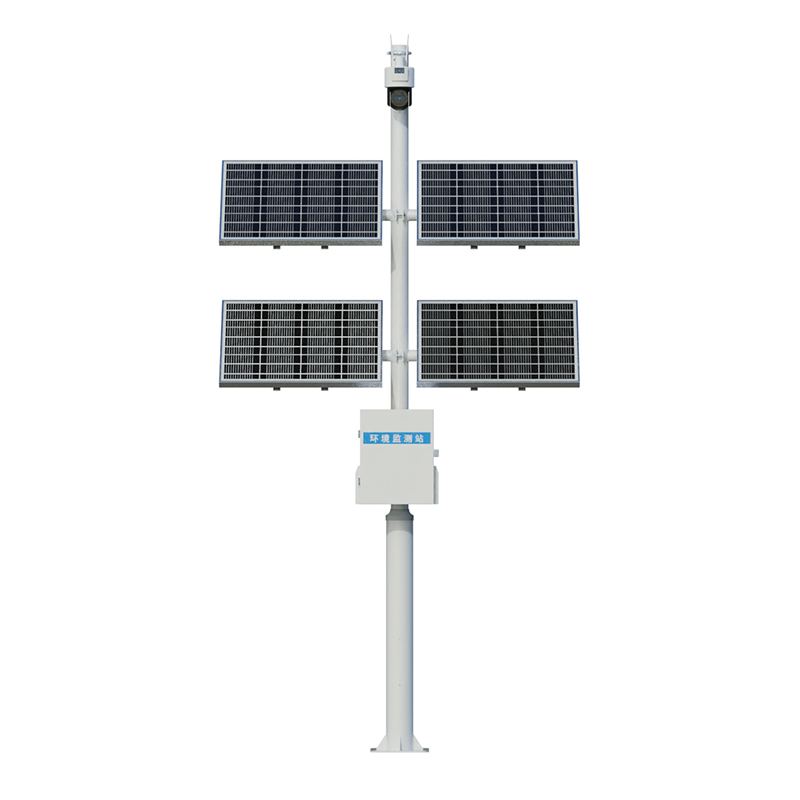
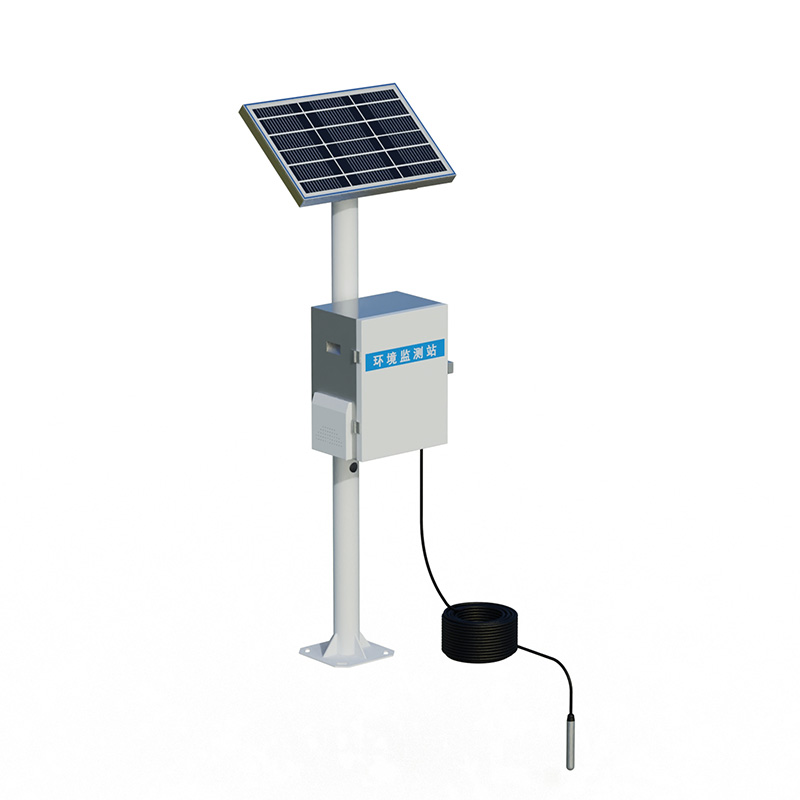
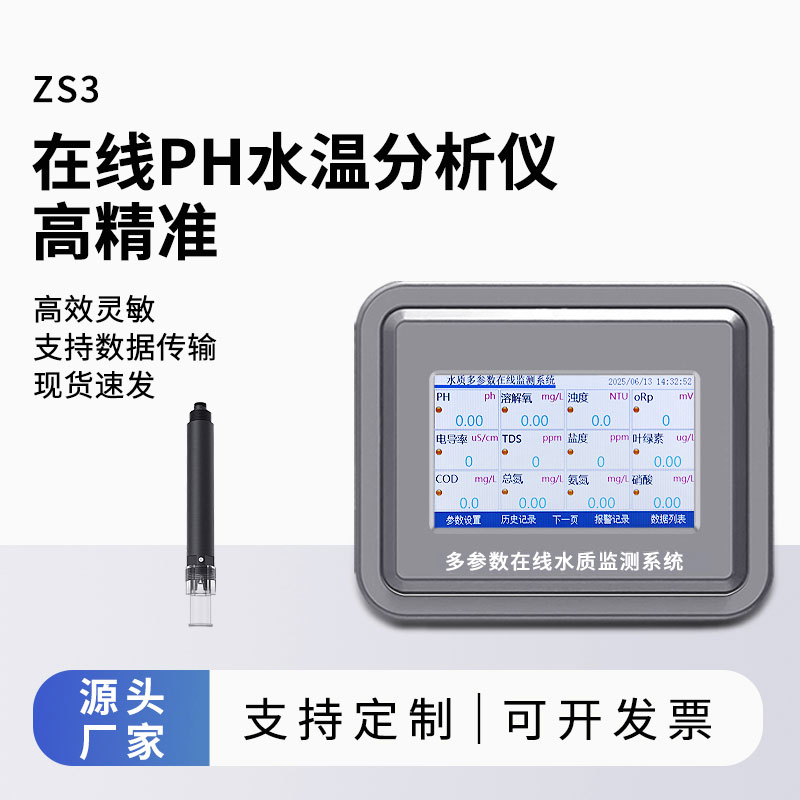
Plant Growth Monitoring is a pole-mounted online monitoring device that can simultaneously and in real-time detect key parameters such as water temperature, conductivity, pH, and dissolved oxygen. This device integrates multiple sensors, avoiding the need for dispersed deployment of single-parameter devices, significantly improving water quality monitoring efficiency and data correlation, and comprehensively assessing water environmental quality. It is suitable for monitoring drinking water, industrial, and irrigation water sources.
Plant Growth Monitoring is an integrated pole-mounted online monitoring device. Its core function is to continuously and automatically measure multiple key physical and chemical parameters of water bodies in real time. Typical monitored parameters include water temperature, conductivity, pH, and dissolved oxygen. This integrated design eliminates the need for users to deploy separate instruments for each monitoring parameter, thus simplifying system configuration and reducing the complexity of installation and maintenance.
Water temperature is a fundamental physical parameter; its changes directly affect the rate of chemical reactions in water, dissolved oxygen saturation, and the activity of aquatic organisms. Conductivity reflects the total content of dissolved ions in water and is a rapid indicator for assessing salinity, mineral concentration, or pollution levels (such as industrial wastewater). pH value indicates the acidity or alkalinity of water and is a core parameter for measuring the chemical balance of water quality, crucial for drinking water safety, aquatic ecosystem health, and industrial water treatment process control. Dissolved oxygen refers to the concentration of oxygen dissolved in water and is a key indicator for assessing the self-purification capacity of water bodies and supporting the survival of aerobic organisms; a low dissolved oxygen content usually indicates organic pollution.
Multi-parameter detection is the core advantage of this type of monitoring station. By integrating multiple sensors into a single probe or tightly mounting them within a flow cell, the equipment ensures that all parameter measurements are based on water samples taken at the same time and location. This synchronicity significantly improves monitoring efficiency and reduces the time and spatial errors caused by batch sampling in traditional single-parameter equipment. More importantly, it enhances the intrinsic correlation between data. Operators or analysis systems can simultaneously observe whether rising water temperature is accompanied by a decrease in dissolved oxygen, and whether changes in pH value are correlated with fluctuations in conductivity. This allows for a more comprehensive and accurate diagnosis of the causes of water quality changes, enabling a full assessment of water environmental quality.
In practical deployment, pole-mounted structures are common for this type of monitoring station. The main monitoring unit (integrating sensors, data acquisition, and transmission units) is mounted on a sturdy column, which is fixed to the water's edge or a suitable underwater platform. The sensor portion is submerged at a specific depth below the water surface to ensure representative measurements. The data acquisition unit reads signals from each sensor at a set frequency, processes and stores the data, and transmits it in real-time to the monitoring center or cloud platform via wired or wireless communication networks.
This type of monitoring station can be widely used for long-term or short-term monitoring of various water sources. In the drinking water sector, it can be used for early warning monitoring of water quality at water sources, water plant inlets, or the end of pipe networks to ensure water supply safety. In industrial water treatment, it can be used to monitor influent water quality, control treatment processes, and supervise compliant discharge. In agriculture, it is suitable for assessing the water quality of irrigation water in farmland, preventing excessive salinity or specific pollutants from damaging the soil and crops. Furthermore, it is frequently used for environmental monitoring of natural water bodies such as rivers, lakes, and reservoirs, evaluating the health of the water ecosystem and the effectiveness of pollution control.
From a technical implementation perspective, the effective operation of Plant Growth Monitoring depends on the accuracy and stability of each sensor and the overall maintenance of the system. Regularly cleaning the sensor surfaces to prevent biofouling or dirt accumulation, and calibrating according to specifications, are fundamental to ensuring long-term data reliability. The data management platform typically has functions such as real-time display, historical curve analysis, alarm for exceeding limits, and report generation, transforming raw data into usable management information.
In summary, Plant Growth Monitoring achieves simultaneous online monitoring of water quality by integrating sensors for water temperature, conductivity, pH, and dissolved oxygen. Its pole-mounted design facilitates on-site installation, and the multi-parameter integrated measurement mode significantly improves monitoring efficiency and data value, supporting comprehensive and timely assessment of water environmental quality. This equipment provides an efficient and continuous data acquisition method for multiple fields such as water resource management, environmental protection, water supply security, and industrial production, and is an important infrastructure in modern water environment monitoring systems.
Agrometeorological Instruments is an integrated handheld monitoring terminal equipped with industrial-grade sensors. It can simultaneously collect multiple parameters such as air temperature and humidity, soil moisture, and light intensity. It features built-in storage and transmission capabil...
These sensors are atmospheric electric field monitoring devices based on the principle of electric field induction. They have a measurement range of -100kV/m to 100kV/m, an accuracy of ±0.001%F.S., and a response time of 3 seconds. Utilizing Modbus-485 communication, the devices can monitor c...
Yangmei, a characteristic fruit in southern China, is highly favored by consumers for its sweet and sour taste, as well as its rich medicinal and edible values. As a perennial plant, its growth is influenced by the comprehensive effects of the current year's climate, the previous year's envi...
Agricultural Weather Stations is a high-precision observation device specifically designed for monitoring and recording meteorological data in fields and forest areas. It can automatically monitor the climate of farmland or forest areas, measuring common meteorological elements such as air temperature, humidity, soil moisture, soil temperature, wind speed, wind direction, rainfall, and light intensity. The data is used to guide precision irrigation, fertilization, and pest and disease control, improving crop yields. Furthermore, it optimizes greenhouse environmental control by analyzing temperature, humidity, and light data....


 Skype
Skype
 whatsapp
 mail
mail