Shandong Fengtu IOT Technology Co., Ltd
Sales Manager:Ms. Emily Wang
Cel,Whatsapp,Wechat:+86 15898932201
Email:info@fengtutec.com
Add:No. 155 Optoelectronic Industry Accelerator, Gaoxin District, Weifang, Shandong, China


Sales Manager:Ms. Emily Wang
Cel,Whatsapp,Wechat:+86 15898932201
Email:info@fengtutec.com
Add:No. 155 Optoelectronic Industry Accelerator, Gaoxin District, Weifang, Shandong, China
time:2025-12-26 10:24:29 source:Weather Station viewed:503 time
Plant Growth Monitoring System comprehensively utilizes Internet of Things (IoT), cloud computing, and video streaming technologies to collect real-time video images of crop growth, pests, diseases, and disasters through field monitoring equipment. Combined with meteorological and soil moisture data, it provides visual monitoring and management decision support for agricultural planting.
Plant Growth Monitoring System is a remote visual monitoring and management platform applied to modern agricultural production. This system integrates internet communication technology, IoT sensing technology, cloud computing storage and processing technology, and high-definition video streaming technology, aiming to achieve continuous, real-time monitoring of crop growth and disaster occurrences throughout the entire process from planting to harvest.
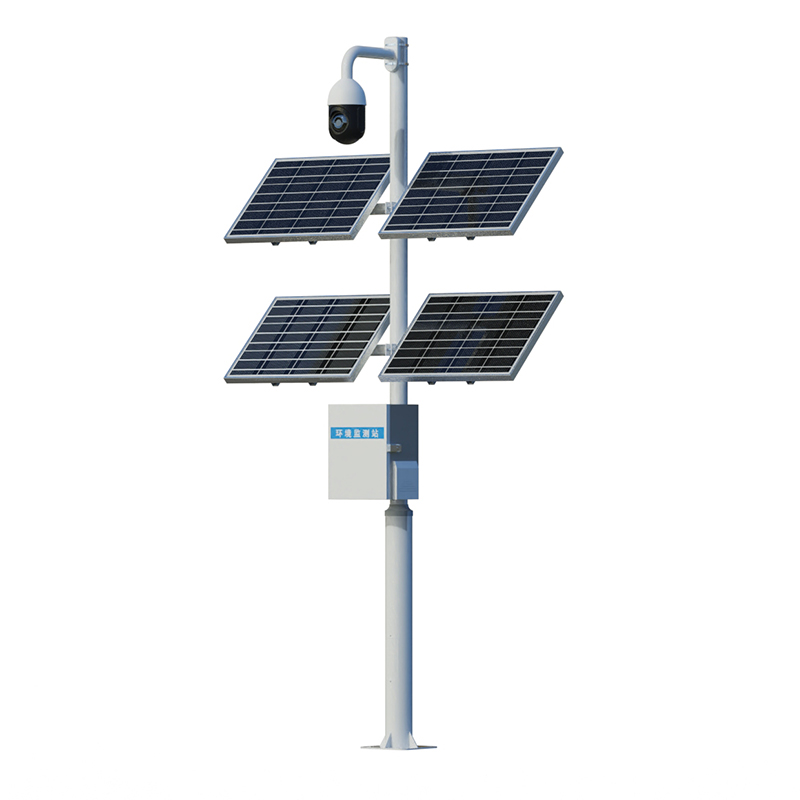
The physical foundation of the system is the various monitoring devices deployed in the field. Core equipment includes high-definition network cameras and infrared thermal imaging cameras. High-definition cameras are responsible for capturing visual morphological information such as crop canopy color, density, and plant height during the day; infrared cameras can form thermal imaging images at night or under low light conditions by sensing the difference in thermal radiation between the ground and crops, used to monitor low-temperature frost damage, drought stress, or identify certain biological activities. These camera devices are usually installed on fixed poles and have horizontal rotation, vertical tilt, and zoom functions, covering a large monitoring range.
In addition to video surveillance equipment, the system often integrates or associates with various environmental sensors to form a comprehensive sensing node. For example, meteorological sensors monitor wind speed, wind direction, rainfall, and air temperature and humidity; soil moisture sensors monitor the volumetric water content and temperature of different soil layers; and insect monitoring lamps automatically attract, identify, and count pests. All these devices transmit the collected video streams, image data, and sensor data to the cloud server or local data management center via wired or wireless IoT methods.
At the data aggregation layer, the cloud computing platform undertakes the tasks of massive data storage, processing, and analysis. After compression and optimization, video and image data can be streamed stably through low-bandwidth networks. Users can remotely view live footage of any monitoring point and access historical recordings through computer or mobile phone clients. The platform software can perform preliminary image analysis, such as preliminarily judging crop nutrient deficiencies through color recognition, or evaluating growth rate through image comparison. At the same time, the platform integrates video information with synchronized meteorological and soil data to provide a comprehensive monitoring view. When sensor data (such as continuous high temperatures and no rain) or image recognition results (such as the observation of widespread crop lodging) trigger preset disaster thresholds, the system can automatically send early warning messages to management personnel.
This system is suitable for various large-scale planting scenarios. In field crop areas, such as rice, wheat, and corn planting bases, it can be used to monitor seedling uniformity, crop growth, and the occurrence of lodging or large-scale pests and diseases. In orchards, it can monitor the growth of new shoots, flowering and fruiting, as well as disasters such as frost damage and sunscald. In protected agriculture and vegetable bases, it can observe the growth status of crops in greenhouses and monitor the effectiveness of environmental control. Its users include agricultural technology extension departments, large farms, agricultural cooperatives, and agricultural insurance institutions, serving multiple aspects such as production guidance, disaster assessment, and scientific research.
Overall, Plant Growth Monitoring System transforms traditional fixed-point manual inspections into networked, automated, and all-weather remote monitoring. It expands the perception range and efficiency of management personnel, enabling more timely responses to crop growth dynamics and sudden disasters. The continuous images and data generated by the system accumulate valuable digital assets for precise management of agricultural production, disaster early warning and assessment, and agronomic research, making it one of the important applications driving the development of smart agriculture.
In the system of meteorological observation and hydrological research, precipitation measurement is an indispensable link. Rainfall data not only lays a solid foundation for weather forecasting and climate research but also plays a decisive role in decision-making in fields such as water resource ma...
A mobile weather station is a movable meteorological observation device, distinguished by its high portability, simple operation, and ability to monitor multiple meteorological elements simultaneously. In terms of equipment structure, it has built-in high-precision sensors and intelligent chips. Rel...
FT-BQX9 Professional Weather Station is a portable weather station suitable for industrial use, characterized by its highly integrated design that combines monitoring functions for nine meteorological and environmental elements into a single compact sensor.【Monitoring Elements】It can simultaneousl...
Chemical plant explosion-proof weather stationModel: FT-FB01Manufacturer: Shandong Fengtu Internet of Things Technology Co., Ltd.Product features: FT-FB01 is a new generation of industrial-grade meteorological observation equipment based on ultrasonic series sensors. It adopts a modular design metho...


 Skype
Skype
 whatsapp
 mail
mail