Shandong Fengtu IOT Technology Co., Ltd
Sales Manager:Ms. Emily Wang
Cel,Whatsapp,Wechat:+86 15898932201
Email:info@fengtutec.com
Add:No. 155 Optoelectronic Industry Accelerator, Gaoxin District, Weifang, Shandong, China


Sales Manager:Ms. Emily Wang
Cel,Whatsapp,Wechat:+86 15898932201
Email:info@fengtutec.com
Add:No. 155 Optoelectronic Industry Accelerator, Gaoxin District, Weifang, Shandong, China
time:2025-12-16 10:09:58 source:Weather Station viewed:516 time
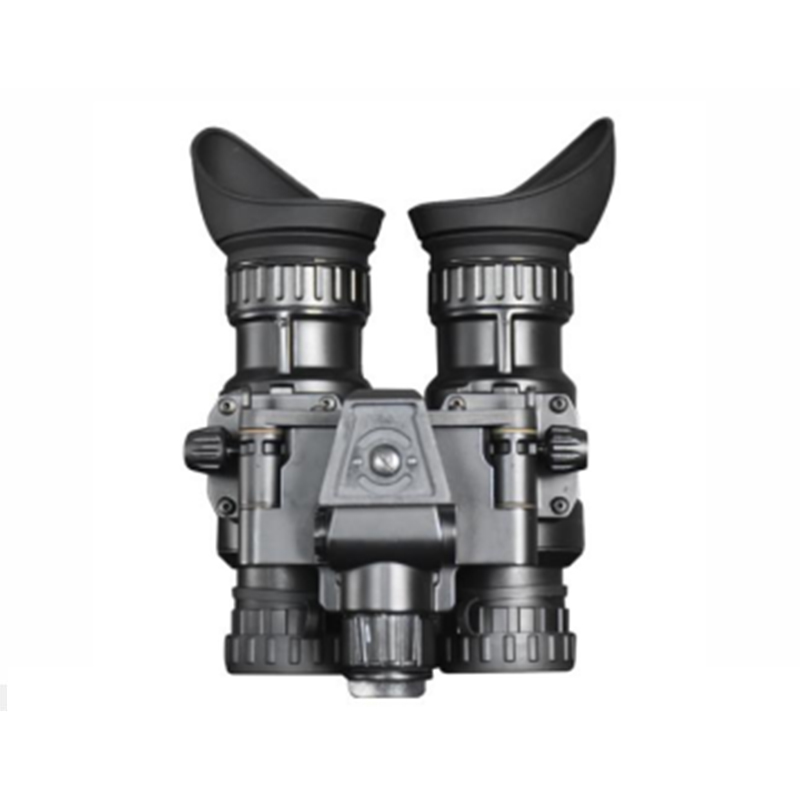
Underwater Night Vision Goggle utilizes a high-performance third-generation image intensifier and is an electro-optical device specifically designed for observation and search in low-light or no-light underwater environments. It can effectively penetrate dark environments and accurately capture underwater details. Its main applications include underwater rescue in fire and emergency situations, underwater reconnaissance by armed police forces, underwater facility inspection for power companies, forest fire water source exploration, underwater evidence searching for police and public security, and underwater ecological monitoring for forestry and environmental protection.
The underwater infrared night vision detector, also commonly referred to as Underwater Night Vision Goggle, has the core function of solving the observation challenges in underwater environments with insufficient visible light. This device does not rely on traditional thermal infrared imaging, but instead integrates a high-performance third-generation image intensifier as its core component. This allows for a significant amplification of reflected light under weak starlight, moonlight, or specific auxiliary light sources, thus converting dimly lit underwater scenes that are invisible to the human eye into clear and visible images.
Its working process can be summarized as a photon-electron-photon conversion and amplification. The weak light reflected from the target enters the device through the objective lens and reaches the photocathode of the image intensifier. The photocathode converts these photons into electrons, which are then accelerated and multiplied under the high-voltage electric field inside the image intensifier, resulting in an exponential increase in their number. The multiplied electron cloud then bombards the fluorescent screen, converting back into visible light, forming a bright and clear image for the user to observe. The third-generation image intensifier features a gallium arsenide photocathode and a microchannel plate, offering significantly better sensitivity, resolution, and signal-to-noise ratio than earlier models, providing clearer images and longer observation distances.
The key technological capability of this device lies in its ability to "penetrate darkness." In nighttime, turbid water, or underwater areas where light is obscured (such as under bridge piers, inside caves, or within sunken ships), conventional cameras and lighting methods are ineffective. Underwater Night Vision Goggle, through image intensification technology, can operate under extremely low light conditions, effectively extending the spatiotemporal range of underwater operations and accurately capturing key details such as terrain structures, obstacles, and target objects.
In specific application scenarios, this device plays an irreplaceable role. In the field of fire and emergency response, rescue personnel can use this device for underwater search and rescue in nighttime or deep water areas, quickly locating drowning victims or missing persons. Armed police and public security departments use it for underwater security, border anti-smuggling operations, evidence recovery, and counter-terrorism reconnaissance tasks, performing covert underwater surveillance. In the power industry, maintenance personnel can conduct clear inspections of underwater cables, pipelines, dam structures, and power plant water intakes, promptly detecting damage or abnormal attachments.
Furthermore, in forest fire prevention, this device can be used for rapid surveying of water sources, reservoirs, and lakes to assess water intake conditions. In the field of forestry and environmental protection, research and monitoring personnel can conduct covert observation and recording of underwater ecosystems and animal and plant activity at night or during times that do not disturb aquatic life, providing visual evidence for ecological research and water body protection.
When using Underwater Night Vision Goggle, it's important to note that it is typically designed with waterproof sealing, but has a rated maximum operating depth, which should not be exceeded during operation. Its observation effectiveness may be affected in extremely turbid water or in the presence of strong light pollution. Choosing the appropriate model, using suitable auxiliary lighting, and following operating procedures are essential for ensuring stable and effective operation in various complex underwater environments. This device has become an important piece of technical equipment for performing critical tasks in dark underwater environments across numerous professional fields.
The Portable Weather Station and the Vehicle-Mount Weather Station are significantly different in multiple aspects and are different products that meet the needs of meteorological monitoring in various scenarios.The Portable Weather Station focuses on flexibility and portability. It is applicable to...
The compact weather station is a dedicated device focused on meteorological data collection. Characterized by easy installation, simple operation, high measurement accuracy, and integration of multiple meteorological elements, it is highly favored by meteorological researchers and has become their p...
In ecologically beautiful areas, such as forests, mountain streams, rivers, lakes, seas, and around waterfalls, people often feel that the air is particularly fresh. This is mainly due to the relatively high content of negative oxygen ions in the air in these places. Negative oxygen ions are oxygen...
The atmospheric electric field mill is a lightning monitoring device based on the "field mill" principle. By measuring the intensity and fluctuations of the atmospheric electric field at ground level, it infers the charge state of thunderstorm clouds and issues lightning warnings 5 t...


 Skype
Skype
 whatsapp
 mail
mail