Shandong Fengtu IOT Technology Co., Ltd
Sales Manager:Ms. Emily Wang
Cel,Whatsapp,Wechat:+86 15898932201
Email:info@fengtutec.com
Add:No. 155 Optoelectronic Industry Accelerator, Gaoxin District, Weifang, Shandong, China


Sales Manager:Ms. Emily Wang
Cel,Whatsapp,Wechat:+86 15898932201
Email:info@fengtutec.com
Add:No. 155 Optoelectronic Industry Accelerator, Gaoxin District, Weifang, Shandong, China
time:2026-03-24 11:11:58 source:Weather Station viewed:263 time
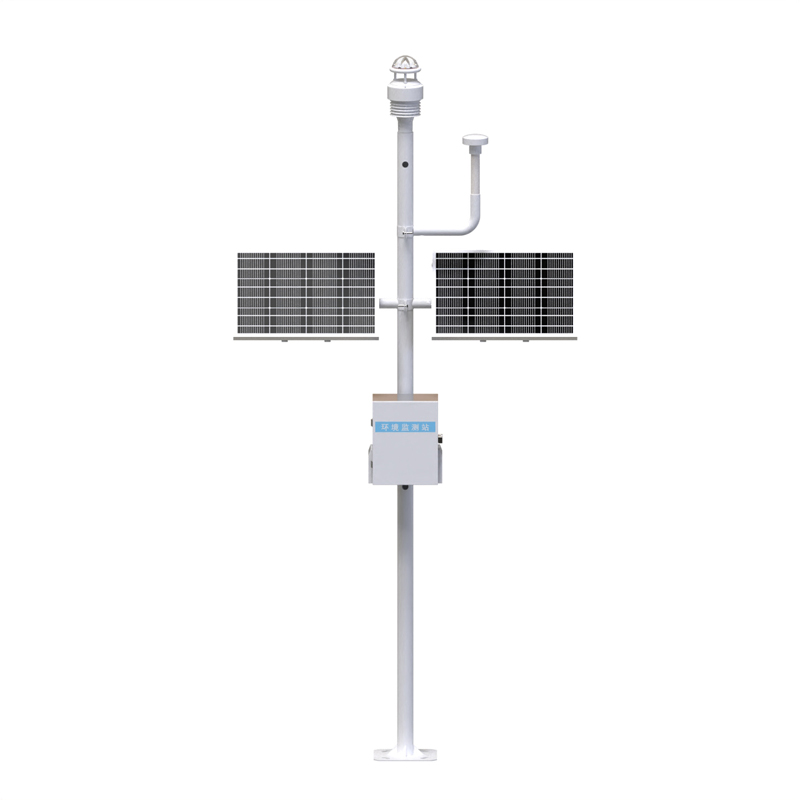
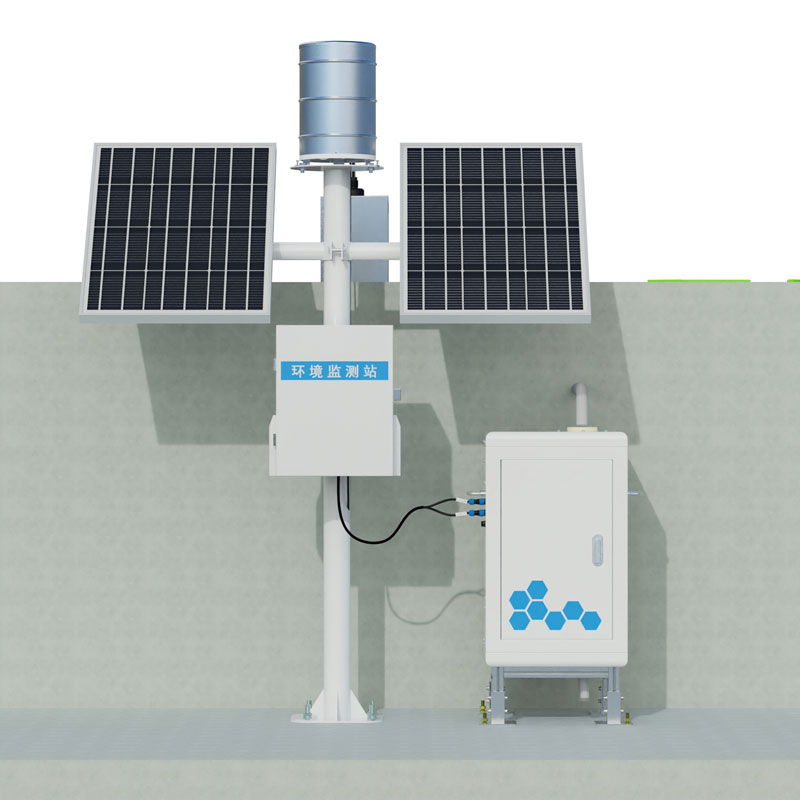
Ecological Environment Monitoring Station integrates BeiDou-3 regional short message communication technology with meteorological and environmental monitoring technology. This enables real-time observation of various meteorological parameters—including ultrasonic wind speed and direction, temperature, humidity, atmospheric pressure, optical rainfall, total radiation, and negative oxygen ions—thereby resolving the critical issue of environmental monitoring data transmission in areas with weak or non-existent signal coverage.
Ecological Environment Monitoring Station is an automated meteorological monitoring device; its core technology lies in the seamless integration of meteorological data acquisition with the BeiDou-3 regional short message communication capability. The device comprises an ultrasonic wind speed and direction sensor, temperature and humidity sensor, atmospheric pressure sensor, optical rain gauge, total radiation sensor, negative oxygen ion sensor, as well as a data collector and a BeiDou short message communication terminal. After the various sensors acquire meteorological data in real time, the data collector encodes and transmits this information to the BeiDou terminal. The terminal then relays the data back to a central platform using the BeiDou satellite network's short message function, operating entirely independently of terrestrial mobile communication networks.
Ecological Environment Monitoring Station is primarily deployed in areas where mobile communication signal coverage is weak or completely absent—including remote mountainous regions, forested areas, nature reserves, uninhabited plateau zones, and border regions. In such areas, conventional meteorological monitoring equipment struggles to achieve remote, real-time observation because it is unable to transmit data via 4G or standard wireless networks. Ecological Environment Monitoring Station resolves this critical bottleneck through the use of BeiDou short message communication. The BeiDou-3 regional short message service supports the transmission of relatively large data volumes in a single instance—sufficient to carry observation data for multiple meteorological parameters—and offers a stable transmission process that remains unaffected by terrain obstructions or the absence of terrestrial communication infrastructure.
Regarding meteorological parameter observation, Ecological Environment Monitoring Station employs ultrasonic technology to measure wind speed and direction; featuring no mechanical moving parts, it requires minimal maintenance and is ideally suited for long-term, unattended operation. The optical rain gauge detects rainfall intensity using infrared or laser principles, offering distinct advantages over traditional tipping-bucket rain gauges in terms of low power consumption and response speed. The total radiation sensor is utilized to monitor solar radiation intensity, while the negative oxygen ion sensor is specifically designed for applications involving the assessment of ecological environmental quality. All sensors feature a low-power design; when paired with a solar power system, they enable continuous, year-round operation without the need for an external power grid connection.
Ecological Environment Monitoring Station Data collected by the system is transmitted back via Beidou short-message services, after which it is parsed, stored, and visualized on a central platform. Users can access the platform to view real-time meteorological data and historical trends for each monitoring station, as well as configure threshold-based alerts. The deployment of this device fills a critical gap in meteorological monitoring within signal-deprived areas, providing essential data support for tasks such as ecological and environmental monitoring, disaster early warning, and scientific research.
The lightning location instrument is a fully digital electric field detection and lightning warning platform. Utilizing MEMS technology and optimized warning algorithms, it reduces false alarms in windy, rainy, and dusty environments. It can be deployed in a network and is suitable for short-t...
Based on edge computing, this device achieves targeted pest trapping, classifies and statistically analyzes different pest data, and identifies peak occurrence patterns. It supports target photography and remote image transmission, and is widely used in orchards, forest farms, and field fields...
In conventional understanding, atmospheric visibility is influenced by subjective factors, but it is essentially an objective phenomenon. In meteorology, this phenomenon is defined by optical path length: specifically, it refers to the distance a parallel light beam (emitted by an incandescent lamp...
Agricultural Weather Stations are an important part of the construction of the demonstration base for smart agricultural meteorological services. The multi - element Agricultural Weather Stations standing in the fields can collect data on atmospheric temperature and humidity, soil moisture, and crop...


 Skype
Skype
 whatsapp
 mail
mail