Shandong Fengtu IOT Technology Co., Ltd
Sales Manager:Ms. Emily Wang
Cel,Whatsapp,Wechat:+86 15898932201
Email:info@fengtutec.com
Add:No. 155 Optoelectronic Industry Accelerator, Gaoxin District, Weifang, Shandong, China


Sales Manager:Ms. Emily Wang
Cel,Whatsapp,Wechat:+86 15898932201
Email:info@fengtutec.com
Add:No. 155 Optoelectronic Industry Accelerator, Gaoxin District, Weifang, Shandong, China
time:2026-09-18 10:13:06 source:Weather Station viewed:1 time
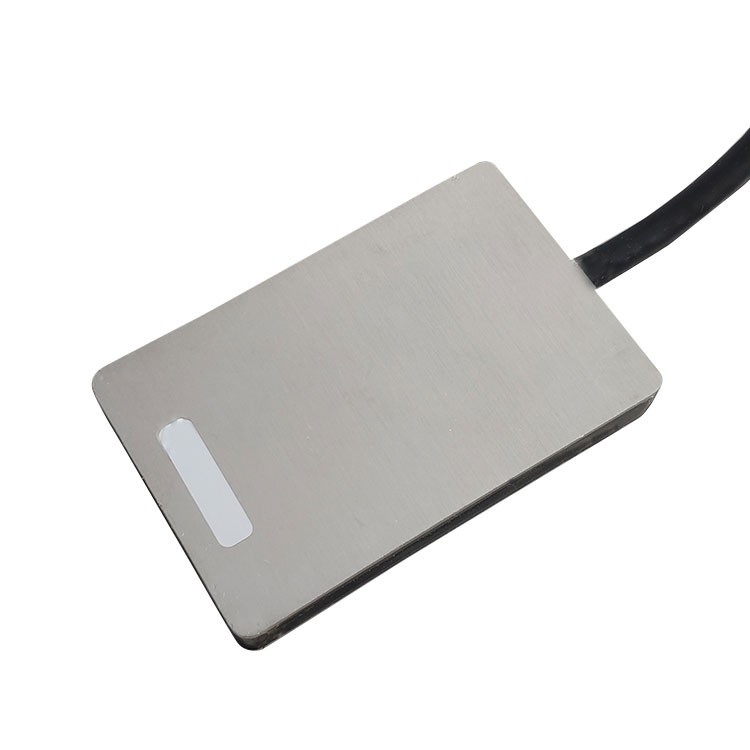
The Soil sensor is a professional monitoring device based on the thermopile principle, designed for in-situ soil heat flux measurement. It supports diverse application scenarios and delivers precise data output. Characterized by low power consumption, high accuracy, and ease of operation, it is widely used for thermal conductivity testing in agriculture, forestry, environmental science, and construction.
As a specialized instrument for measuring soil heat flux, the Soil sensor utilizes the thermopile principle for data acquisition. It converts monitored heat flux into a voltage signal output that is directly proportional to the soil heat flux; personnel can accurately calculate specific heat flux values using a standard formula, ensuring the accuracy and validity of the monitoring results. The device supports in-situ buried measurement—typically installed at a depth of 2 cm below the soil surface—allowing it to capture data that reflects actual soil conditions, avoid the numerical deviations associated with sampling-based testing, and facilitate long-term, routine monitoring.
During actual monitoring, the Soil sensor precisely captures the seasonal dynamics of soil heat flux. In natural environments, soil heat exchange follows stable seasonal patterns: in summer, higher temperatures drive atmospheric heat into the soil, resulting in a positive and relatively high heat flux value; in winter, lower temperatures cause heat to release from the soil into the atmosphere, resulting in a negative and relatively low heat flux value. The device comprehensively records these year-round dynamic changes, providing robust data support for soil environment research. Beyond soil monitoring, the device is also capable of measuring the thermal conductivity of building walls and glass facades, demonstrating exceptional versatility across applications.
The Soil sensor boasts comprehensive technical specifications and practical performance: it offers a measurement range of -200 to 200 W/m², an internal resistance of less than 300 Ω, and a measurement accuracy error controlled within 5%. It supports power supply modes of 12–24 V or 5 V and offers multiple signal output options—including 4–20 mA current, 0–2 V voltage, and customized RS485—to meet the data integration requirements of various monitoring systems. The device features an overall low-power design, drawing a startup current of only 26mA at a 12V operating voltage, which results in lower energy costs. Additionally, it is compact, easy to install and operate, and offers efficient power management and stable performance, remaining resilient against interference from soil conditions and environmental factors.
Thanks to these performance advantages, Soil sensor is now widely used in fields such as environmental monitoring, agriculture, forestry surveys, and structural testing. It serves as an indispensable monitoring tool for soil ecology research, building energy-efficiency assessment, and precision management in agriculture and forestry, providing stable, accurate, and continuous heat flux data for various scientific research projects and engineering inspections.
This lamp converts solar energy into electricity using a solar panel. At night, it powers an LED insect-attracting light source that releases specific wavelengths to attract phototactic pests. A fan generates negative pressure airflow, drawing the pests into a collection box where they are dri...
The lightning early warning and monitoring system utilizes MEMS technology to develop its core electric field detection structure, eliminating mechanical parts prone to wear and tear. By combining electric field differentiation with optimized threshold algorithms, the system effectively avoids...
Fengtu Technology has 4 water level monitoring stations, the models are: FT-SW1, FT-SW2, FT-SW3, FT-SW4. For details, please contact the customer service of this website.Fengtu Hydrological Monitoring Station adopts radar technology to measure hydrological data by non-contact method, with low power...
Meteorological changes have a crucial impact on numerous fields. In agricultural production, meteorological conditions are directly related to the growth and harvest of crops. Through meteorological monitoring, people can obtain weather information in advance, arrange agricultural activities reasona...


 Skype
Skype
 whatsapp
 mail
mail