Shandong Fengtu IOT Technology Co., Ltd
Sales Manager:Ms. Emily Wang
Cel,Whatsapp,Wechat:+86 15898932201
Email:info@fengtutec.com
Add:No. 155 Optoelectronic Industry Accelerator, Gaoxin District, Weifang, Shandong, China


Sales Manager:Ms. Emily Wang
Cel,Whatsapp,Wechat:+86 15898932201
Email:info@fengtutec.com
Add:No. 155 Optoelectronic Industry Accelerator, Gaoxin District, Weifang, Shandong, China
time:2026-05-07 10:24:50 source:Weather Station viewed:245 time
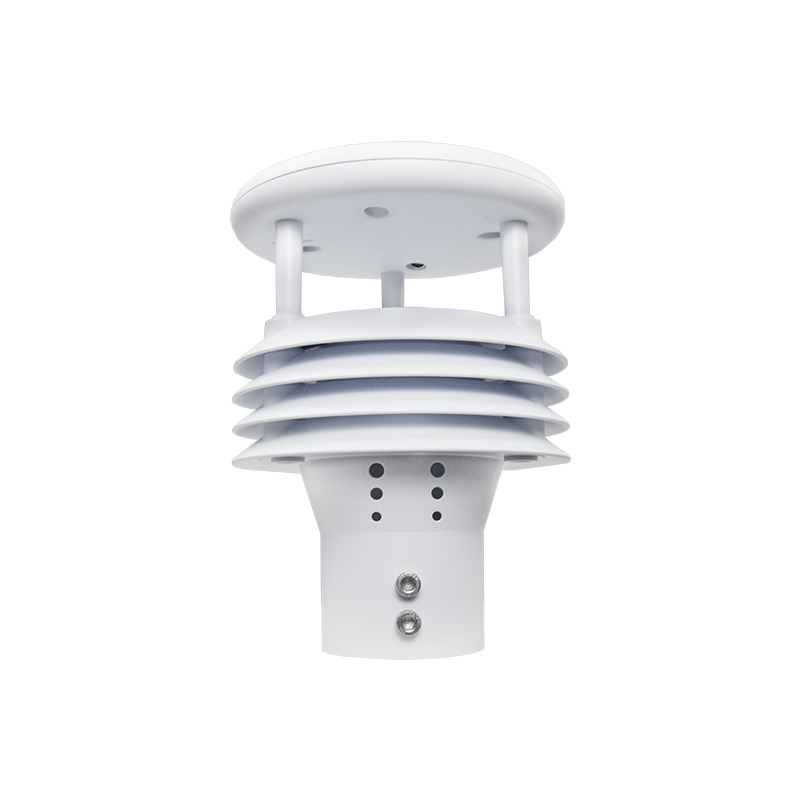
This integrated sensor unit for temperature, humidity, wind speed, wind direction, and air pressure utilizes ultrasonic probes to measure wind speed and direction, complemented by a diode junction voltage method for temperature measurement and capacitive elements for humidity sensing. All measurement results are centrally transmitted to external systems via a single digital interface. The unit is suitable for environments requiring real-time meteorological data—such as outdoor weather monitoring, airport environmental surveillance, and agricultural greenhouse control—and is capable of continuous 24-hour operation with excellent environmental adaptability.
The integrated sensor employs a unified "five-element" sensing solution, consolidating the monitoring functions for five fundamental meteorological parameters into a single structural assembly. Through a dedicated digital communication interface, the device simultaneously outputs data for temperature, humidity, wind speed, wind direction, and air pressure to the receiving end. The entire data acquisition and transmission process is fully automated, eliminating the need for manual, item-by-item data collection. Across various application scenarios, this integrated design reduces the volume of field cabling and shortens equipment deployment times, all while maintaining comprehensive parameter coverage.
Wind speed and direction measurements are acquired using an ultrasonic probe system. An array of ultrasonic transducers is discreetly embedded within the device's top cover; during operation, these probes emit continuous, variable-frequency ultrasonic waves. By calculating the time-of-flight differences as airflow passes between the various probes, the device accurately derives wind speed and direction readings. This method eliminates the need for mechanical rotating parts—unlike traditional wind cups or wind vanes—thereby requiring no additional mechanical maintenance or calibration during its service life. Furthermore, the absence of moving parts ensures that the device remains fully functional even in rainy or snowy conditions, without the risk of failure due to component icing. The wind speed measurement range spans from 0 to 60 meters per second, while wind direction coverage extends from 0 to 360 degrees, effectively meeting the requirements of routine meteorological observation.
Air temperature is measured using the diode junction voltage method. The core temperature sensor element is housed within a protective chamber equipped with a radiation shield; this design effectively blocks direct solar radiation while allowing ambient air to flow freely through the chamber. The temperature measurement range covers temperatures from -40°C to +80°C. Air humidity is measured using a capacitive sensing element, which generates an electrical signal output based on how changes in ambient humidity affect the dielectric constant of the sensing material. The humidity measurement range covers 0% to 100% Relative Humidity (RH). Barometric pressure measurement is performed using a piezoresistive sensing structure, covering a measurement range of 300 to 1100 hPa. These three parameters are ultimately consolidated with wind speed and wind direction data within a single processing unit. The data is then transmitted externally via standard communication protocols—such as RS485 and Modbus—allowing host computers or data loggers to utilize the information directly upon reception. The device's communication interface supports simultaneous connectivity to local computers, PLC control systems, or cloud-based monitoring platforms, enabling users to configure data flow paths according to their specific requirements.
This integrated unit for temperature, humidity, wind speed, wind direction, and barometric pressure detection is capable of providing continuous, 24-hour online monitoring. Structurally, the unit's housing is constructed from either ASA engineering plastics or imported ABS materials. The housing surface undergoes specialized anti-UV and anti-corrosion treatments, ensuring that the device remains free from significant discoloration or material degradation—even during prolonged exposure to direct sunlight or salt-mist environments. The device boasts an overall protection rating of IP65 or higher; once its mounting bracket is secured at an outdoor site, there is no need to construct an additional protective enclosure. Routine maintenance simply involves periodically clearing any obstructions from the sensor probes to ensure measurement accuracy. In terms of power consumption, the integrated unit operates at less than 1 watt. Powered by a 12V DC supply, it can be paired with solar panels and storage batteries to establish an off-grid power system, making it ideally suited for remote monitoring sites where access to mains electricity is unavailable.
In practical applications, this integrated unit serves as an effective replacement for traditional meteorological sensor arrays. Conventional weather stations typically require the separate outdoor installation of an anemometer, wind vane, radiation shield (louvered box), and barometer. Since each component requires independent wiring, such setups occupy a significant amount of installation space, and each individual component must be calibrated and replaced separately. By consolidating these functions into a single device, the integrated unit reduces the overall physical footprint to one-third—or even less—than that of a traditional weather station. During installation, a single mounting pole is sufficient to deploy the entire suite of meteorological sensors, demonstrating a significant structural advantage compared to traditional setups involving facilities such as fiberglass radiation shields. In terms of application scenarios, agricultural meteorology observations and the development of crop growth models rely on these five fundamental data points; large-scale logistics ports and airport runways demand real-time data regarding wind direction and speed; and air quality assessments in scenic areas require comprehensive records of temperature, humidity, and barometric pressure. The sampling frequency and data upload interval of this integrated unit can be flexibly adjusted as needed, allowing for freely configurable sampling intervals ranging from once per minute to once per hour. Administrators can remotely retrieve historical data records via a cloud platform or mobile device, generating parameter variation curves—segmented by day, month, or season—for the purposes of data comparison and long-term trend analysis.
For organizations or departments planning to establish new meteorological monitoring sites, selecting a highly integrated "five-element" all-in-one unit offers an effective means of reducing system complexity. The three core components—sensors, data collector, and communication module—are fully calibrated and configured at the factory; upon receiving the device, users simply need to mount the unit onto an outdoor bracket and connect the power supply, at which point the system automatically begins collecting data and transmitting any five selected parameters via the communication interfaces assigned to the respective sensors. Once the data server receives the RS485 data stream, it can either store the data directly in a meteorological database or integrate it into an existing automated control system. Characterized by a compact design, ease of deployment, and high reliability, this type of integrated unit provides long-term, stable technical support in various operational scenarios—such as environmental monitoring, industrial production, and scientific research and education—where the consistent acquisition of five-element meteorological data is essential.
Micro-meteorology refers to the atmospheric conditions within small-scale areas near the earth's surface. Key monitoring parameters include wind speed, wind direction, air temperature, humidity, atmospheric pressure, and optionally, rainfall. These parameters exhibit significant gradient variati...
The high-altitude monitoring lamp is specifically designed for tracking high-altitude migratory pests, such as the Fall Armyworm (*Spodoptera frugiperda*). By leveraging the pests' phototactic behavior—their natural attraction to light—the device lures migratory insects flying at altitud...
The FT-BN20 Portable Visibility Detector is a precision instrument designed using the forward scattering principle, which automatically calculates current visibility values by measuring the total air extinction coefficient. With a maximum range of 20 kilometers, this device meets the precise visibil...
When we visit some parks and scenic areas, we often see an electronic screen on which real-time meteorological data, as well as negative oxygen ion and PM content, etc. are displayed. This is the Negative oxygen ion monitoring system.The Negative oxygen ion monitoring system can not only monitor the...


 Skype
Skype
 whatsapp
 mail
mail