Shandong Fengtu IOT Technology Co., Ltd
Sales Manager:Ms. Emily Wang
Cel,Whatsapp,Wechat:+86 15898932201
Email:info@fengtutec.com
Add:No. 155 Optoelectronic Industry Accelerator, Gaoxin District, Weifang, Shandong, China


Sales Manager:Ms. Emily Wang
Cel,Whatsapp,Wechat:+86 15898932201
Email:info@fengtutec.com
Add:No. 155 Optoelectronic Industry Accelerator, Gaoxin District, Weifang, Shandong, China
time:2026-04-29 10:21:47 source:Weather Station viewed:258 time
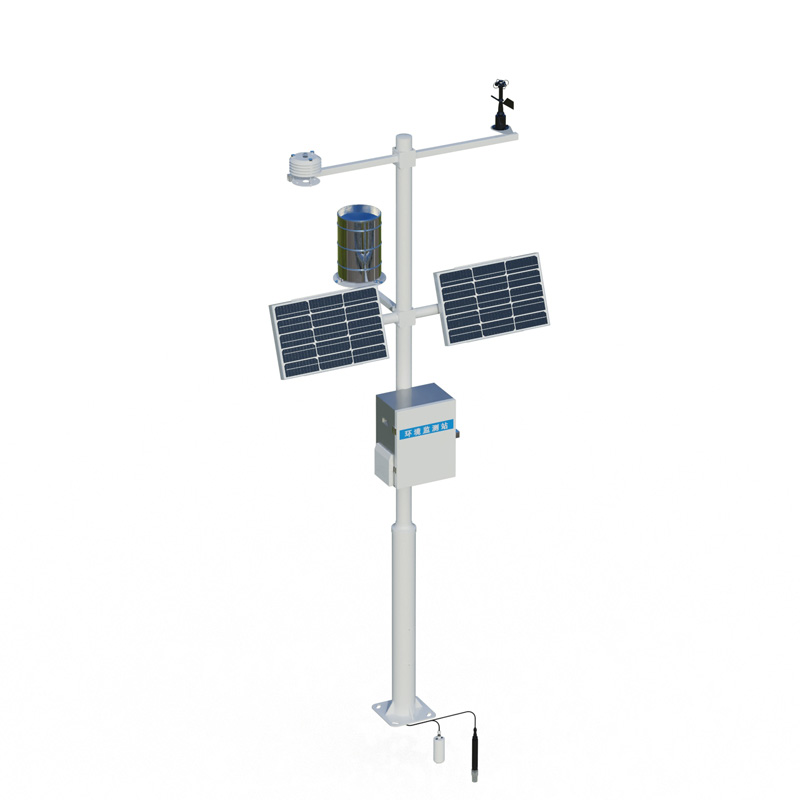
The 12-Parameter Agricultural Weather Station is a highly integrated, low-power, and rapidly deployable high-precision observation device. Comprising five key components—sensors, a data collector, a solar power system, a pole mount, and a cloud platform—it provides integrated monitoring of various parameters, including air temperature and humidity, light intensity, carbon dioxide levels, atmospheric pressure, rainfall, soil temperature and humidity, wind speed, and wind direction.
Specifically designed for agricultural environmental monitoring, this high-precision weather station integrates meteorological sensors, a data collector, a solar power system, a pole mount, and a cloud platform to enable integrated, real-time monitoring of both field meteorological conditions and soil parameters. The monitored parameters encompass twelve critical variables closely linked to crop growth, such as air temperature, air humidity, light intensity, CO2 concentration, atmospheric pressure, rainfall, soil temperature, soil humidity, wind speed, and wind direction. Featuring a low-power design with a static power consumption of less than 1mA, and coupled with a solar power system utilizing MPPT (Maximum Power Point Tracking) charge management technology, the device is capable of long-term, unattended operation in remote field environments lacking access to mains electricity. The pole mount features a 3-meter carbon steel structure with a two-section threaded assembly; installation requires no specialized construction crew and can be easily completed by a single individual.
Regarding data acquisition and transmission, the 12-Parameter Agricultural Weather Station comes standard with GPRS connectivity and supports optional extensions for Bluetooth and wired transmission methods, enabling the rapid upload of real-time monitoring data to the cloud platform. Users can access the cloud platform via mobile devices or computers to view real-time data, historical data trends, and dashboard visualizations. The system supports data export in tabular format as well as SMS alert functionality: should any meteorological parameter exceed a pre-set threshold, the system will automatically dispatch an alert via SMS to a designated mobile phone number. In practical agricultural applications, the system leverages real-time monitoring data to issue early warnings for adverse weather events—such as heavy rainfall, drought, or frost—and, by integrating with crop growth models, provides tailored recommendations regarding irrigation volumes, optimal fertilization timing, and pest and disease control strategies. When anomalies in temperature and humidity data are detected, the weather station can forecast periods of high pest and disease prevalence, guiding farmers to implement preventive and control measures in advance. During periods of high wind, the system recommends avoiding pesticide application to minimize drift contamination and enhance pesticide utilization efficiency. Regarding soil moisture monitoring, the equipment simultaneously tracks parameters such as soil temperature, humidity, electrical conductivity, and pH levels, enabling farmers to gain insights into soil moisture and nutrient conditions. This facilitates scientific irrigation and rational fertilization, thereby boosting crop yields and quality, and driving the agricultural sector toward a more efficient and eco-friendly trajectory.
Intelligent transportation utilizes new-generation information technologies such as the Internet of Things and cloud computing, along with theoretical tools like transportation science and artificial intelligence, aiming to achieve comprehensive perception and scientific decision-making. By building...
In meteorological observation work, visibility is a key element. It intuitively reflects the transparency of the atmosphere and is related to many fields such as traffic travel, aviation and shipping safety. Briefly speaking, visibility refers to the maximum distance at which a person with normal vi...
Agricultural meteorological stations is a device used for real-time monitoring of meteorological parameters in the farmland environment, including air temperature, humidity, soil moisture, soil temperature, wind speed, wind direction, rainfall, and light intensity. It features data acquisition, wireless transmission, automatic storage, threshold alarming, and data analysis functions, supporting agricultural management, pest and disease forecasting, and scientific research and teaching....
Agricultural Weather Station is a highly integrated, low-power, and rapidly deployable high-precision meteorological observation device designed specifically for farmland monitoring scenarios. Compliant with the requirements for high-standard farmland construction, the device comes bundled wit...


 Skype
Skype
 whatsapp
 mail
mail