Shandong Fengtu IOT Technology Co., Ltd
Sales Manager:Ms. Emily Wang
Cel,Whatsapp,Wechat:+86 15898932201
Email:info@fengtutec.com
Add:No. 155 Optoelectronic Industry Accelerator, Gaoxin District, Weifang, Shandong, China


Sales Manager:Ms. Emily Wang
Cel,Whatsapp,Wechat:+86 15898932201
Email:info@fengtutec.com
Add:No. 155 Optoelectronic Industry Accelerator, Gaoxin District, Weifang, Shandong, China
time:2025-06-09 09:54:01 source:Weather Station viewed:487 time
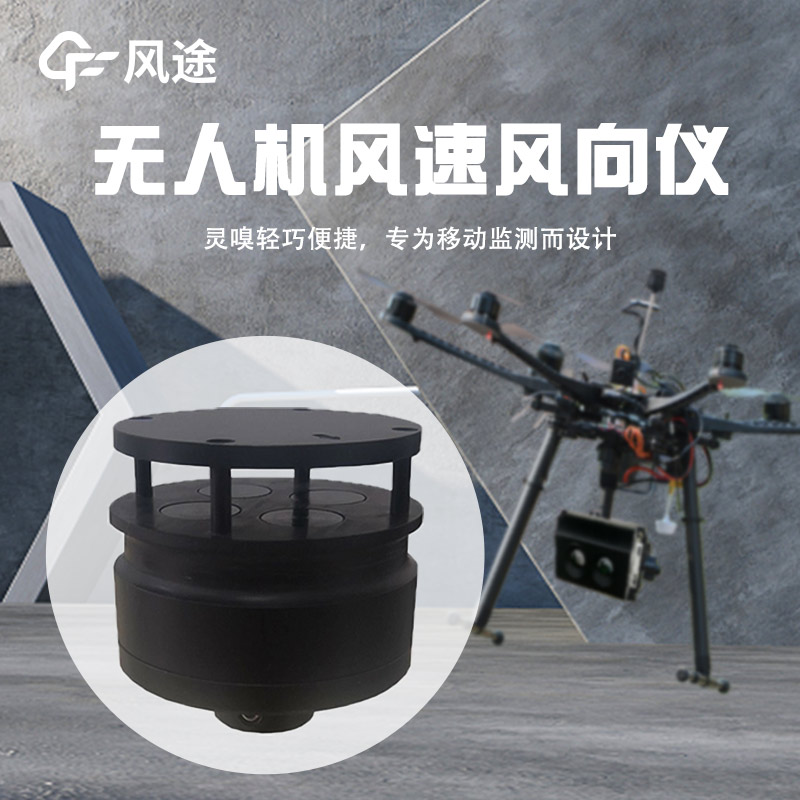
In the field of meteorological monitoring, the emergence of Drone-Based Weather Stations has undoubtedly achieved an organic integration of drone technology and meteorological monitoring technology, enabling precise and efficient meteorological data collection. The FT-F3 Drone-Based Weather Station is a typical example, demonstrating the "divine collaboration" between drones and meteorological monitors.
Drones offer the advantages of flexibility and mobility, capable of quickly reaching designated areas. They can easily traverse complex terrains without being restricted by ground transportation conditions. In meteorological monitoring missions, drones can arrive at target monitoring points in a short time, reducing the difficulties and risks of manual deployment to monitoring sites. Meteorological monitors, on the other hand, are key devices for accurately measuring various meteorological elements. The FT-F3 Drone-Based Weather Station is equipped with integrated meteorological sensors that can real-time monitor critical meteorological parameters such as atmospheric temperature, humidity, air pressure, wind speed, and wind direction.
When a drone carries the FT-F3 meteorological monitor, their "collaboration" begins to take effect. In meteorological scientific research, to obtain meteorological data at different altitudes and regions, drones can carry the monitor for all-around monitoring according to preset flight routes and altitudes. The monitor can real-time transmit data back to the ground control center, allowing researchers to promptly analyze this data for studying complex meteorological phenomena such as atmospheric circulation and climate change, providing rich data support for optimizing meteorological forecasting models.
In agricultural production, this "divine collaboration" also plays a significant role. Drone-Based Weather Stations can shuttle above farmland to real-time monitor farmland microclimates, helping farmers understand in-field temperature, humidity, and other information, thereby enabling more scientific planning of agricultural activities such as irrigation and fertilization to improve crop yield and quality.
In summary, the integration of drones and meteorological monitors—particularly the application of Drone-Based Weather Stations like the FT-F3—has significantly enhanced the efficiency and accuracy of meteorological monitoring, providing strong technical support for multiple fields such as meteorological research and agricultural production. Their role will become increasingly prominent as technology continues to advance.
The FT-BN20 Portable Visibility Sensor launched by Fengtu Technology is a device specifically designed for fields that require rapid acquisition of atmospheric visibility data in field and complex environments. It integrates portability, high precision, and ruggedness into one compact unit.In...
By integrating Beidou-3 short message communication technology with meteorological sensors, Beidou weather stations enable 24-hour unattended monitoring. Data is transmitted back in real-time via satellite links, effectively resolving the challenges of meteorological data collection and transm...
The Fengtu Small Automatic Weather Station simultaneously conducts real-time monitoring of six core meteorological parameters: wind speed, wind direction, temperature, humidity, air pressure, and optical rainfall. The wind speed and direction sensors have a range of 0 to 60 m/s, with an accuracy of...
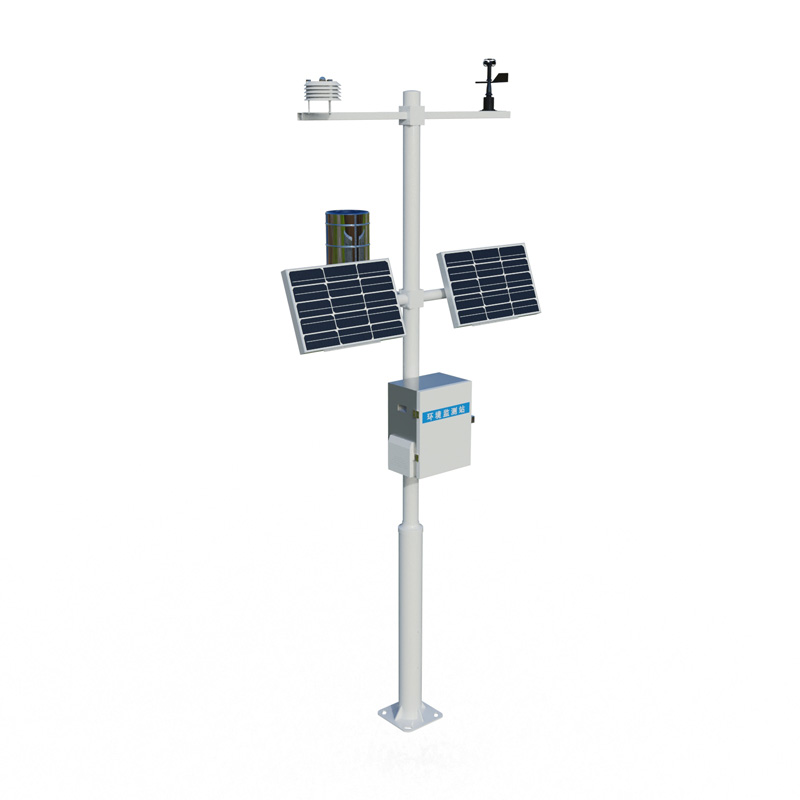
Agricultural Environment Monitoring System is a field environmental monitoring equipment composed of five parts: meteorological sensors, data collector, solar power supply system, pole support, and cloud platform. This system features easy installation and rapid deployment, automatically collecting and remotely transmitting environmental data such as temperature and humidity. It is widely used in agriculture, forestry, and scientific research....


 Skype
Skype
 whatsapp
 mail
mail