Shandong Fengtu IOT Technology Co., Ltd
Sales Manager:Ms. Emily Wang
Cel,Whatsapp,Wechat:+86 15898932201
Email:info@fengtutec.com
Add:No. 155 Optoelectronic Industry Accelerator, Gaoxin District, Weifang, Shandong, China


Sales Manager:Ms. Emily Wang
Cel,Whatsapp,Wechat:+86 15898932201
Email:info@fengtutec.com
Add:No. 155 Optoelectronic Industry Accelerator, Gaoxin District, Weifang, Shandong, China
time:2025-01-09 09:36:14 source:Weather Station viewed:665 time
Under the conditions of sufficient water vapor, gentle breezes, and a relatively stable atmosphere, once the air close to the ground cools down to a certain degree, the water vapor in it will condense into extremely tiny water droplets. These small droplets will then suspend in the air one after another, which will significantly reduce the horizontal visibility on the ground. In this way, the weather phenomenon known as fog is formed.
According to different visibilities, fog can be divided into five grades: When the visibility is in the range of 1 - 10 kilometers, it is defined as light fog; when the visibility is in the range of 500 meters to 1 kilometer, it is called fog; if the visibility is between 200 meters and 500 meters, it is heavy fog; when the visibility is in the range of 200 meters to 50 meters, it belongs to the category of thick fog; and when the visibility is below 50 meters, it is extremely dangerous dense fog.
Fog seriously hinders the normal takeoff and landing of flights. Specifically, when the visibility at the airport drops below 350 meters, flights will be prohibited from taking off; if the visibility is lower than 500 meters, flights will not be able to land smoothly. What's more serious is that once the visibility is less than 50 meters, flights can hardly even carry out the basic operation of taxiing on the airport ground. And if the handling measures are slightly improper, it is very easy to cause flight accidents. In fact, in the course of aviation development both at home and abroad, there have been real accident cases where airplanes collided with each other while taxiing at the airport under the cover of heavy fog, resulting in tragic consequences.
For example, in the Tenerife disaster in 1977, at Los Rodeos Airport on the island of Tenerife in the Canary Islands of Spain, there was thick fog at that time. KLM Flight 4805 and Pan Am Flight 1736 collided on the runway. Due to the extremely low visibility, the airport tower, the pilots of the two airplanes could not clearly see each other's movements. Coupled with the failure of the runway center lights and the absence of ground radar equipment, it finally led to one of the most tragic air disasters in the history of civil aviation, with a total of 583 deaths.
After these tragic airport accidents in foggy weather, all parties have actively learned lessons and made a lot of efforts to ensure safe flights. For example, strengthening meteorological monitoring and early warning, improving meteorological monitoring equipment, enhancing meteorological early warning capabilities, and adding more meteorological monitoring equipment in key areas, such as visibility meters, wind speed and direction meters, etc., to more accurately monitor the real-time changes of low-visibility weather such as foggy days. In addition, strengthening cooperation with meteorological departments, establishing a more efficient meteorological information sharing mechanism, timely obtaining early warning information about bad weather such as foggy days, and releasing early warnings to various departments of the airport, airlines, passengers, etc. through multiple channels to remind relevant personnel to make preventive preparations.
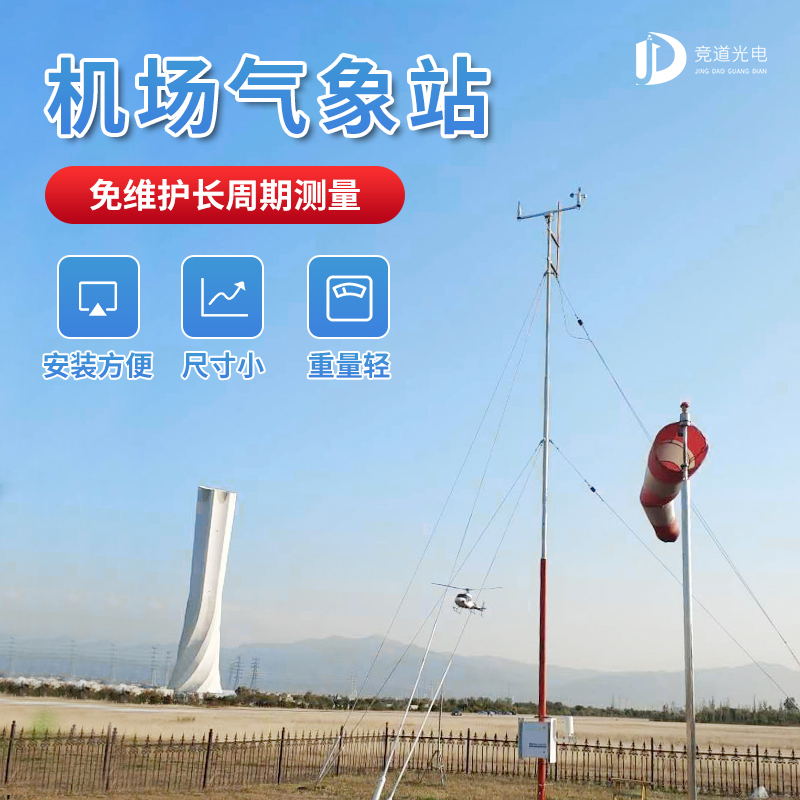
Airport weather station FT-JC1 is a complete solution designed specifically for aviation meteorological support at various airports.
This solution consists of an automated meteorological monitoring station, civil aviation meteorological ground observation application software, user terminals, and network communication. Each part works together to achieve the collection, processing, and transmission of meteorological data. It is suitable for various types of airports, including small, medium, large, and helicopter airports, and can meet the meteorological monitoring needs of airports of different scales.
It can continuously collect and process various types of meteorological data in real time, such as visibility, wind speed, wind direction, temperature, humidity, atmospheric pressure, and rainfall, and use various communication channels to process and distribute these data for use by various managers, providing accurate and objective bases for meteorological condition decisions.
When weather conditions such as heavy fog that affect visibility occur, it can quickly issue early warnings, allowing the airport to promptly activate emergency response plans.
Through network communication, meteorological data can be shared with various departments of the airport, such as the tower, the dispatching center, etc., realizing the collaborative application of meteorological information and improving the operational efficiency and safety of the airport.
The system adopts high-quality hardware equipment and mature software technology, has relatively high reliability and stability, and can operate stably for a long time in the harsh airport environment.
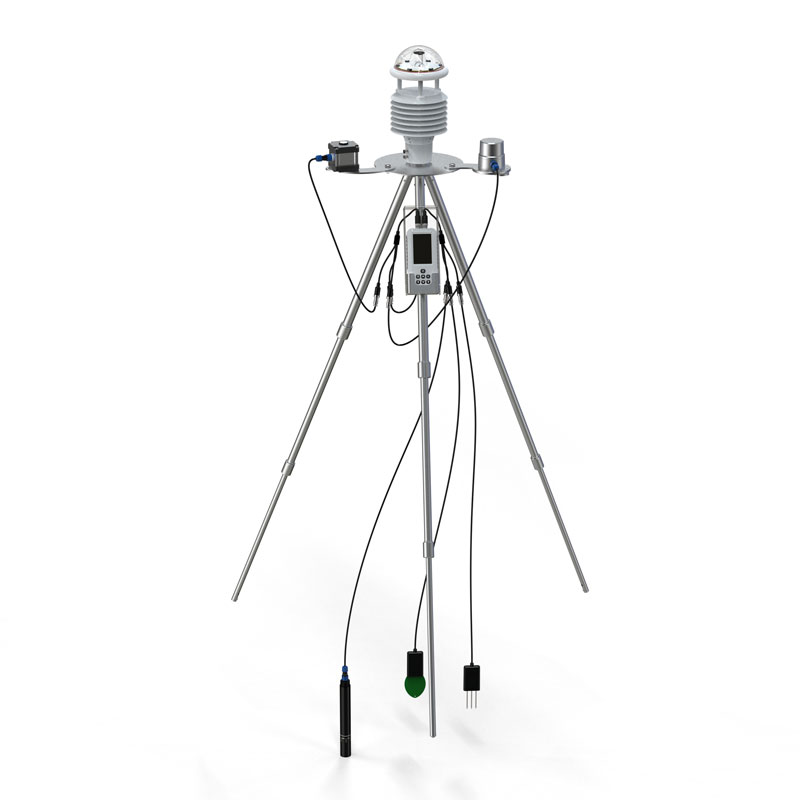
Plant Growth Monitoring is a pole-mounted online monitoring device that can simultaneously and in real-time detect key parameters such as water temperature, conductivity, pH, and dissolved oxygen. This device integrates multiple sensors, avoiding the need for dispersed deployment of single-parameter devices, significantly improving water quality monitoring efficiency and data correlation, and comprehensively assessing water environmental quality. It is suitable for monitoring drinking water, industrial, and irrigation water sources....
The fall armyworm, also known as the autumn armyworm, is an agricultural pest native to the tropical and subtropical regions of the Americas. The adult has a wingspan of 32 - 40 mm. The forewings are gray to dark brown, and the hindwings are white with a narrow brown band along the edge. The larvae...
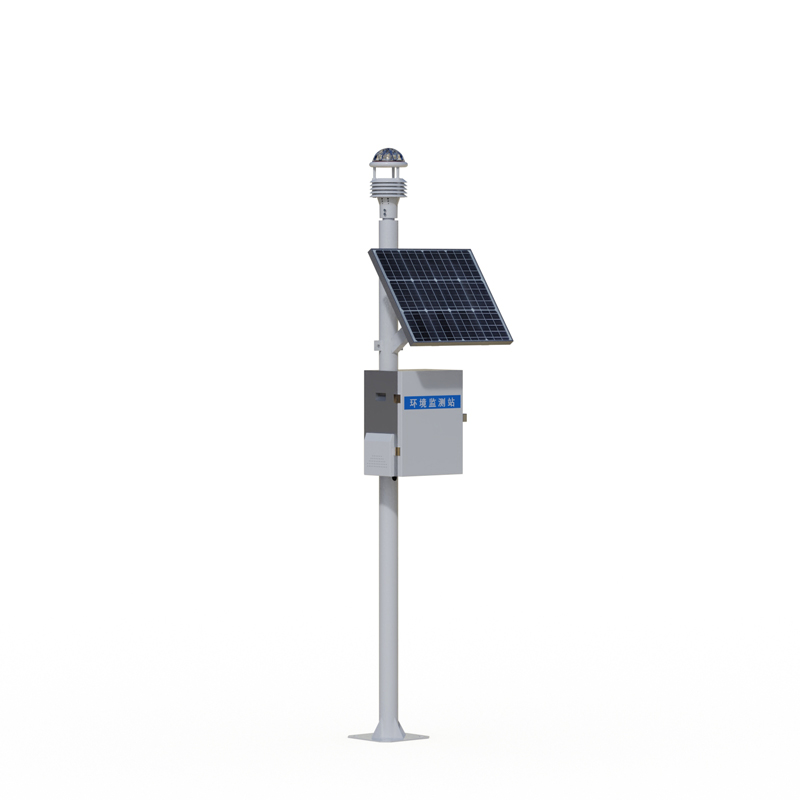
In the meteorological monitoring network, regional Weather Monitoring Equipment plays an irreplaceable role, and the word "regional" precisely represents its key characteristics and value.Regional Weather Monitoring Equipment has clear geographical limitations, which is quite different fro...
The environmental grid monitoring station manufacturer [Fengtu Technology], located in Weifang, Shandong Province, has been engaged in the research and development and sales of meteorological environmental monitoring equipment since its establishment in 2017, and has achieved fruitful results in the course of many years of development....


 Skype
Skype
 whatsapp
 mail
mail