Shandong Fengtu IOT Technology Co., Ltd
Sales Manager:Ms. Emily Wang
Cel,Whatsapp,Wechat:+86 15898932201
Email:info@fengtutec.com
Add:No. 155 Optoelectronic Industry Accelerator, Gaoxin District, Weifang, Shandong, China


Sales Manager:Ms. Emily Wang
Cel,Whatsapp,Wechat:+86 15898932201
Email:info@fengtutec.com
Add:No. 155 Optoelectronic Industry Accelerator, Gaoxin District, Weifang, Shandong, China
time:2025-09-02 09:42:31 source:Weather Station viewed:503 time
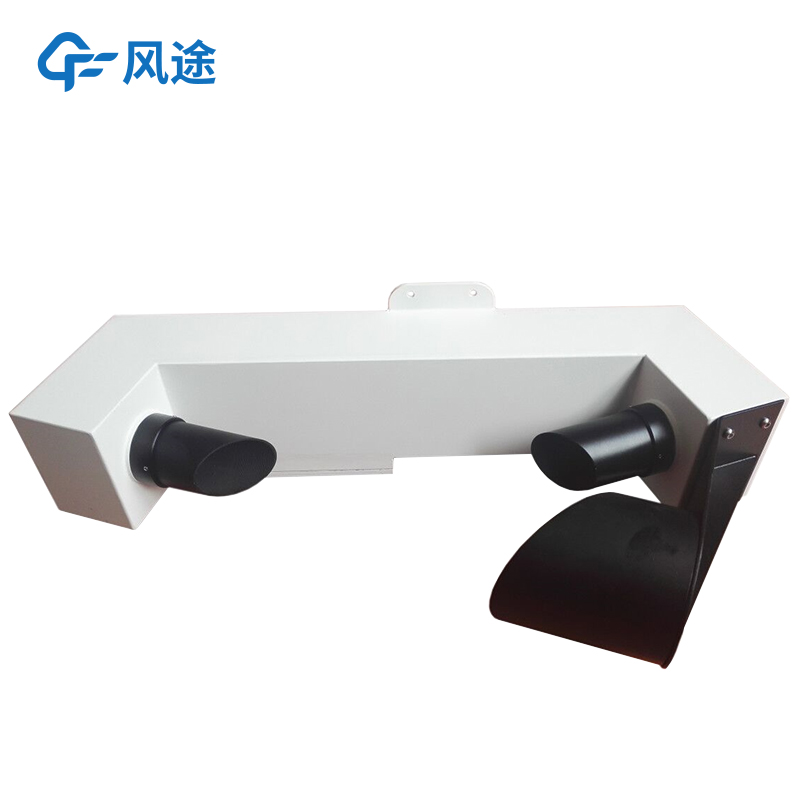
The Visibility Sensor is a specialized sensor device designed for automatic and continuous monitoring of atmospheric visibility, playing a vital role in fields such as meteorological observation and environmental monitoring. Its core working mechanism is based on the principle of forward scattering. The specific operation process is as follows: the device actively emits an infrared light beam of a specific wavelength; when the light beam passes through a preset sampling area, atmospheric particles (such as dust, water vapor condensates, and pollutant particles) present in the area will scatter the light beam; the device accurately measures the intensity of this scattering effect, then processes the data using professional algorithms, and finally calculates the current atmospheric visibility value. This provides accurate basic data support for observation work in relevant fields.
This visibility sensor adopts an integrated structural design. This design not only greatly simplifies the overall structure of the device but also brings significant practical advantages: it has a compact size, allowing flexible placement in installation environments with limited space; at the same time, the installation process is simple, requiring no complex assembly steps, which reduces labor and time costs during installation. In terms of performance, the device features stable and reliable operation. It can maintain a good working state even under the influence of different meteorological conditions and environmental factors, with extremely strong environmental adaptability. Whether in high-temperature, low-temperature, humid or dry environments, it can normally carry out visibility monitoring work.
In terms of material selection, the entire device is made of high-quality aluminum. The characteristics of this material enable the device to have excellent structural strength while achieving extremely small size and light weight. This makes it easy to carry and transport, further expanding the scope of its application scenarios. Based on the above characteristics, this Visibility Sensor can be widely used in special observation occasions that have strict restrictions on device size and weight and do not have high requirements for measurement range. Examples include radiosonde observation in the meteorological field, drop sonding observation for specific area monitoring, and vehicle-mounted mobile observation that requires flexible mobile monitoring. It provides reliable equipment support for atmospheric visibility monitoring in these scenarios.
In the field of agricultural production, the 14 - element Agricultural Meteorological Stations mainly consist of meteorological sensors, collectors, solar power supply systems, pole brackets, and cloud platforms. Meteorological sensors are responsible for sensing and measuring various meteorological...
As an important part of the modern transportation network, the internal environment of a tunnel is closely related to visibility. Tunnels are relatively enclosed, with insufficient natural light. Pollutants such as vehicle exhaust and dust are likely to accumulate, creating an environment with high...
In emergency response, meteorological conditions have a significant impact on rescue operations. Conducting emergency drills with a Portable Weather Station can make the drills more realistic and effectively improve the emergency response level. The entire process can be divided into three key stage...
In docks and harbors, a Water Level Monitoring System with water - level sensors plays a vital role. It is a solid shield for the safety of ships and personnel.During maritime activities, weather and water level are unpredictable, like beasts lurking in the dark, threatening the safety of ships and...


 Skype
Skype
 whatsapp
 mail
mail