Shandong Fengtu IOT Technology Co., Ltd
Sales Manager:Ms. Emily Wang
Cel,Whatsapp,Wechat:+86 15898932201
Email:info@fengtutec.com
Add:No. 155 Optoelectronic Industry Accelerator, Gaoxin District, Weifang, Shandong, China


Sales Manager:Ms. Emily Wang
Cel,Whatsapp,Wechat:+86 15898932201
Email:info@fengtutec.com
Add:No. 155 Optoelectronic Industry Accelerator, Gaoxin District, Weifang, Shandong, China
time:2025-05-06 09:05:05 source:Weather Station viewed:586 time
As an important part of the modern transportation network, the internal environment of a tunnel is closely related to visibility. Tunnels are relatively enclosed, with insufficient natural light. Pollutants such as vehicle exhaust and dust are likely to accumulate, creating an environment with high concentrations of smoke and dust, which leads to a decrease in visibility. When visibility is reduced, the driver's visual range is limited, making it difficult to detect vehicles, obstacles, and road signs ahead in a timely manner. This can easily lead to traffic accidents such as rear-end collisions and crashes, seriously threatening traffic safety and road traffic flow. Therefore, real-time monitoring of tunnel visibility is of great significance for ensuring traffic safety in tunnels.
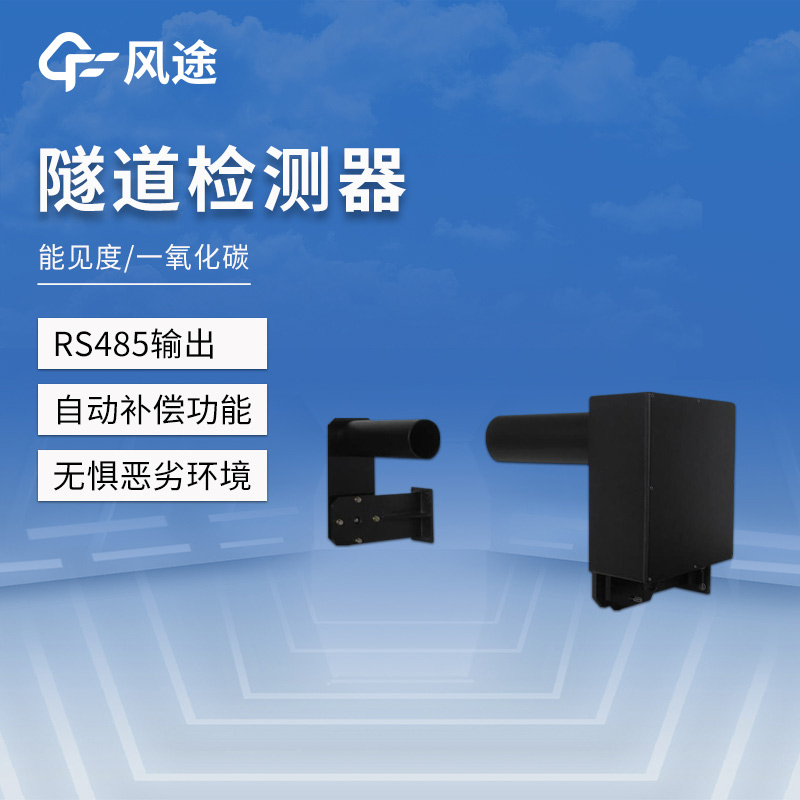
The Tunnel visibility detector is mainly used to monitor and evaluate the visibility conditions inside the tunnel to ensure the safety of vehicles and pedestrians when driving in the tunnel. Its working principle is mainly based on optical measurement, and the transmission method is one of the commonly used measurement methods. The transmitting end of the detector emits a beam of light with a specific wavelength, such as laser or infrared light, etc. The receiving end receives the light after it passes through the tunnel air, and calculates the visibility by measuring the degree of light attenuation. For example, the COVI tunnel visibility detector adopts the transmission principle, with a built-in light-emitting diode as the light source, and a photodiode is installed at the other end as the receiver. When there are occlusions such as smoke and dust in the tunnel, the light received by the receiver is weakened, and the visibility value can be calculated according to the degree of change in light intensity.
The tunnel visibility detector is generally composed of a transmitter, a receiver, a signal processing unit, a data transmission module, etc. The transmitter and the receiver are installed oppositely in the tunnel. The transmitter emits a light beam, and the receiver receives the light beam and converts it into an electrical signal. The signal processing unit processes and analyzes the electrical signal, calculates the visibility value, and transmits the data to the control center or monitoring platform through the data transmission module.
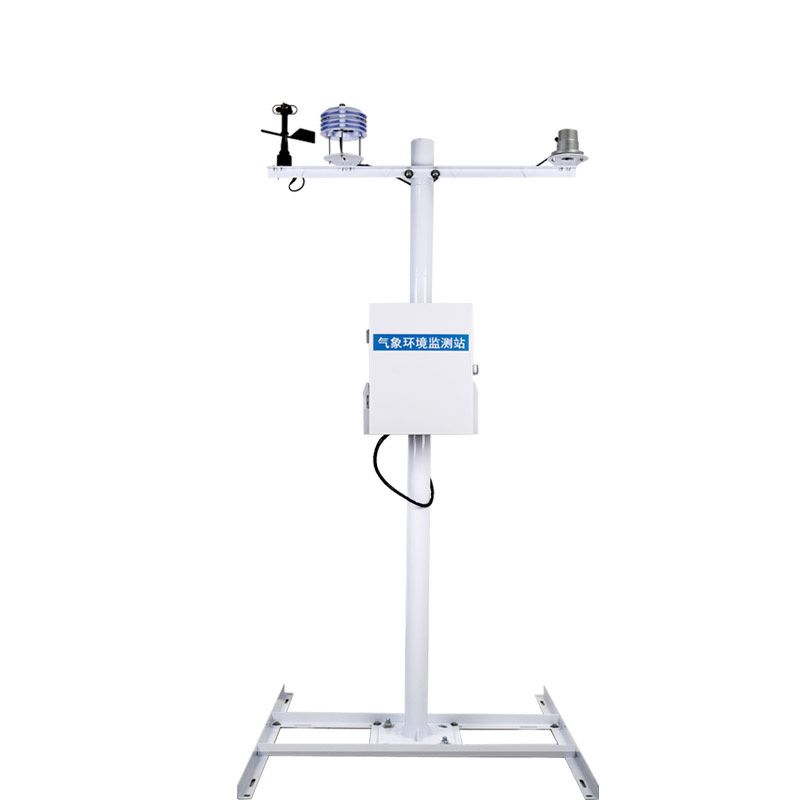
Beidou Meteorological Station is an automated monitoring device that integrates multiple meteorological sensors and utilizes the BeiDou satellite short message function for data transmission. It can collect environmental data such as temperature, humidity, wind speed, wind direction, air pressure, and rainfall in real time in areas without terrestrial network coverage and autonomously transmit it to the monitoring center. It is suitable for disaster early warning and meteorological observation in remote areas....
The industrial park environmental monitoring system FT-CQX12 is an environmental monitoring device launched by Fengtu Technology. It is mainly used in industrial parks. It can monitor the wind speed, wind direction, temperature, humidity, air pressure, optical rainfall, pm2.5, pm10, etc. CO, NO2, SO...
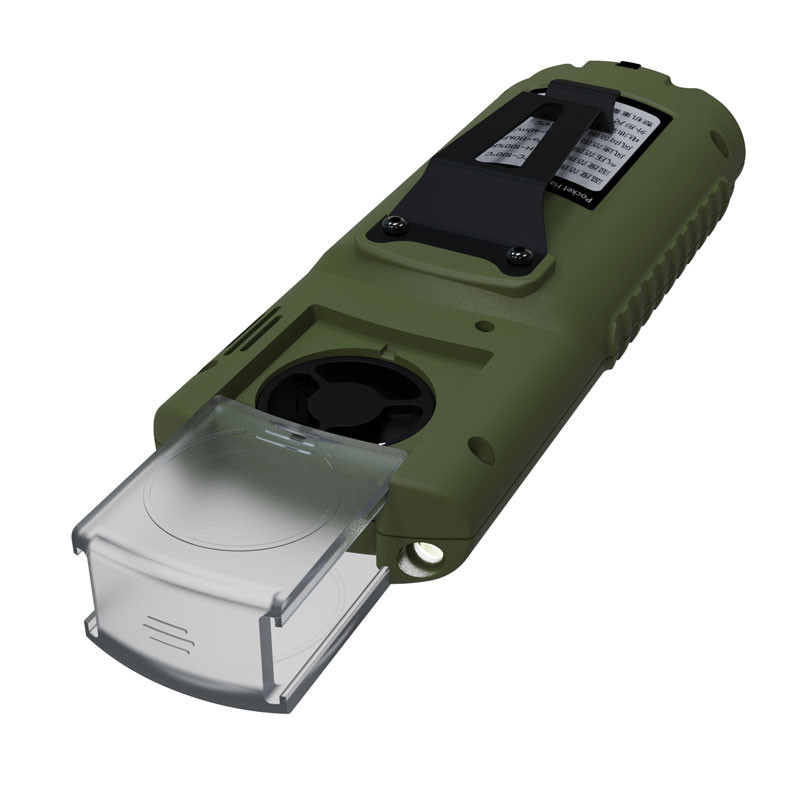
Handheld Weather Stations need continuous upgrades to better meet diverse meteorological monitoring needs. The FT-SQ6+ has been upgraded in multiple aspects compared to its predecessor, the FT-SQ5.First, it offers a richer set of measurement parameters. The FT-SQ6+ adds measurements of average wind...
The Portable Weather Station and the Vehicle-Mount Weather Station are significantly different in multiple aspects and are different products that meet the needs of meteorological monitoring in various scenarios.The Portable Weather Station focuses on flexibility and portability. It is applicable to...


 Skype
Skype
 whatsapp
 mail
mail