Shandong Fengtu IOT Technology Co., Ltd
Sales Manager:Ms. Emily Wang
Cel,Whatsapp,Wechat:+86 15898932201
Email:info@fengtutec.com
Add:No. 155 Optoelectronic Industry Accelerator, Gaoxin District, Weifang, Shandong, China


Sales Manager:Ms. Emily Wang
Cel,Whatsapp,Wechat:+86 15898932201
Email:info@fengtutec.com
Add:No. 155 Optoelectronic Industry Accelerator, Gaoxin District, Weifang, Shandong, China
time:2026-07-15 10:37:37 source:Weather Station viewed:41 time
The lightning early warning and monitoring system utilizes MEMS technology to develop its core electric field detection structure, eliminating mechanical parts prone to wear and tear. By combining electric field differentiation with optimized threshold algorithms, the system effectively avoids false alarms caused by environmental interference—such as rain or strong winds—and achieves a detection radius of 15 kilometers, making it suitable for high-risk sectors like aerospace, petrochemicals, and power grids.
This system is a fully digital platform for electric field detection and lightning early warning. Its core detection structure is based on the principle of charge induction and developed using MEMS (Micro-Electro-Mechanical Systems) technology. Unlike traditional electric field detection equipment, the MEMS-based solution eliminates moving mechanical parts (such as motors) that are susceptible to wear, resulting in sensors that are compact, low-power, highly reliable, and easy to integrate. The sensor weighs only 710 grams, and the entire unit consumes approximately 2W of power, allowing for stable, long-term outdoor deployment.
Regarding warning algorithms, the system employs an optimized approach that combines electric field differentiation with threshold-based logic. While conventional threshold methods are prone to false alarms during rain, strong winds, snow, or dusty conditions, the electric field differentiation algorithm identifies the rate of change in the electric field, distinguishing environmental interference from genuine pre-lightning signals. This technical approach significantly improves warning accuracy, thereby reducing unnecessary responses and resource waste caused by false alarms.
By integrating electromagnetic detection, atmospheric electric field measurement, and meteorological data, the system enables real-time lightning localization, short-term early warning, and intelligent protective linkage. It issues warnings within a 15-kilometer radius of the installation site up to 30 minutes before a lightning event occurs. The electric field measurement range spans -100 kV/m to 100 kV/m, with a resolution of 0.1 V/m and an accuracy of ±0.001% F.S. The sensor operates between -10°C and 60°C, while the controller withstands extreme environments ranging from -40°C to 80°C. The system supports three-level warning linkage and interfaces with devices such as audible-visual alarms and cloud data platforms via an RS485 connection. Lightning warning and monitoring systems are applied across a wide range of sectors, including aerospace and national defense, meteorological observation, the petroleum and petrochemical industries, power transmission grids, scenic area management, mining operations, fuel storage facilities, and military installations. In the petrochemical sector, the system can automatically trigger protective measures—such as halting loading and unloading operations or activating spray systems—when a thunderstorm approaches. In the power industry, it provides lightning strike risk warnings for transmission substations and high-voltage lines, guiding adjustments to operational configurations. The system is easy to install and network, enabling comprehensive monitoring of regional lightning activity through distributed deployment.
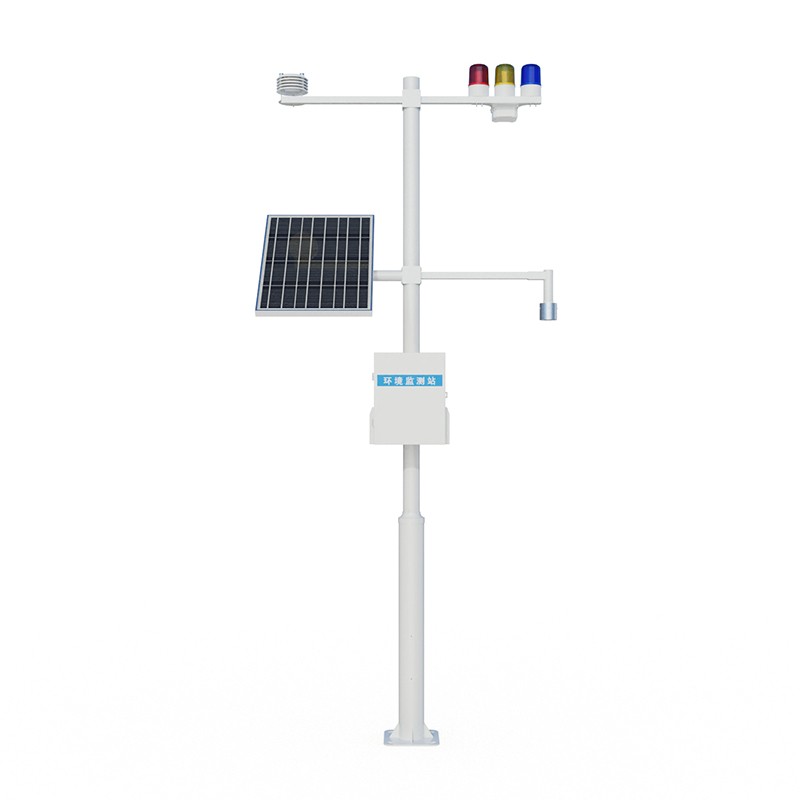
Meteorological emergency monitoring is an action that utilizes professional equipment and technologies to collect meteorological data in real-time and dynamically in response to sudden meteorological disasters or abnormal meteorological conditions. Through the rapid monitoring and analysis of meteor...
This integrated mini weather station is a high-precision automatic meteorological observation device. It integrates ten meteorological sensors, features low power consumption and easy installation, supports multiple data transmission methods, and can continuously monitor meteorological environ...
The casing material of micro weather sensors significantly affects their performance and service life. Currently, ASA and ABS are common choices for micro weather sensor enclosures:ASA Material: Offers excellent weather resistance, effectively blocking UV rays to prevent fading and aging during long...
FT-BQX9 Professional Weather Station is a portable weather station suitable for industrial use, characterized by its highly integrated design that combines monitoring functions for nine meteorological and environmental elements into a single compact sensor.【Monitoring Elements】It can simultaneousl...


 Skype
Skype
 whatsapp
 mail
mail