Shandong Fengtu IOT Technology Co., Ltd
Sales Manager:Ms. Emily Wang
Cel,Whatsapp,Wechat:+86 15898932201
Email:info@fengtutec.com
Add:No. 155 Optoelectronic Industry Accelerator, Gaoxin District, Weifang, Shandong, China


Sales Manager:Ms. Emily Wang
Cel,Whatsapp,Wechat:+86 15898932201
Email:info@fengtutec.com
Add:No. 155 Optoelectronic Industry Accelerator, Gaoxin District, Weifang, Shandong, China
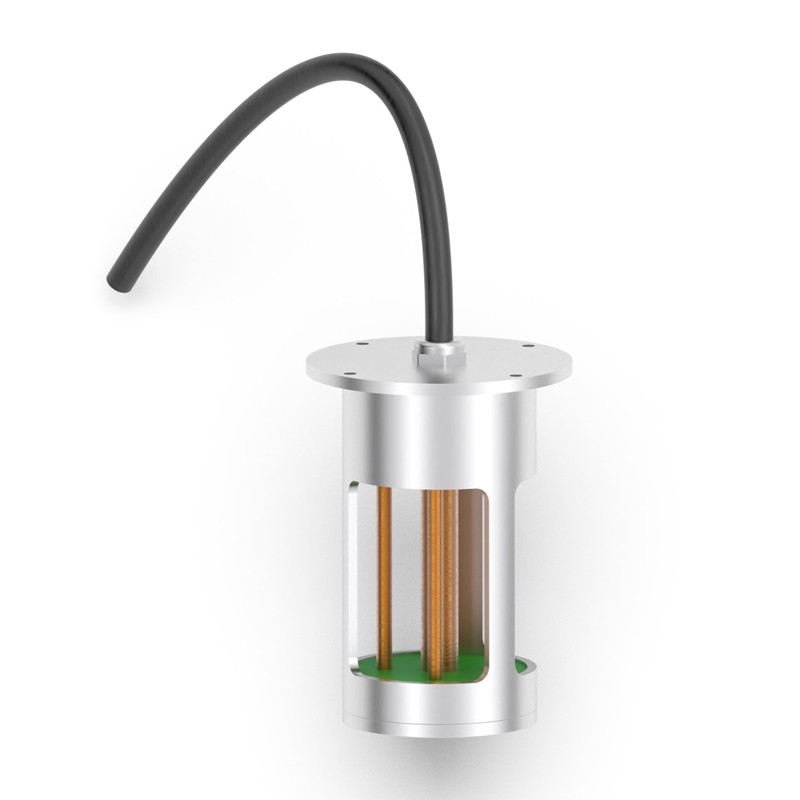
Model:FT-JB1H
Brand:fengtu
1、Ice thickness sensor Introduction
Ice thickness sensor utilizes a unique microwave detection technology combined with temperature analysis to provide real-time monitoring of icing on various components of wind turbine generator systems—including nacelles, blades, cables, cooling towers, communication antennas, and other outdoor equipment. The system issues icing alerts for monitored areas, calculates ice thickness, assesses the severity of icing risks in real time, and triggers de-icing control commands to activate de-icing systems. This ensures the safe operation of equipment in harsh, icing-prone climates, enhances operational efficiency, and minimizes energy consumption during the de-icing process.
For blade icing monitoring, the system employs an embedded design. The sensors are compact and support distributed installation, allowing them to be easily placed in high-risk areas such as blade edges. This overcomes the limitations of existing non-contact monitoring methods, which often fail to provide accurate icing data. The sensors feature a lightning-protected design to prevent damage to both the sensors and the blades, and they include an integrated heating function to reduce the likelihood of missed detections or false alarms.
The icing monitoring sensors for wind turbine nacelles address the challenge of monitoring blades on turbines that are already installed. By analyzing icing on the nacelle surface—in conjunction with temperature and humidity data from the wind farm environment—the system can indirectly infer the icing status of the blades. It then triggers the blade de-icing system, helping to prevent operational incidents caused by severe icing conditions and improving power generation efficiency.
For outdoor equipment, antennas, cooling towers, and cables, the sensors can be installed in locations tailored to specific application requirements. Their design can be customized based on the installation site to ensure the most accurate and comprehensive monitoring of icing conditions on the equipment.
2、Ice thickness sensor Operating Principles
Common types of automatic icing detectors include oscillating, differential-pressure, microwave-disturbance, radioisotope, and optical icing detectors.
The core component of an oscillating icing detector is an ultrasonic axial-oscillation probe. When ice forms on the probe, its oscillation frequency changes; by monitoring this shift, the system can detect whether icing is occurring on the aircraft.
A differential-pressure icing detector—also known as a ram-air icing detector—determines whether an aircraft is experiencing icing by measuring the difference between the total pressure (stagnation pressure) and the static pressure of the oncoming airflow.
Optical icing detectors determine the presence of ice by measuring changes in the intensity of light absorption.
Microwave-disturbance detectors assess icing by measuring how much microwave energy is absorbed by ice or other substances present on the surface of the probe.
Radioisotope icing detectors operate on the principle that the formation of ice reduces the number of beta particles (electrons) reaching a counter from a radioactive source.
3、Ice thickness sensor Technical Specifications
Icing Detection Range: 0.2 mm – 50 mm
Minimum Ice Thickness: 0.2 mm
Maximum Ice Thickness: 50 mm
Ice Thickness Alarm Threshold: 0.2 – 50 mm (adjustable)
Measurement Accuracy: ±2% FS
Data Resolution: 0.001 mm
Communication Interface: RS485, MODBUS-RTU
Operating Temperature: -40°C to +85°C
Operating Humidity: 0–100% RH
Storage Temperature: -55°C to +85°C
Operating Voltage: DC +9–30V
Power Consumption: 0.4W (non-heating mode); 40W (maximum heating power)
Electromagnetic Compatibility (EMC): Designed for lightning protection and electromagnetic interference (EMI) resistance
Heating Function: Included
4、Ice thickness sensor Installation Method
For mechanical installations, the icing monitoring sensor is secured using a flange near the target object. The installation should ensure that the sensor’s surface reflects the icing conditions on the target object’s surface as accurately as possible.
For equipment enclosure icing monitoring, the sensor is installed externally; it is mounted vertically on the surface of the enclosure using a bracket, with its monitoring face positioned to face the wind.
5、Ice thickness sensor Wiring Definitions
| Color | Description |
| Red | Power positive |
| Black | Power supply negative terminal |
| Yellow | RS485_A |
| Green | RS485_B |
| Brown | Heating positive electrode |
| White | Heating the negative electrode |
With the continuous advancement of transportation infrastructure construction, tunnels are playing an increasingly important role in the modern transportation network. However, the special environment inside the tunnels poses many challenges to driving safety, and the issue of visibility is particul...
This crop growth monitoring equipment is an automated agricultural monitoring system. It uses a high-definition camera to collect real-time daytime and nighttime infrared images of crop growth and development. Combined with meteorological and soil moisture sensors and pest forecast lights, it...
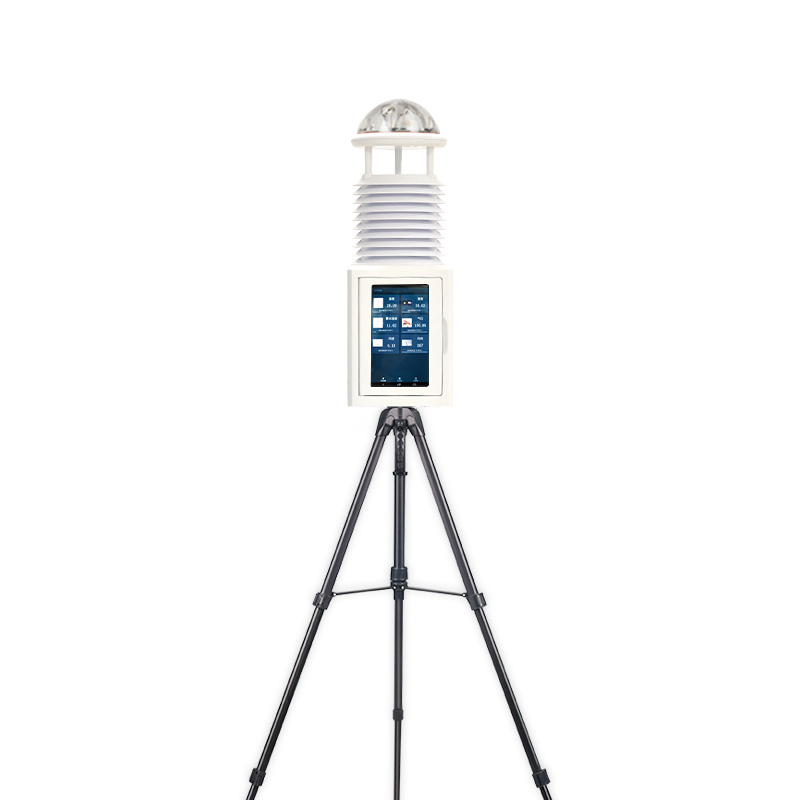
One of the advantages of the Portable Weather Station is its convenient deployment capability. When natural disasters or emergencies occur, time is critical, and traditional fixed weather stations cannot be quickly transferred to the affected areas. However, the Portable Weather Station is small in...
Why choose a Portable Weather Station?First, it is small in size and light in weight, making it easy to carry to different locations. Whether for scientific research in remote mountainous areas, agricultural monitoring in vast farmlands, or rescue sites after natural disasters, a Portable Weather St...


 Get a Free Quote
 Skype
 whatsapp
 mail