Shandong Fengtu IOT Technology Co., Ltd
Sales Manager:Ms. Emily Wang
Cel,Whatsapp,Wechat:+86 15898932201
Email:info@fengtutec.com
Add:No. 155 Optoelectronic Industry Accelerator, Gaoxin District, Weifang, Shandong, China


Sales Manager:Ms. Emily Wang
Cel,Whatsapp,Wechat:+86 15898932201
Email:info@fengtutec.com
Add:No. 155 Optoelectronic Industry Accelerator, Gaoxin District, Weifang, Shandong, China
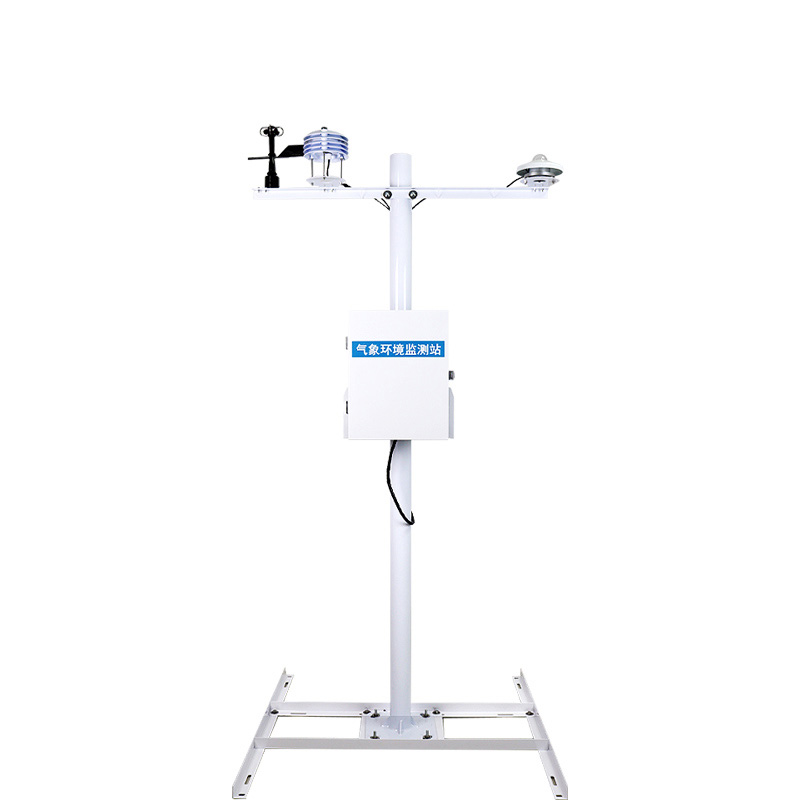
Model:FT-FGF11
Brand:fengtu
1.Photovoltaic Station Weather System Application Scope
Distributed photovoltaic power generation refers to photovoltaic power generation facilities that are built and operated at or near the user's site, mainly self-use on the user's side, excess power is connected to the grid and balanced adjustment in the distribution network system.
In order to ensure the normal operation of photovoltaic power stations and data analysis, it is usually necessary to be equipped with a distributed photovoltaic power generation environment monitoring system to monitor indicators such as total solar radiation, surrounding ambient temperature, wind speed and direction, and photovoltaic module temperature.
The distributed photovoltaic power generation environment monitoring system can be connected to the monitoring system, and the monitoring system displays, records and analyzes the data of the environmental monitoring system, or connects to the inverter control system, and analyzes the sensor data by the control system to ensure the effective operation of the photovoltaic power station.
2.Photovoltaic Station Weather System product description
This model meets the national standards and meets the latest provincial data requirements and logical correspondence of photovoltaic power stations, and supports secondary upgrades of subsequent new parameters.It adopts a high-stability total solar radiation sensor, which has perfect cosine characteristics, fast response, zero offset and wide temperature response, ensuring accurate and stable radiation data.
Our company has many years of rich experience in serving domestic and foreign photovoltaic power station users, sufficient sensor inventory, complete production line, mature instrument and equipment debugging technology capabilities, comprehensive after-sales tracking services, and a fast logistics and transportation system.
3.Typical applications of Photovoltaic Station Weather System
1.Solar photovoltaic power generation and solar energy resource assessment
2.Solar energy system monitoring and atmospheric energy balance research
3.Calibration and verification of solar radiation data obtained by satellite inversion
4.Heat stress research, heat exchange research, climate change research
5.Early optical resource estimate processing of power stations, revenue assessment
4.Photovoltaic Station Weather System Implementation Specifications
The site selection of distributed photovoltaic power generation environment monitoring systems requires many factors to be considered.The site should be built in places that are not shaded from sunrise to sunset throughout the year.
Based on international observation methods, national observation specifications, power industry standards, and many years of rich experience in on-site site selection and environmental monitoring system installation and debugging, our company provides detailed and professional specification guidance documents to relevant personnel of photovoltaic power stations.
5.Photovoltaic Station Weather System Technical Parameters
Power supply: DC12V
Output: RS485 MODBUS RTU protocol
Power supply method: solar power supply/DC12V/AC220V/UPS
Baud rate: 4800-115200 Default baud rate: 9600
Working temperature: -40°C~+70°C
Storage temperature: -40°C~+80°C
Working humidity: 0~100%RH
Protection level: IP65
Carrying form: Fixed bracket 2m
6.Photovoltaic Station Weather System Model Configuration
| model | FGF9 (basic model) | FGF11 (standard model) | FGF11H (high-end model) |
| Installation method | I-shaped bracket, no need for pre-embedding and expansion screws | I-shaped bracket, no need for pre-embedding and expansion screws | I-shaped bracket, no need for pre-embedding and expansion screws |
| Power supply method | Mains power supply | Mains power supply | 30W, 20AH solar power supply |
| Output method | RS485 output (multiple address) | RS485 output (multiple address) | RS485 output (single address) |
| Monitoring elements | Wind speed, wind direction, average wind speed, temperature, humidity, air pressure, total photoelectric radiation, sunshine hours, component temperature | Wind speed, wind direction, average wind speed, temperature, humidity, air pressure, total thermoelectric radiation, total thermoelectric radiation day cumulative, total thermoelectric radiation total, sunshine hours, component temperature | Wind speed, wind direction, average wind speed, temperature, humidity, air pressure, total thermoelectric radiation, total thermoelectric radiation day cumulative, total thermoelectric radiation total, sunshine hours, component temperature |
7.Photovoltaic Station Weather System sensor parameters
| Sensor name | Measurement range | Accuracy | Resolution |
| Wind speed | 0~60m/s | ±0.2m/s | 0.01m/s |
| wind direction | 0-360℃ | ±1℃ | 0.1℃ |
| Average wind speed | 0-60m/s | ±0.2m/s | 0.01m/s |
| Ambient temperature | -40-80℃ | ±0.3℃ | 0.01℃ |
| Ambient humidity | 0-100%RH | ±3%RH (20%~80%) | 0.01%RH |
| Air pressure | 300-1100hpa | ±0.25% | 0.1hpa |
| Component temperature | -50-100℃ | ±0.5℃ | 0.1℃ |
| Total photoelectric radiation | 0-2000W/㎡ | <±3% | 1W/㎡ |
| Total thermal radiation | 0-2000W/㎡ | <±3.1% | 1W/㎡ |
| Sunshine hours | 0-6500h | <0.2h | 0.1h |
| Total thermal and electrical radiation day cumulative | 0-65535W.h/m² | --- | 1W.h/m² |
| Total thermal and electrical radiation total | 0-4000000000W.h/m² | --- | 1W.h/m² |
8.Photovoltaic Station Weather System Design and Implementation Standards
"Guidelines for Meteorological Instruments and Observation Methods" World Meteorological Organization (WMO) Instrument and Observation Methods Committee (CIMO) and IEC (International Electrical and Technical Committee) State Grid Company Enterprise Standard Q/GDW 617-2011 "Technical Regulations on Photovoltaic Power Station Access Power Grid" State Grid Company Enterprise Standard Q/GDW 618-2011 "Photovoltaic Power Station Access Power Grid Test Regulations"
"QX/T61-2007 Ground Meteorological Observation Specifications" "QX/T-2000II Automatic Meteorological Station Industry Standard"
"QX/T74-2007 Technical Specifications for Meteorological Observation and Data Review and Revision of Wind Farms"
Designed specifically for monitoring migratory pests such as the fall armyworm, the high-altitude monitoring light uses a 1000W insect-attracting light source to automatically attract insects, kill them with far-infrared radiation, take photos, and upload data. It is suitable for unattended mo...
Crop Growth Monitoring utilizes high-definition video cameras to provide real-time monitoring of crop growth and development, supporting both daytime visual imaging and nighttime infrared imaging. The device integrates meteorological sensors, soil moisture sensors, and pest forecasting lamps t...
This lightning monitoring and early warning system is a fully digital platform for electric field detection and warning. It utilizes MEMS charge-sensing probes and employs an optimized differential electric field algorithm to minimize false alarms caused by rain, snow, or airborne dust. Suppor...
This fully digital electric field detection and warning platform employs MEMS technology at its core. The electric field measurement range is -100kV/m to 100kV/m, with a resolution of 0.1V/m and a detection radius of 15km. The system acquires electric field changes through the principle of cha...


 Get a Free Quote
 Skype
Skype
 whatsapp
 mail
mail