Shandong Fengtu IOT Technology Co., Ltd
Sales Manager:Ms. Emily Wang
Cel,Whatsapp,Wechat:+86 15898932201
Email:info@fengtutec.com
Add:No. 155 Optoelectronic Industry Accelerator, Gaoxin District, Weifang, Shandong, China


Sales Manager:Ms. Emily Wang
Cel,Whatsapp,Wechat:+86 15898932201
Email:info@fengtutec.com
Add:No. 155 Optoelectronic Industry Accelerator, Gaoxin District, Weifang, Shandong, China
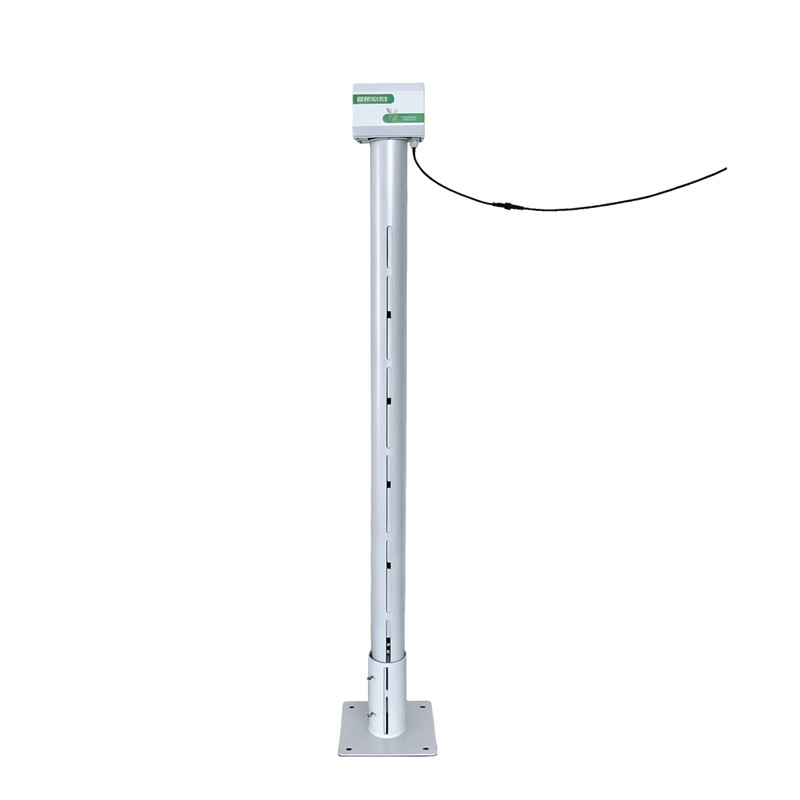
Model:FT-DTS2
Brand:fengtu
Paddy Field Water Level Gauge Practical Significance:
In the context of paddy field water level monitoring, the Paddy Field Water Level Gauge resolves common issues such as the susceptibility of submersible level sensors to clogging by mud and silt, and the interference caused by rice foliage to ultrasonic or radar level sensors. Additionally, the Paddy Field Water Level Gauge is lightweight, portable, and easy to install, making it ideal for mobile, multi-point monitoring across paddy fields; it is a water level measurement device specifically optimized for this application.
Furthermore, the Paddy Field Water Level Gauge utilizes standard communication interfaces to link with integrated gate control systems, enabling automated, precision management of paddy field water levels. Supported by our company’s complimentary cloud services and mobile app, it facilitates a range of IoT-enabled functions—including remote online monitoring, data logging, trend analysis, and remote alerts—thereby ensuring scientifically managed rice cultivation and the efficient use of water resources.
Paddy Field Water Level Gauge System Structure:
The unit consists of an integrated solar-powered main control housing, an antenna, a support pole, a mounting base, and ground anchors. Constructed from powder-coated stainless steel, the device is immune to rust-related damage and is designed for year-round installation in paddy fields.
Main Control Housing: Features an IP68 protection rating (waterproof, dustproof, and corrosion-resistant) and a built-in high-capacity lithium battery; the integrated solar design eliminates the need for an external power supply system.
Support Pole: Utilizes a "hollow conductive channel" design that provides a compact RF structure for radar sensing; this design avoids external interference with the radar signal while ensuring water circulation between the inside and outside of the pole.
Mounting Base: Secured via ground anchors for easy installation, making the device suitable for mobile, multi-point monitoring in paddy fields; it also ensures a stable baseline reference for radar measurements, resulting in higher accuracy for water level readings.
Measurement Method: Radar sensing;
Paddy Field Water Level Gauge Measured parameters:
4G: Supports networked monitoring of parameters such as paddy field water level (air gap distance and actual level), remaining battery power, and solar charging status;
Average power consumption: 0.6W.
Communication interfaces: RS485, 4G, NB-IoT, LoRa;
Measurement range: Selectable ranges of 0–1m, 0–2m, or 0–3m;
Typical accuracy: ±1mm
Resolution: 1mm
Data upload frequency: Default 60 min/transmission (battery-powered model), configurable;
Data acquisition frequency: Default 3600 s/reading (battery-powered model), configurable;
Ingress protection rating: IP68
Operating environment: -20°C to +60°C, 0% RH to 99% RH (non-condensing).
An Automatic Farmland Weather Station is an agricultural management system based on information technology. It continuously collects environmental data from agricultural production sites and provides decision support for production management through data analysis.The system uses a sensor network to...
Agricultural Weather Stations is a high-precision observation device specifically designed for monitoring and recording meteorological data in fields and forest areas. It can automatically monitor the climate of farmland or forest areas, measuring common meteorological elements such as air temperature, humidity, soil moisture, soil temperature, wind speed, wind direction, rainfall, and light intensity. The data is used to guide precision irrigation, fertilization, and pest and disease control, improving crop yields. Furthermore, it optimizes greenhouse environmental control by analyzing temperature, humidity, and light data....
Micro-meteorology refers to the atmospheric conditions within small-scale areas near the earth's surface. Key monitoring parameters include wind speed, wind direction, air temperature, humidity, atmospheric pressure, and optionally, rainfall. These parameters exhibit significant gradient variati...
In modern society, the measurement of visibility is of great significance. In terms of meteorological research, visibility data is a crucial element for analyzing atmospheric characteristics. Its value can reflect the conditions of water vapor and particulate matter in the atmosphere, helping meteor...


 Get a Free Quote
 Skype
Skype
 whatsapp
 mail
mail