Shandong Fengtu IOT Technology Co., Ltd
Sales Manager:Ms. Emily Wang
Cel,Whatsapp,Wechat:+86 15898932201
Email:info@fengtutec.com
Add:No. 155 Optoelectronic Industry Accelerator, Gaoxin District, Weifang, Shandong, China


Sales Manager:Ms. Emily Wang
Cel,Whatsapp,Wechat:+86 15898932201
Email:info@fengtutec.com
Add:No. 155 Optoelectronic Industry Accelerator, Gaoxin District, Weifang, Shandong, China
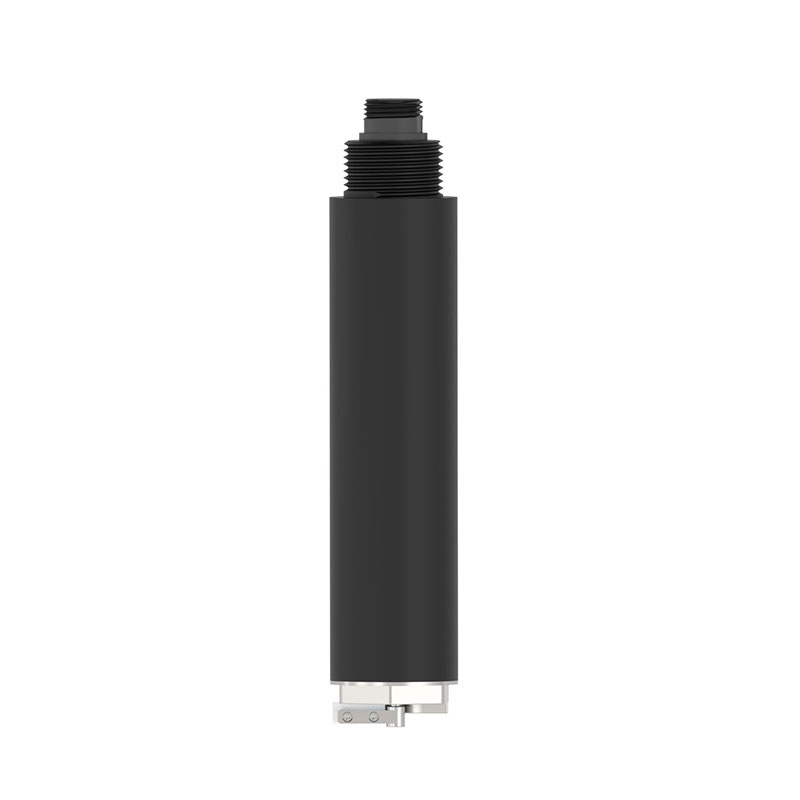
Model:FT-S17S
Brand:fengtu
one.Oil in Water Analyzer Application Environment Instructions
Oil in Water Analyzer uses the characteristic that soluble oil has absorption peaks and emission peaks in the spectrum.The spectral absorption peak of soluble oil emits monochromatic light and irradiates it into the water.The soluble oil absorbs the energy of the monochromatic light and releases another Monochromatic light with wavelength emission peak, the light intensity emitted by soluble oil is proportional to the content of soluble oil in water.The sensor is simple to install and easy to use.
Signal output: RS485 (MODBUS-RTU).
Filter detection, strong anti-interference ability.
Internal signal isolation technology, strong interference resistance.
Good reproducibility, thermal stability, low drift, small size, fast response
Easy and simple installation, 3/4NPT pipe thread, convenient for submersible installation or installation in pipes and tanks
Stable performance and long service life
IP68 waterproof standard
two.Oil in Water Analyzer technical performance and specifications
1.Technical parameters
| Measurement principle | Fluorescence method |
| Signal mode | RS485 (MODBUS-RTU) |
| Measuring range | 0~60ppm |
| detection limit | Determined based on actual oil samples |
| Accuracy | 0.1 ppm |
| Measurement resolution | 0.01 ppm |
| Shell material | Glass and 316L stainless steel |
| Cable length | Standard 5 meters |
| Supply voltage | 12-24VDC |
| Product power consumption | 12V power supply: When the cleaning brush is not working, the power consumption of the product is about 0.5W.When the cleaning brush is working, the power consumption of the product is about 1.5W. |
| Calibration method | Two point calibration |
| Measurement environment | Temperature 0~50℃ (non-freezing), <0.2MPa |
| Waterproof level | IP68 |
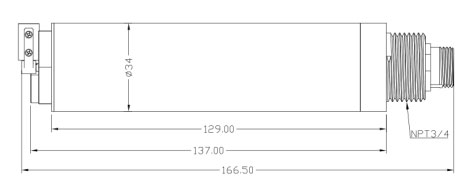
| Installation method | Submersible installation, NPT3/4 thread |
2.Oil in Water Analyzer size chart
three.Oil in Water Analyzer installation and electrical connections
1.Oil in Water Analyzer installation
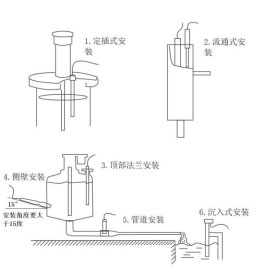
Installation distance requirements: keep more than 5cm from the side wall and more than 10cm from the bottom.
Installation environment: Do not work under strong light, try to work in a dark environment.There cannot be other fluorescent substances that can be excited.
2.Electrical installation
The cable is a 4-core shielded wire, and the wire sequence is defined as:
Red - power cord (12~24VDC)
Blue - Ground (GND)
Green-485B, Yellow-485A
The wiring sequence should be carefully checked before powering on to avoid unnecessary losses caused by wiring errors.
Note: The color of the cable may vary slightly due to different production batches, please refer to the silk screen printing of the cable.
4.Oil in Water Analyzer maintenance and care
1.Use and maintenance
The measurement window of the sensor is one of the key components to ensure the normal operation and accurate measurement of the sensor.Its cleaning requirements are critical to ensure accuracy and reliability of measurements.
1.1 Maintenance methods
1.Regular cleaning: The measurement window should be cleaned regularly to remove dirt, sediment and other impurities attached to the surface.The frequency of cleaning depends on the measurement environment, but daily or weekly cleaning is generally recommended.
2.Use mild cleaners: Use mild cleaners when cleaning, and avoid using cleaners containing abrasives or acid-base ingredients to prevent damage to the surface of the measurement window.
3.Soft cloth or sponge: During the cleaning process, a soft cloth or sponge should be used to gently wipe the surface of the measurement window to prevent scratches or wear.
4.Avoid direct contact: Avoid direct contact with the surface of the measurement window during the cleaning process to reduce fingerprint and grease contamination.
5.Rinsing: After cleaning is completed, the measurement window should be rinsed thoroughly with clean water to ensure that residual detergent and dirt are removed.
6.Drying: After cleaning, use a dry soft cloth to gently wipe the surface of the measurement window to remove water stains and ensure complete dryness.
7.Regular inspection: Regularly check the surface of the measurement window for damage or wear to maintain the normal operation of the sensor.
8.Avoid exposure to chemicals and high temperature environments: Avoid exposing the measurement window to harmful chemicals or high temperature environments to prevent damage or corrosion to its surface
When the sensor has been used for a long time and measurement errors occur, it can be calibrated and corrected by cooperating with the instrument.If the sensor cannot be calibrated and measured after maintenance and maintenance in the above methods, it means that the sensor has failed.Please replace the sensor.
1.2 Precautions
1.The measurement window contains glass components, so avoid using sharp or hard objects to scratch the surface to prevent scratches and damage.
2.It contains sensitive optical components and precision electronic equipment.Avoid exposing the sensor to severe vibration or impact to prevent the optical parts and electronic equipment from being displaced or damaged.There is no maintenance required inside the device.
3.When not in use, an appropriate dust cover or sleeve should be used to protect the optics from dust and contaminants.
Crop Growth Monitoring utilizes high-definition video cameras to provide real-time monitoring of crop growth and development, supporting both daytime visual imaging and nighttime infrared imaging. The device integrates meteorological sensors, soil moisture sensors, and pest forecasting lamps t...
This lamp converts solar energy into electricity using a solar panel. At night, it powers an LED insect-attracting light source that releases specific wavelengths to attract phototactic pests. A fan generates negative pressure airflow, drawing the pests into a collection box where they are dri...
In maritime navigation, poor visibility is an "invisible killer" threatening ship safety. When weather conditions such as dense fog, heavy rain, or sand and dust occur, the visibility distance shortens sharply. Ships not only struggle to observe nearby landmarks, with positioning accuracy...
Traditional fixed visibility monitoring equipment is limited by factors such as installation location and power supply conditions, making it difficult to meet flexible and variable monitoring needs. The emergence of the Portable Visibility Detector has effectively solved this problem.Low visibility...


 Get a Free Quote
 Skype
Skype
 whatsapp
 mail
mail