Shandong Fengtu IOT Technology Co., Ltd
Sales Manager:Ms. Emily Wang
Cel,Whatsapp,Wechat:+86 15898932201
Email:info@fengtutec.com
Add:No. 155 Optoelectronic Industry Accelerator, Gaoxin District, Weifang, Shandong, China


Sales Manager:Ms. Emily Wang
Cel,Whatsapp,Wechat:+86 15898932201
Email:info@fengtutec.com
Add:No. 155 Optoelectronic Industry Accelerator, Gaoxin District, Weifang, Shandong, China
time:2026-06-24 10:04:25 source:Weather Station viewed:89 time
electric field monitor is a fully digital electric field detection and early warning platform, developed based on the principle of charge induction and MEMS technology, eliminating easily worn components such as motors. The system employs an electric field differentiation combined with a threshold optimization algorithm to avoid environmental interference such as rain and strong winds, issuing warnings 15 to 30 minutes in advance. It is suitable for flammable and explosive locations such as oil and petrochemical plants, oil depots, and chemical plants.
electric field monitor is also a fully digital electric field detection and lightning early warning platform. Its core electric field detection structure is based on the principle of charge induction and developed using MEMS (Micro-Electro-Mechanical Systems) technology, eliminating easily worn moving mechanical components such as motors. It boasts significant advantages such as small size, low power consumption, high reliability, and ease of integration. This system uses an electric field differentiation combined with a threshold optimization lightning early warning algorithm. Compared with conventional threshold methods, it significantly reduces the likelihood of false alarms caused by human interference (rain, strong winds, snow, dust), further improving the accuracy of early warnings.
In terms of technical performance, the system's electric field measurement range is -100kV/m to 100kV/m, with a resolution of 0.1V/m and a detection radius of up to 15 kilometers. The lightning warning lead time is no less than 10 minutes, and in some scenarios, it can reach 15 to 30 minutes, with an average effective alarm rate of no less than 80%. The lightning detection modules installed on-site meet electrical explosion-proof requirements, with a protection level of no less than IP65, adapting to the special environment of oil and gas storage bases.
The system consists of lightning warning probes, a data processing host, a solar power supply system, a direct lightning strike protection system, a surge system, and a grounding system. Optional accessories include temperature and humidity sensors and retractable lightning rods. The system supports seamless integration with the oil depot's DCS and security systems, helping managers take emergency measures such as valve closure and power outages in advance. It is equipped with central monitoring software, allowing users to monitor the system via a single PC. Data can be transmitted via RJ45, RVV, and other interfaces.
The electric field monitor system primarily addresses the atmospheric electric field detection and localized short-term lightning warning applications in aerospace, defense, meteorology, petroleum and petrochemical, power grid, scenic areas, mines, oil depots, and military sectors. In the petrochemical industry, the breather valves on the top of crude oil tanks, refined oil tanks, and chemical tanks are high-risk points for lightning strikes. Several lightning-induced fires have occurred in oil storage tank areas at oil transfer stations. Installing a lightning warning system can provide early warnings when lightning approaches the tank area, facilitating the timely activation of lightning protection plans for large oil storage tanks. Long-term lightning monitoring data can also reveal regional thunderstorm activity patterns, such as peak periods and movement paths, providing a scientific basis for developing targeted emergency response plans. This system offers accurate warnings, is easy to network, and convenient to install, and has been widely used in flammable and explosive locations such as petroleum, petrochemical, and oil depots.
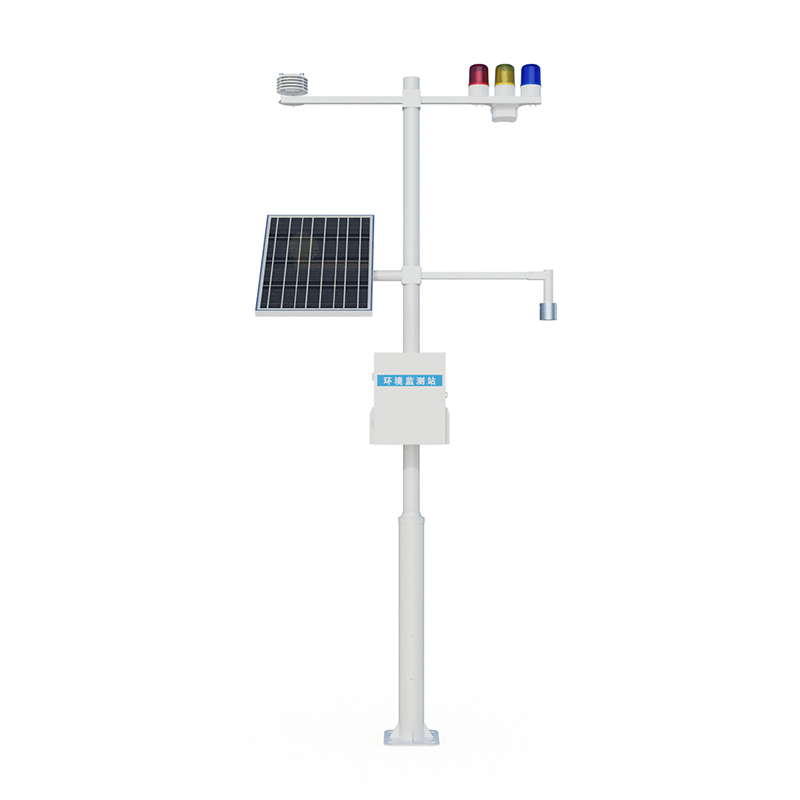
Low-visibility weather conditions (such as heavy fog, dense haze, heavy rain, and smoke/dust) reduce drivers' effective visual range and are a major cause of significant safety incidents including multi-vehicle rear-end collisions on highways and aircraft go-arounds or delays at airports. Theref...
Designed for installation on power pylons, these meteorological monitoring stations collect data on wind speed, wind direction, temperature, humidity, atmospheric pressure, and rainfall. This information is transmitted to a monitoring center via GPRS or fiber optics, with alerts pushed directly to t...
It is feasible to use soil moisture monitoring system to guide agricultural irrigation. Soil moisture monitoring systems can monitor soil moisture, temperature, conductivity and other parameters in real time to help farmers understand the soil condition of farmland in time and provide scientific bas...
The combination of carbon fiber support and portable design has brought about performance improvements for the Portable Meteorograph. In the field of outdoor meteorological monitoring, the stability, durability, and portability of equipment directly affect the accuracy of monitoring data and operati...


 Skype
 whatsapp
 mail