Shandong Fengtu IOT Technology Co., Ltd
Sales Manager:Ms. Emily Wang
Cel,Whatsapp,Wechat:+86 15898932201
Email:info@fengtutec.com
Add:No. 155 Optoelectronic Industry Accelerator, Gaoxin District, Weifang, Shandong, China


Sales Manager:Ms. Emily Wang
Cel,Whatsapp,Wechat:+86 15898932201
Email:info@fengtutec.com
Add:No. 155 Optoelectronic Industry Accelerator, Gaoxin District, Weifang, Shandong, China
time:2026-07-17 09:45:33 source:Weather Station viewed:33 time
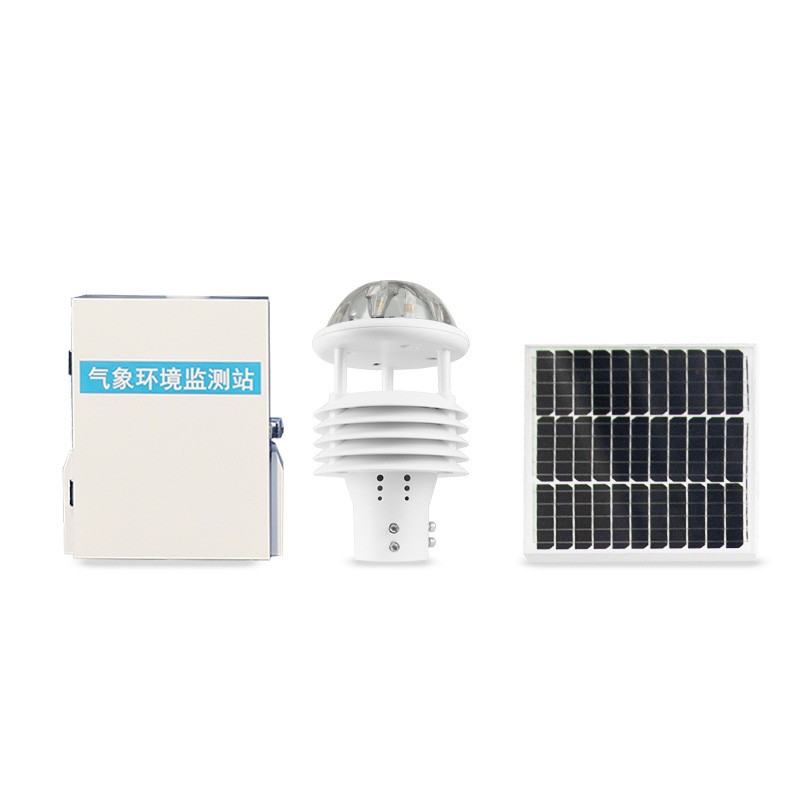
Transmission line micro-meteorological monitoring stations are installed on power transmission towers to collect real-time meteorological parameters such as wind speed, wind direction, temperature, humidity, air pressure, and rainfall. This data is transmitted back to the monitoring center via a wireless network for analysis and early warning, helping power departments to promptly identify meteorological risks around the transmission lines.
Overhead transmission lines in my country are frequently exposed to harsh environments, including strong winds, heavy rain, and snow. These weather conditions can lead to short circuits, power outages, and tower collapses, severely impacting power supply and residential electricity consumption. Therefore, power departments place great importance on the safety management and construction of transmission lines.
Transmission line micro-meteorological monitoring stations are specialized equipment developed and manufactured for monitoring local meteorological conditions along transmission line corridors. The system is primarily installed on power transmission towers, with installation locations flexibly adjustable according to customer requirements. The equipment integrates high-precision sensors to monitor real-time meteorological parameters such as wind speed, wind direction, temperature, humidity, air pressure, and rainfall within the transmission line area. Unlike traditional weather stations, this monitoring station reduces sensing accuracy from the kilometer level to the meter level, accurately reflecting the real micro-meteorological environment around the transmission towers.
In terms of data acquisition, the transmission line micro-meteorological monitoring station employs technologies such as ultrasonic sensors and piezoelectric rainfall, featuring high measurement accuracy, no moving parts, and maintenance-free operation. The equipment casing is made of anti-magnetic metal materials or ASA engineering plastics, with an IP66 or higher protection rating, capable of withstanding harsh outdoor climates. The power supply system uses solar power plus batteries, allowing continuous operation for more than 30 days without sunlight.
The collected meteorological parameters are transmitted in real time to the monitoring center via wireless networks such as GPRS, 4G/5G, or fiber optics. The monitoring center stores, analyzes, and statistically processes the data. When parameters exceed set thresholds, the system automatically sends warning messages to designated personnel's mobile phones. Maintenance personnel can view the meteorological dynamics of each monitoring point at any time via PC or mobile device.
The transmission line micro-meteorological monitoring station has been deployed in multiple regions. Anhui Ma'anshan Power Supply Company piloted the installation of integrated micro-weather stations on the mountainous section of the 220kV Xianghuang line. Based on real-time monitoring data, targeted measures are taken to prevent line faults caused by severe weather. Shandong Zaozhuang Power Supply Company deployed micro-weather devices on important lines to collect real-time data on wind direction, wind speed, and temperature, and can promptly issue early warnings to inspection personnel in emergencies.
Through the accumulation and statistical analysis of long-term micro-weather data, transmission line micro-weather monitoring stations can provide reliable data for transmission line operation and maintenance, condition-based inspections, and line design. Against the backdrop of intensifying climate change and an increasingly complex power grid operating environment, transmission line micro-weather monitoring stations are becoming an important technical means to ensure the safe operation of the power grid.
This lamp converts solar energy into electricity using a solar panel. At night, it powers an LED insect-attracting light source that releases specific wavelengths to attract phototactic pests. A fan generates negative pressure airflow, drawing the pests into a collection box where they are dri...
Equipped with insect suction technology and leveraging aerodynamic suction alongside IoT-based AI, this intelligent monitoring device automatically traps and tracks small migratory insects around the clock, making it suitable for plant protection monitoring and pest data analysis across various sect...
Agrometeorological Instruments is an integrated handheld monitoring terminal equipped with industrial-grade sensors. It can simultaneously collect multiple parameters such as air temperature and humidity, soil moisture, and light intensity. It features built-in storage and transmission capabil...
In the process of agricultural development, the construction of unmanned farms has become an important direction for the development of modern agriculture. In this process, Agricultural meteorological stations, by providing refined meteorological services combined with mobile applications, make farm...


 Skype
Skype
 whatsapp
 mail
mail