Shandong Fengtu IOT Technology Co., Ltd
Sales Manager:Ms. Emily Wang
Cel,Whatsapp,Wechat:+86 15898932201
Email:info@fengtutec.com
Add:No. 155 Optoelectronic Industry Accelerator, Gaoxin District, Weifang, Shandong, China


Sales Manager:Ms. Emily Wang
Cel,Whatsapp,Wechat:+86 15898932201
Email:info@fengtutec.com
Add:No. 155 Optoelectronic Industry Accelerator, Gaoxin District, Weifang, Shandong, China
time:2026-11-09 09:55:15 source:Weather Station viewed:7 time
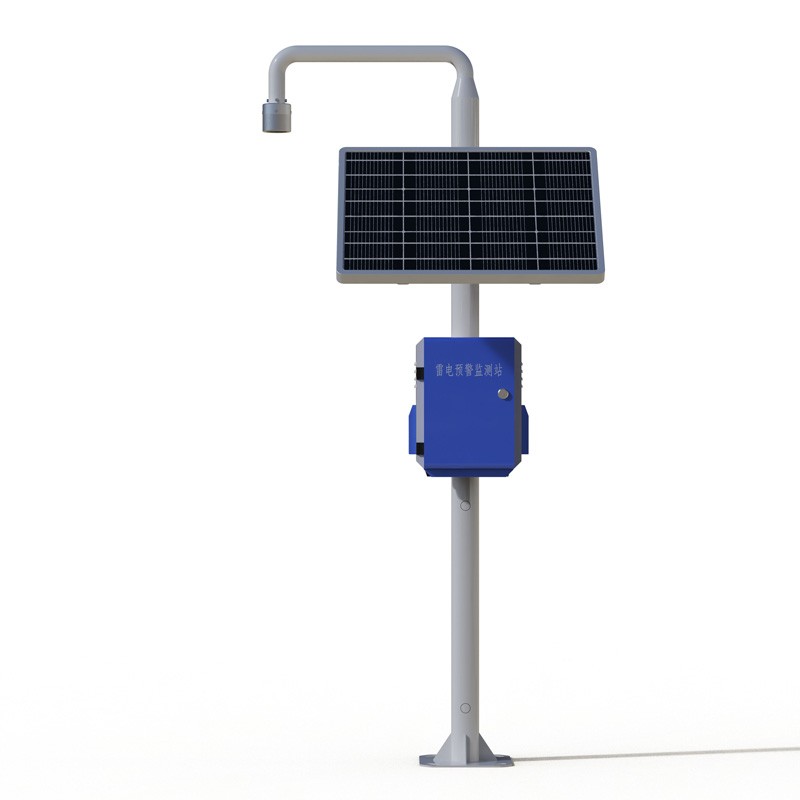
Lightning monitoring and early warning systems for oil and gas depots utilize MEMS (Micro-Electro-Mechanical Systems) electric field sensing technology. The core detection mechanism is based on the principle of charge induction; it contains no moving parts—such as motors—that are prone to wear and tear, resulting in a compact, low-power, and highly reliable system. By employing an algorithm that combines electric field differentiation with optimized threshold settings, the system effectively filters out environmental interference—such as rain, high winds, and airborne dust—thereby reducing the rate of false alarms. The system features a detection radius of 15 kilometers, an electric field measurement range of ±100 kV/m, and a resolution of 0.1 V/m.
Oil and gas depots are highly flammable and explosive environments, where a lightning strike could trigger a fire or an explosion. By monitoring changes in the atmospheric electric field in real time, these warning systems can issue alerts as a thunderstorm approaches, providing critical time to suspend loading and unloading operations and evacuate personnel. According to requirements set by the Ministry of Emergency Management, lightning early warning systems at large-scale oil and gas storage facilities must provide at least 10 minutes of advance warning, achieve an average effective alarm rate of no less than 80%, cover a detection radius of at least 10 kilometers, and incorporate a three-level warning structure. These criteria represent the minimum compliance standards; the actual lead time for warnings depends on the development speed of the thunderstorm and the specific threshold settings used, which may vary between different products.
Traditional methods relying on a single, fixed threshold are prone to false alarms under complex meteorological conditions. For instance, raindrops or dust particles can become electrically charged through friction during high-wind events, causing fluctuations in electric field readings. If an alarm were triggered solely based on the absolute value of the electric field, it would lead to frequent, spurious alerts. In contrast, the electric field differentiation algorithm used in these systems focuses on the rate of change of the electric field over time. As a thunderstorm cloud approaches, the rate of change exhibits distinct characteristics—patterns that differ from the fluctuations caused by wind-blown dust or sand. By integrating these optimized threshold criteria, the system can distinguish between genuine lightning risks and environmental interference, minimizing the disruption that unnecessary alarms might otherwise cause to routine depot operations. At the hardware level, the use of MEMS sensors eliminates the rotating mechanical components found in traditional field-mill sensors, thereby reducing the need for periodic maintenance and motor replacement. The sensor weighs 710 grams, and the complete unit weighs 35 kilograms. It operates on a 12V DC power supply, making it easy to deploy within the existing power and installation infrastructure of an oil depot. The system supports networked operation; multiple units can work in coordination to cover the depot and its surrounding areas, forming a localized lightning monitoring network. Data can be transmitted via a network to a monitoring platform, which can also trigger audible and visual alarms.
In practice, once a warning is triggered, on-duty personnel can—based on the alert level—decide whether to suspend outdoor operations (such as fuel loading or sampling) or direct personnel to move to a safe area. Historical electric field data recorded by the lightning monitoring and early-warning system can be used for post-incident analysis, helping to identify patterns of thunderstorm activity in the vicinity of the depot. For facilities like oil and gas depots—where lightning sensitivity is high and the consequences of an incident can be severe—an electric-field-based detection and warning system with robust anti-interference capabilities serves as an effective supplement to existing lightning protection infrastructure.
As an emerging instrument in the field of meteorological observation, the Portable Weather Station is gradually changing the way meteorological data is collected. It is small in size and light in weight, with extremely strong mobility, making it effortless to carry and transport. Whether it is for c...
Rain is a natural necessity, but excessive rainfall can bring about serious disasters. Urban waterlogging can lead to traffic paralysis, and floods can submerge streets and houses, posing a threat to life safety. Heavy rainfall in mountainous areas is likely to trigger mountain torrents, landslides...
The Visibility Detector is a professional meteorological visibility measurement device. It can be widely applied in various complex environments and scenarios, providing accurate data support for meteorological monitoring and related fields.This Visibility Detector features a stainless steel body, w...
The compact weather station is a dedicated device focused on meteorological data collection. Characterized by easy installation, simple operation, high measurement accuracy, and integration of multiple meteorological elements, it is highly favored by meteorological researchers and has become their p...


 Skype
 whatsapp
 mail