Shandong Fengtu IOT Technology Co., Ltd
Sales Manager:Ms. Emily Wang
Cel,Whatsapp,Wechat:+86 15898932201
Email:info@fengtutec.com
Add:No. 155 Optoelectronic Industry Accelerator, Gaoxin District, Weifang, Shandong, China


Sales Manager:Ms. Emily Wang
Cel,Whatsapp,Wechat:+86 15898932201
Email:info@fengtutec.com
Add:No. 155 Optoelectronic Industry Accelerator, Gaoxin District, Weifang, Shandong, China
time:2025-02-20 08:55:49 source:Weather Station viewed:617 time
In the field of meteorology, visibility is a crucial observation indicator, usually accurately represented by the meteorological optical range. In the aviation field, the precise measurement of the Visibility detector can ensure the safety of aircraft takeoffs and landings; in the transportation field, it can provide important references for road traffic safety and reduce traffic accidents caused by low visibility.
The definition of the meteorological optical range is very rigorous. It refers to a parallel light beam with a color temperature of 2700K emitted by an incandescent lamp. When its luminous flux propagates in the complex medium of the atmosphere, it will be gradually weakened by various factors. Water vapor, dust, aerosols, etc. in the atmosphere will all interfere with the propagation of light. When the luminous flux is weakened to 5% of its initial value, the path length that the light beam has passed through is the meteorological optical range. In routine ground meteorological observation work, for the convenience of recording and data comparison, the unit of measurement is generally the meter, with the symbol "m".
As a professional device for measuring visibility, the Visibility detector mainly consists of three core components: a transmitter, a receiver, and a processor. The function of the transmitter is to emit near-infrared light pulses. When these pulsed light beams propagate in the air, they will encounter various suspended particles in the air, such as dust, water vapor, aerosols, etc., and then the scattering phenomenon will occur. In foggy weather, with a high water vapor content, the scattering phenomenon is more obvious. The scattered light is keenly captured and received by the receiver. Subsequently, the built-in processor of the instrument plays a key role. Based on the relevant data of the scattered light received, it uses complex and precise algorithms to estimate the meteorological optical range, that is, the visibility we mentioned, from the scattering coefficient.
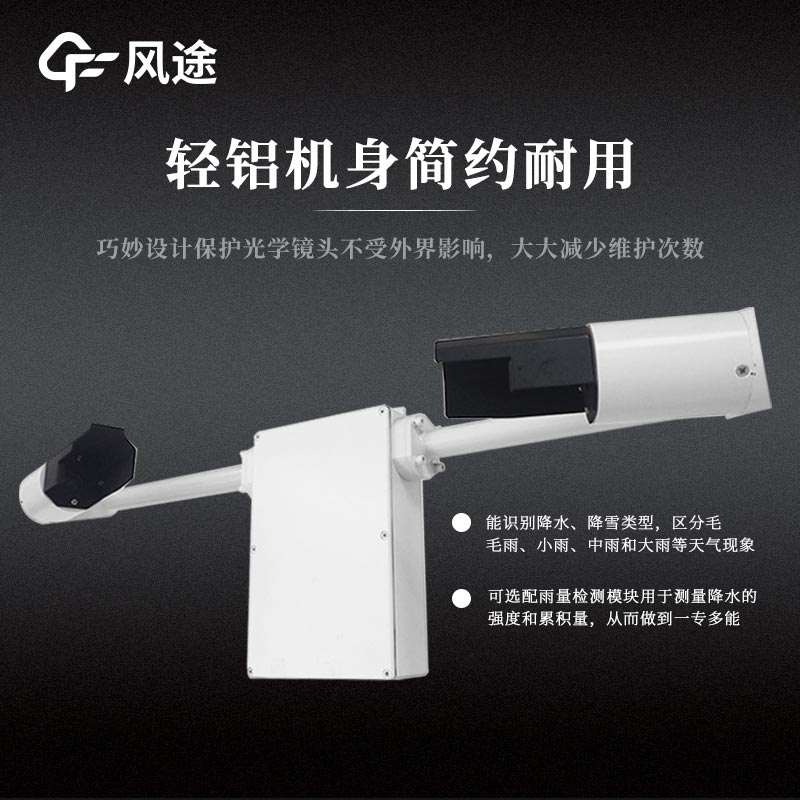
The Beidou Weather Station is an independently developed automated meteorological monitoring device that integrates Beidou-3 short message communication with meteorological monitoring technology. It features autonomous operation, real-time transmission, and intelligent monitoring capabilities,...
Fengtu Technology has 4 water level monitoring stations, the models are: FT-SW1, FT-SW2, FT-SW3, FT-SW4. For details, please contact the customer service of this website.Fengtu Hydrological Monitoring Station adopts radar technology to measure hydrological data by non-contact method, with low power...
An atmospheric electric field meter is a remote sensing device for lightning detection that monitors lightning activity in real-time by measuring changes in the strength of the atmospheric electrostatic field. It can issue warnings 5 to 30 minutes prior to a lightning strike, providing a basis...
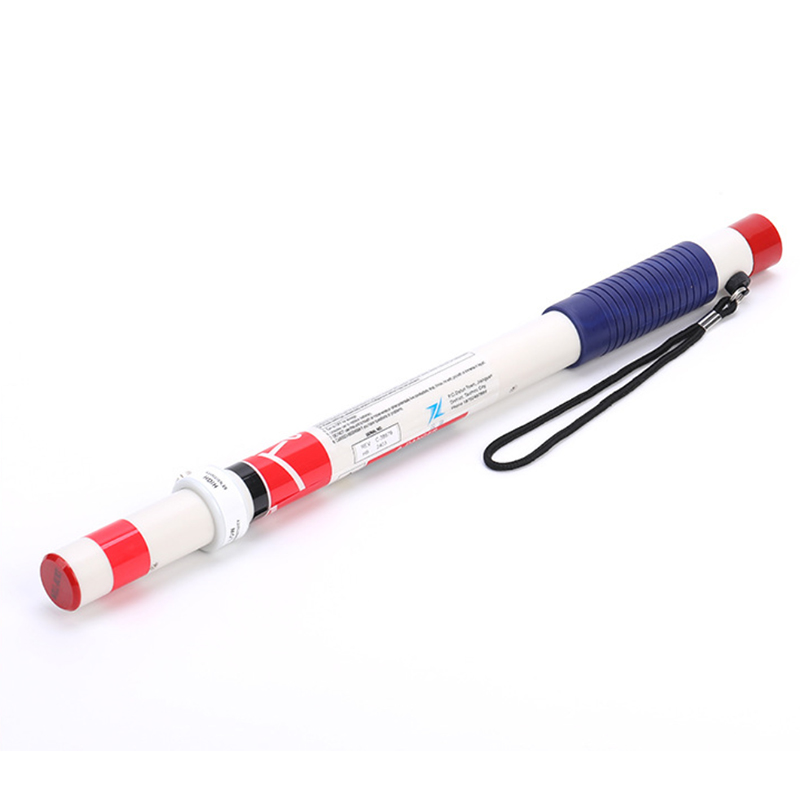
The Portable Visibility Detector is an atmospheric visibility monitoring device system that can be flexibly moved and is convenient to carry. Its working principle is mainly based on the optical scattering principle, and the visibility is calculated by measuring the optical properties of the atmosph...


 Skype
Skype
 whatsapp
 mail
mail