Shandong Fengtu IOT Technology Co., Ltd
Sales Manager:Ms. Emily Wang
Cel,Whatsapp,Wechat:+86 15898932201
Email:info@fengtutec.com
Add:No. 155 Optoelectronic Industry Accelerator, Gaoxin District, Weifang, Shandong, China


Sales Manager:Ms. Emily Wang
Cel,Whatsapp,Wechat:+86 15898932201
Email:info@fengtutec.com
Add:No. 155 Optoelectronic Industry Accelerator, Gaoxin District, Weifang, Shandong, China
time:2025-12-12 10:22:11 source:Weather Station viewed:566 time
Beidou Meteorological Station is an automated monitoring device that integrates multiple meteorological sensors and utilizes the BeiDou satellite short message function for data transmission. It can collect environmental data such as temperature, humidity, wind speed, wind direction, air pressure, and rainfall in real time in areas without terrestrial network coverage and autonomously transmit it to the monitoring center. It is suitable for disaster early warning and meteorological observation in remote areas.
The core feature of Beidou Meteorological Station is the integration of meteorological sensing technology and BeiDou satellite communication capabilities. The device integrates high-precision sensor units to continuously measure basic atmospheric environmental parameters such as wind speed and direction, air temperature and humidity, atmospheric pressure, optical rainfall, and total solar radiation. Some models can also monitor negative oxygen ion concentration. Its most critical technology is the built-in BeiDou communication module, especially the application of BeiDou-3 regional short message service. After real-time processing at the device end, the monitoring data is transmitted via the BeiDou satellite link, completely eliminating dependence on terrestrial mobile communication networks.
This communication method determines the unique application positioning of Beidou Meteorological Station. It is primarily deployed in remote areas where public terrestrial network signals are unavailable or unstable, such as vast sea areas, high mountains, deserts, primeval forests, or border regions. In these areas, traditional automatic weather stations relying on GPRS/4G transmission cannot function, while Beidou Meteorological Station, through its satellite link, achieves stable and reliable data transmission, filling observational gaps.
In practical applications, Beidou Meteorological Station undertakes several important tasks. In disaster prevention and mitigation, it is deployed at locations prone to geological disasters such as landslides and debris flows, monitoring local rainfall and meteorological conditions in real time, providing crucial on-site data for early warning issuance. In marine meteorological observation, Beidou Meteorological Station deployed on islands or buoys supports fisheries navigation and marine forecasting. It also plays an irreplaceable role in ecological monitoring, forest fire prevention, and meteorological support for border outposts. Furthermore, it provides valuable continuous observational data from uninhabited areas for climate research.
Effective operation and maintenance of Beidou Meteorological Station requires attention to its technical characteristics. The equipment typically uses a solar power system and is equipped with batteries; its design must fully consider its endurance under prolonged cloudy and rainy weather conditions. Installation site selection must ensure the representativeness of the sensor measurement environment while guaranteeing a wide-open, unobstructed view of the BeiDou antenna. Data communication adheres to the format and capacity limitations of BeiDou short messages, typically employing timed or threshold-triggered transmission modes. Data encoding optimization is necessary to transmit core information within a limited number of bytes.
Currently, with the improved short message communication capabilities of the BeiDou-3 global system, Beidou Meteorological Station has made continuous progress in monitoring element integration, data transmission frequency, and two-way remote control. Combined with traditional meteorological observation networks, it forms a comprehensive air-ground integrated monitoring system. As a component of national critical infrastructure, Beidou Meteorological Station, through independently controllable communication methods, has significantly enhanced its ability to acquire meteorological data in extreme environments and special regions, providing solid technical support for public safety, resource development, and scientific research.
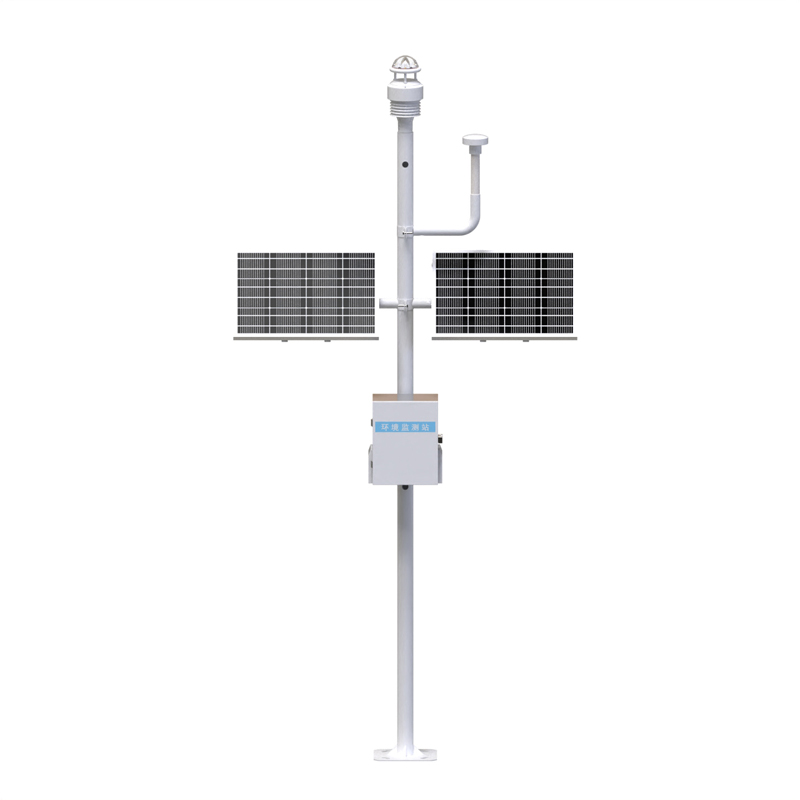
The Fengtu Small Automatic Weather Station simultaneously conducts real-time monitoring of six core meteorological parameters: wind speed, wind direction, temperature, humidity, air pressure, and optical rainfall. The wind speed and direction sensors have a range of 0 to 60 m/s, with an accuracy of...
The Wireless Weather Station not only enables high-precision meteorological monitoring but also flexibly adapts to different application scenarios. Its core highlight lies in the integrated composite meteorological sensor it is equipped with. This sensor has undergone professional calibration and op...
Rainfall is one of the key parameters in meteorology and hydrology, and precise measurement of precipitation is crucial for disaster prevention and mitigation, water resource management, and climate research. In meteorological early warning systems, real-time rainfall data serves as an important bas...
Agricultural meteorological stations is a device used for real-time monitoring of meteorological parameters in the farmland environment, including air temperature, humidity, soil moisture, soil temperature, wind speed, wind direction, rainfall, and light intensity. It features data acquisition, wireless transmission, automatic storage, threshold alarming, and data analysis functions, supporting agricultural management, pest and disease forecasting, and scientific research and teaching....


 Skype
Skype
 whatsapp
 mail
mail