Shandong Fengtu IOT Technology Co., Ltd
Sales Manager:Ms. Emily Wang
Cel,Whatsapp,Wechat:+86 15898932201
Email:info@fengtutec.com
Add:No. 155 Optoelectronic Industry Accelerator, Gaoxin District, Weifang, Shandong, China


Sales Manager:Ms. Emily Wang
Cel,Whatsapp,Wechat:+86 15898932201
Email:info@fengtutec.com
Add:No. 155 Optoelectronic Industry Accelerator, Gaoxin District, Weifang, Shandong, China
time:2025-12-17 11:18:53 source:Weather Station viewed:530 time
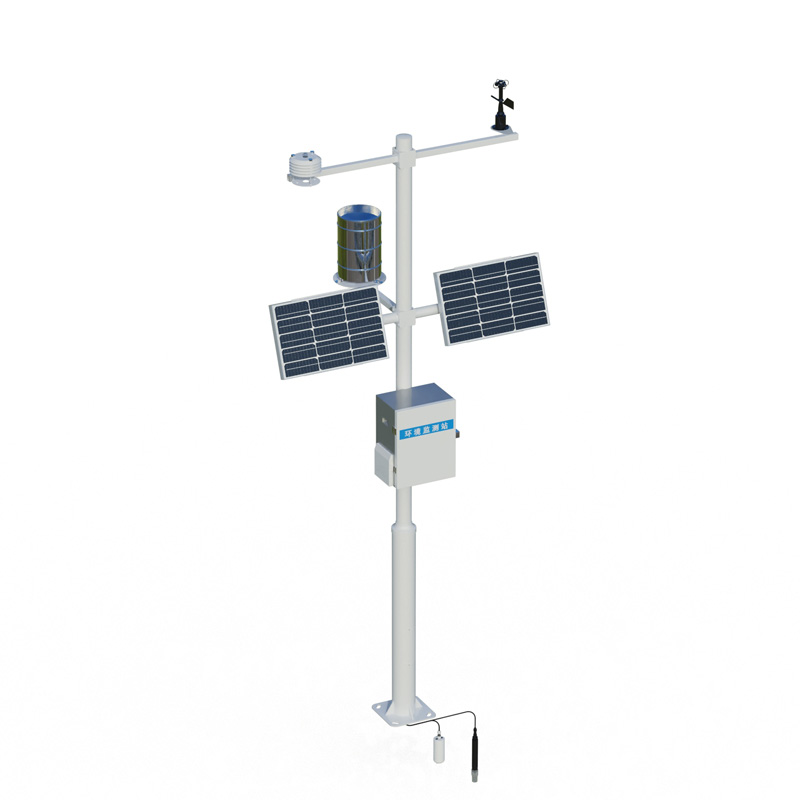
Agricultural Weather Stations is a high-precision observation device specifically designed for monitoring and recording meteorological data in fields and forest areas. It can automatically monitor the climate of farmland or forest areas, measuring common meteorological elements such as air temperature, humidity, soil moisture, soil temperature, wind speed, wind direction, rainfall, and light intensity. The data is used to guide precision irrigation, fertilization, and pest and disease control, improving crop yields. Furthermore, it optimizes greenhouse environmental control by analyzing temperature, humidity, and light data.
Agricultural Weather Stations is a specialized environmental data acquisition device deployed in production sites such as farmland, orchards, forest farms, or greenhouses. Its core function is to continuously and automatically acquire micro-meteorological parameters within the target area, forming a complete and independent local climate data record, providing a scientific basis for the refined management of agricultural production.
This system typically consists of a sensor unit, a data acquisition and transmission unit, a power supply unit, and a software platform. The sensor unit is responsible for sensing various environmental elements: air temperature and humidity sensors monitor near-surface atmospheric conditions; soil moisture and temperature sensors detect the crop root zone environment; wind speed and direction sensors record airflow; rain gauges measure precipitation; and photosynthetically active radiation (PAR) or light intensity sensors monitor solar radiation energy. These sensors convert physical signals into standard electrical signals.
The data acquisition unit is responsible for periodically collecting signals from all sensors and converting them into digital information. Modern systems typically integrate wireless communication modules, such as 4G/5G, LoRa, or NB-IoT, to enable remote automatic data upload. Power supply solutions often use solar panels combined with batteries to ensure long-term stable operation in the field. Users can remotely access real-time data, download historical records, and set alarm thresholds via a cloud platform or dedicated software.
In agricultural production, the application of this system's data is directly related to production decisions. Soil moisture data is the core basis for precision irrigation; farmers or irrigation systems can replenish water in a timely manner during the critical water demand period of crops based on real-time soil moisture conditions, avoiding ineffective irrigation and conserving water resources. Air temperature and humidity data are key parameters for predicting the risk of pests and diseases; combined with models, they can guide preventative pesticide application and reduce pesticide use. Soil temperature data is crucial for determining sowing time and assessing root vigor.
In greenhouse agriculture, this system serves as a source of information for automated environmental control. By continuously monitoring temperature, humidity, and light intensity within the greenhouse, the control system automatically adjusts equipment such as roller shutters, ventilation windows, supplemental lighting, and evaporative cooling fans to maintain the crop growth environment within the optimal range, effectively improving the quality and yield of fruits, vegetables, and flowers.
Furthermore, long-term continuous meteorological data records have scientific research value. They can be used to analyze the correlation between phenological periods of specific crop varieties and climatic conditions, assess the regulatory effects of different agricultural practices (such as mulching and intercropping) on the microclimate, and provide localized data support for addressing climate change and adjusting planting systems.
When deploying this system, instrument installation specifications must be followed. For example, temperature and humidity sensors must be installed inside a Stevenson screen to avoid direct sunlight; wind speed and direction sensors must be installed at the recommended ground clearance; and soil sensors must be buried at the required depth. Regular maintenance, such as cleaning sensors and checking power and communication status, is critical to ensuring data quality.
Overall, Agricultural Weather Stations has driven the transformation of agricultural production from experience-driven to data-driven by converting dispersed environmental information into centralized, analyzable digital assets, and is an important infrastructure for realizing smart agriculture and scientific management of forestry resources.
In emergency response, meteorological conditions have a significant impact on rescue operations. Conducting emergency drills with a Portable Weather Station can make the drills more realistic and effectively improve the emergency response level. The entire process can be divided into three key stage...
In the field of agricultural production, the 14 - element Agricultural Meteorological Stations mainly consist of meteorological sensors, collectors, solar power supply systems, pole brackets, and cloud platforms. Meteorological sensors are responsible for sensing and measuring various meteorological...
Microclimate refers to the small-scale, low-level climate on the surface, which is closely related to human activities. There are mainly air temperature, air humidity, atmospheric pressure, light radiation, rainfall, soil temperature, soil moisture, soil conductivity, soil PH, carbon dioxide and oth...
The price of Agricultural Weather Stations typically ranges from 7200 to 12000 RMB. Before purchasing, it's crucial to clarify your specific monitoring needs. The device integrates multiple sensors for real-time collection of field meteorological data, and the price difference mainly stems...


 Skype
Skype
 whatsapp
 mail
mail