Shandong Fengtu IOT Technology Co., Ltd
Sales Manager:Ms. Emily Wang
Cel,Whatsapp,Wechat:+86 15898932201
Email:info@fengtutec.com
Add:No. 155 Optoelectronic Industry Accelerator, Gaoxin District, Weifang, Shandong, China


Sales Manager:Ms. Emily Wang
Cel,Whatsapp,Wechat:+86 15898932201
Email:info@fengtutec.com
Add:No. 155 Optoelectronic Industry Accelerator, Gaoxin District, Weifang, Shandong, China
time:2026-04-20 11:12:21 source:Weather Station viewed:321 time
By integrating Beidou-3 short message communication technology with meteorological sensors, Beidou weather stations enable 24-hour unattended monitoring. Data is transmitted back in real-time via satellite links, effectively resolving the challenges of meteorological data collection and transmission in areas with absent or weak signal coverage.
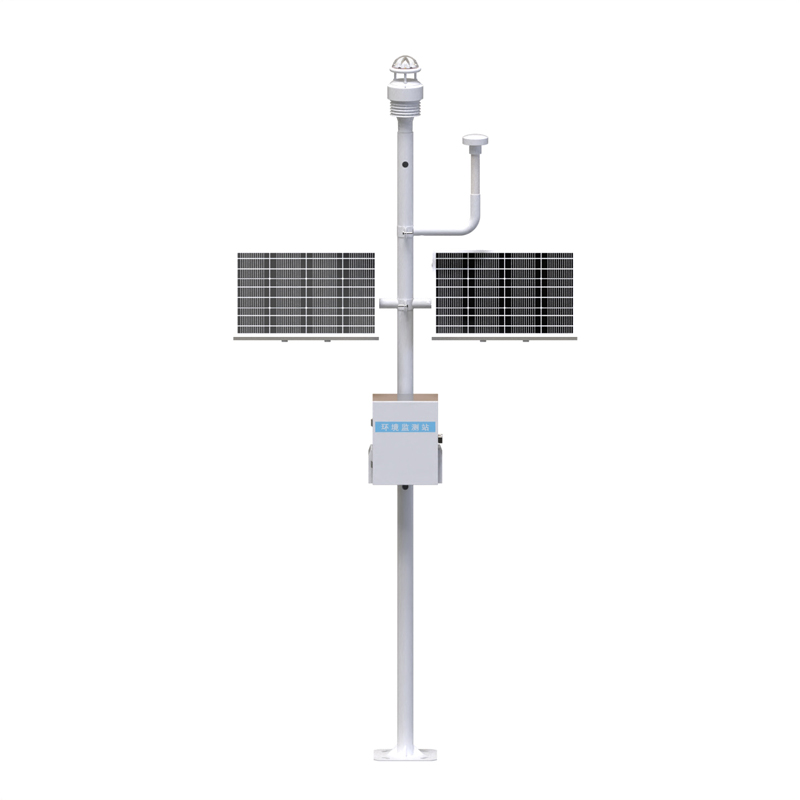
The Beidou weather station is an automated meteorological monitoring device that combines Beidou-3 regional short message communication technology with meteorological and environmental monitoring capabilities. Featuring a modular design, the system primarily comprises a sensor unit, a data logger, a Beidou data transmission terminal, a solar power supply system, and a protective enclosure. Characterized by autonomous operation, real-time transmission, and intelligent monitoring capabilities, the system is capable of conducting continuous, 24-hour monitoring of changes in the meteorological environment.
In regions lacking terrestrial network coverage, traditional automated weather stations are unable to transmit data back because they cannot access GPRS or 4G signals. The Beidou weather station resolves this challenge by leveraging the unique short message communication functionality inherent to the Beidou Satellite Navigation System. The device's embedded Beidou-3 short message module supports integrated RDSS positioning and data transmission capabilities; it offers a single-message capacity exceeding 78 bytes and allows for configurable transmission intervals, thereby enabling remote data backhaul even in environments devoid of terrestrial network infrastructure. After the data logger collects meteorological parameters—such as wind speed, wind direction, temperature, humidity, atmospheric pressure, and precipitation—measured by the sensors, the Beidou communication module encodes this data and transmits it via satellite link to a central data center, thereby automating the entire process from data acquisition to backhaul.
Beidou weather stations have already been deployed for practical application in numerous regions. For instance, the Meteorological Bureau of Yining County, Xinjiang, has completed the installation and commissioning of a Beidou-based automated weather station powered by a hybrid solar-wind energy system. By utilizing Beidou's short message communication service, the station has acquired the capability for continuous, long-term, real-time online observation and data transmission. The collected meteorological data is automatically transmitted back to a central processing facility, thereby resolving the difficulties associated with covering remote areas using conventional communication methods and significantly enhancing both the accuracy and lead time of weather forecasts. Dali County in Shaanxi Province has established the county's first automated meteorological station utilizing Beidou satellite transmission, situated near the confluence of the Yellow, Wei, and Luo rivers. Sensors at the station are responsible for detecting six key meteorological parameters—wind speed, wind direction, temperature, humidity, atmospheric pressure, and precipitation—while a data collector processes this information according to a standardized format. A solar power unit ensures a stable and continuous power supply, and a dedicated Beidou communication unit transmits the collected data to the meteorological control room, thereby providing critical support for flood control, disaster prevention, and early warning decision-making. Meanwhile, the Meteorological Bureau of Xiangcheng County in Sichuan Province has successfully retrofitted 23 regional meteorological observation stations with Beidou satellite systems. These stations cover key areas—including high-altitude valleys and remote villages—ensuring that meteorological data (such as air temperature, precipitation, wind force, and humidity) can be transmitted accurately and in real-time to the County Meteorological Bureau's data processing center, even amidst severe weather conditions such as heavy rain, blizzards, or mudslides. In Xishuangbanna Prefecture, the local meteorological department has deployed its first Beidou-3 satellite communication terminal. By utilizing Beidou satellite links to transmit meteorological monitoring data, the system effectively mitigates the disruptions typically caused by GPRS signal outages during severe storms or local power failures, thereby guaranteeing the security and stability of meteorological data transmission.
The equipment features a solar power system paired with high-capacity backup batteries, enabling it to maintain normal operations even during prolonged periods of overcast or rainy weather. Furthermore, the protective enclosure meets the IP67 ingress protection standard, allowing the station to withstand and function effectively within complex outdoor environments. By leveraging independently controllable communication technologies, these Beidou-enabled meteorological stations have significantly enhanced the capability to acquire meteorological data in extreme environments and geographically challenging regions, providing vital support for weather forecasting, environmental early warnings, and disaster prevention and mitigation efforts.
The Environment Visibility Sensor is equipped with stable and efficient light sources such as lasers or LEDs. Taking the infrared LED as an example, it emits infrared light with wavelengths of 940nm, 930nm, or 870nm. After being collimated by a lens, the light is directed towards the atmospheric sam...
Designed specifically for transmission line corridors, these environmental monitoring stations can be flexibly mounted on power pylons. They capture high-precision data—including wind speed, wind direction, temperature, humidity, air pressure, and rainfall—and transmit it wirelessly to a monitorin...
Traditional pest monitoring is labor-intensive and time-consuming, making it difficult to meet the needs of production efficiency. However, the Insect Monitoring System successfully addresses this issue through the integration of interdisciplinary theories and modern technologies. It is not a simple...
Tunnels are enclosed spaces with poor air circulation, and due to complex traffic structures and heavy traffic volumes, poor ventilation can easily lead to the accumulation of harmful gases such as smoke particles and carbon monoxide (CO). This significantly reduces visibility inside the tunnel and...


 Skype
Skype
 whatsapp
 mail
mail