Shandong Fengtu IOT Technology Co., Ltd
Sales Manager:Ms. Emily Wang
Cel,Whatsapp,Wechat:+86 15898932201
Email:info@fengtutec.com
Add:No. 155 Optoelectronic Industry Accelerator, Gaoxin District, Weifang, Shandong, China


Sales Manager:Ms. Emily Wang
Cel,Whatsapp,Wechat:+86 15898932201
Email:info@fengtutec.com
Add:No. 155 Optoelectronic Industry Accelerator, Gaoxin District, Weifang, Shandong, China
time:2026-06-02 10:29:58 source:Weather Station viewed:192 time
The intelligent weather station is a highly integrated, low-power, and quickly installable high-precision automatic meteorological observation device. It can monitor meteorological elements such as wind speed, wind direction, temperature, humidity, air pressure, optical rainfall, PM2.5, PM10, CO, NO2, SO2, and O3 in real time, and is suitable for 24-hour continuous online monitoring in various scenarios such as agriculture, environmental protection, and scientific research.
The intelligent weather station is a highly integrated, low-power, and quickly installable automatic meteorological observation device, mainly used for 24-hour continuous online monitoring of outdoor meteorological parameters. Compared with traditional split-type weather stations, the intelligent weather station integrates multiple sensors into one unit, significantly reducing installation and maintenance costs, while also reducing potential failure points caused by multiple separate devices. This equipment provides real-time monitoring of various meteorological and airborne factors, including wind speed, wind direction, air temperature, relative humidity, atmospheric pressure, optical rainfall, PM2.5, PM10, carbon monoxide, nitrogen dioxide, sulfur dioxide, and ozone. It can meet the needs of diverse scenarios such as agricultural irrigation, environmental monitoring, campus science education, airports and ports, and scientific expeditions.
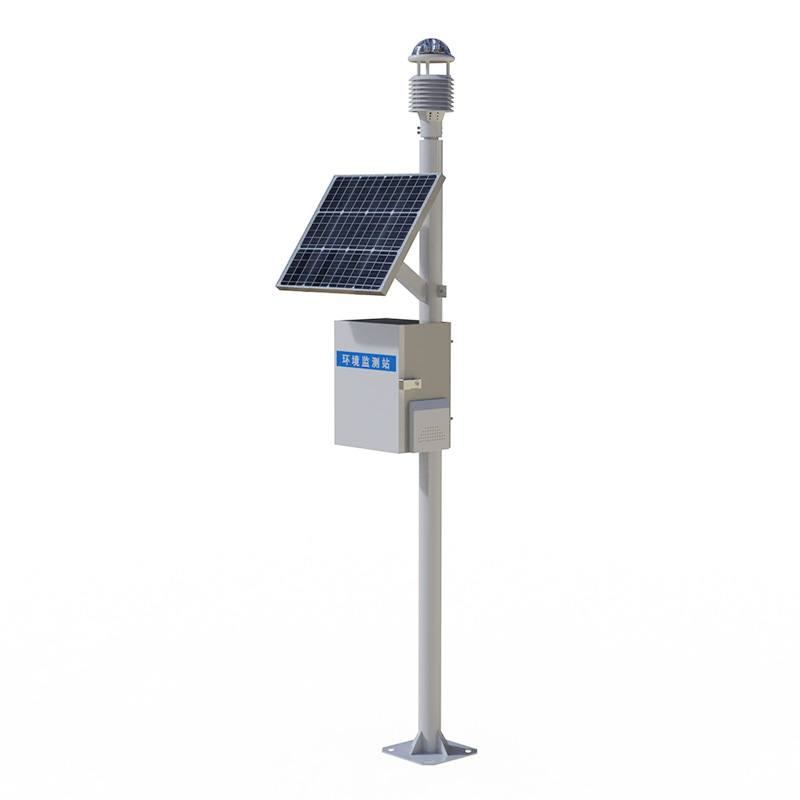
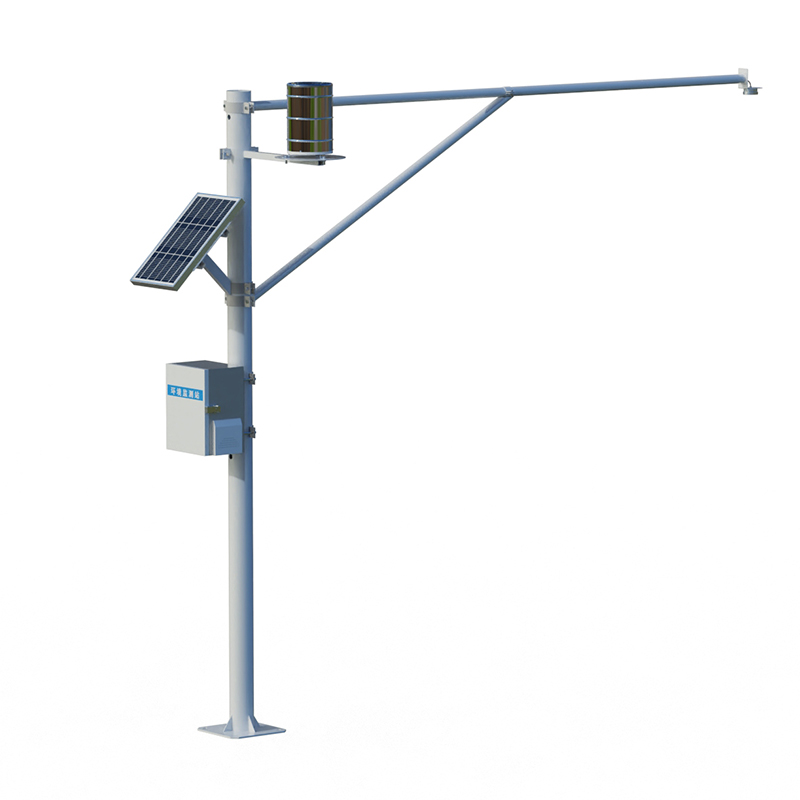
Structurally, an intelligent weather station typically consists of five parts: meteorological sensors, a data acquisition unit, a solar power system, a pole support, and a cloud platform. The meteorological sensor is the core component of the entire device, and its measurement accuracy directly determines the reliability of the observation data. Taking the Fengtu FT series weather station as an example, the wind speed sensor uses ultrasonic principles, with a range of 0 to 60 meters per second and an accuracy of ±0.2 meters per second; the wind direction sensor has a range of 0 to 360 degrees and an accuracy of ±1 degree; the air temperature uses the diode junction voltage method, with a range of -40 to 80 degrees Celsius and an accuracy of ±0.3 degrees Celsius; the relative humidity uses a capacitive measurement principle and an accuracy of ±3% relative humidity; the atmospheric pressure range is 300 to 1100 hPa and an accuracy of ±0.25%. PM2.5 and PM10 measurements are both 0 to 1000 micrograms per cubic meter with an accuracy of ±10%. The optical rain gauge has a range of 0 to 4 millimeters per minute and an accuracy of ≤±4%. The static power consumption of the data acquisition unit is controlled within 1 mA, and it supports multiple transmission methods such as GPRS, Bluetooth, and wired connections, adapting to communication needs in different deployment environments.
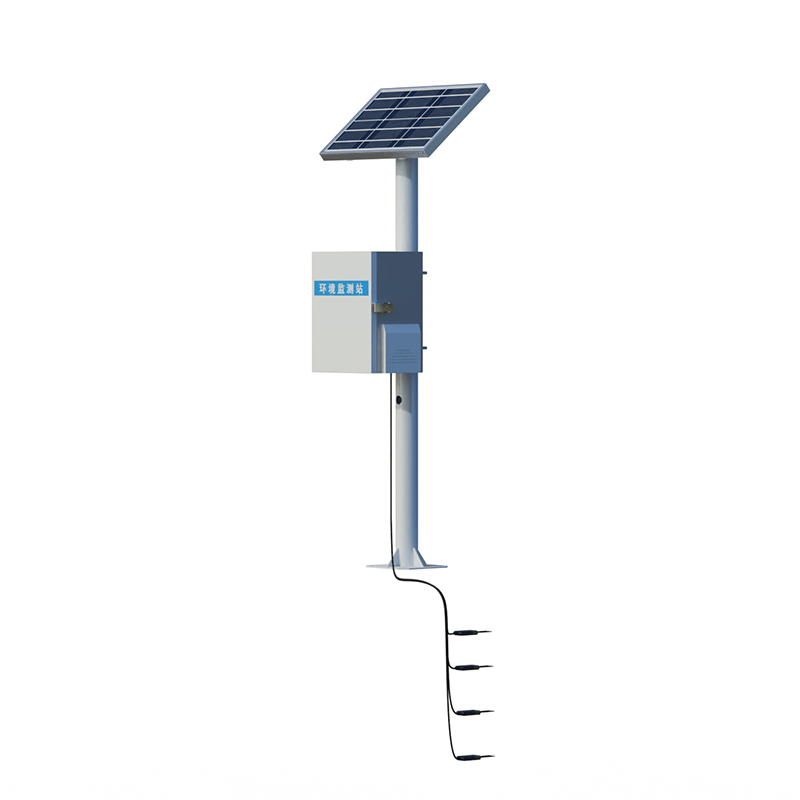
Regarding the power supply system, smart weather stations typically use a combination of solar panels and lead-acid or lithium batteries. The solar charging management system supports MPPT (Multi-Level Power Tracking), improving charging efficiency by approximately 20% compared to traditional solutions. Its low-power design allows for continuous operation for several days even without sunlight, making it suitable for long-term deployment in remote mountainous areas, uninhabited wilderness, and other locations without mains power coverage. The data upload interval is adjustable from 1 minute to 1000 minutes, allowing users to flexibly set it according to the time accuracy requirements of their monitoring tasks. In terms of protection, the sensor housing is made of imported ABS or stainless steel, achieving an IP65 or higher protection rating, effectively resisting rain, snow, and sandstorms, and meeting the long-term operational needs of harsh outdoor environments. With its integrated structure, flexible deployment methods, and reliable data quality, the intelligent weather station has become a crucial infrastructure for meteorological observation network construction and field environmental monitoring.
In fields such as meteorological monitoring and traffic control, accurate measurement of visibility is required. Fengtu Technology, a manufacturer of meteorological stations, has launched a variety of Visibility detectors, including portable models, professional models, coastal models, and explosion...
A Portable Weather Station for firefighting is a lightweight and multi-functional weather monitoring device specially designed for fire rescue scenarios. It is mainly used to monitor the meteorological conditions at the fire scene in real-time, helping firefighters assess the development trend of th...
As a vital water transportation corridor, shipping safety in canals is of utmost importance. Visibility stands as one of the critical factors influencing canal navigation safety. During adverse weather conditions such as heavy fog or torrential rain that reduce visibility, ship operators face restri...
A scattering-type visibility sensor is an instrument that estimates visibility by measuring the intensity of scattered light in the atmosphere. It is based on three assumptions: the atmosphere is homogeneous, the extinction coefficient is equal to the scattering coefficient, and the scattered light...


 Skype
Skype
 whatsapp
 mail
mail