Shandong Fengtu IOT Technology Co., Ltd
Sales Manager:Ms. Emily Wang
Cel,Whatsapp,Wechat:+86 15898932201
Email:info@fengtutec.com
Add:No. 155 Optoelectronic Industry Accelerator, Gaoxin District, Weifang, Shandong, China


Sales Manager:Ms. Emily Wang
Cel,Whatsapp,Wechat:+86 15898932201
Email:info@fengtutec.com
Add:No. 155 Optoelectronic Industry Accelerator, Gaoxin District, Weifang, Shandong, China
time:2026-06-15 10:08:04 source:Weather Station viewed:119 time
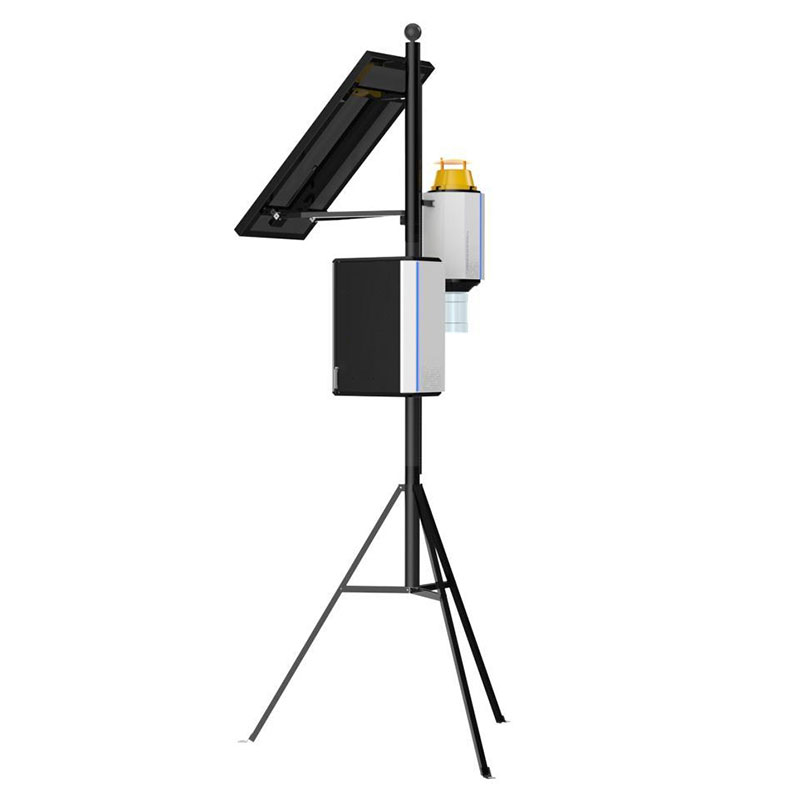
Based on edge computing, this device achieves targeted pest trapping, classifies and statistically analyzes different pest data, and identifies peak occurrence patterns. It supports target photography and remote image transmission, and is widely used in orchards, forest farms, and field fields.
This intelligent insect pheromone trapping and monitoring device utilizes computer internet technology combined with insect sex pheromone technology to create a pest monitoring and early warning system. It is primarily used in parks, forest farms, and orchards, but can also be used in vegetable gardens, field fields, and other agricultural settings. The device meets the monitoring and reporting needs of various common pests, including fruit tree pests, agricultural pests, storage pests, and quarantine pests, such as fall armyworm, corn borer, beet armyworm, tobacco budworm, diamondback moth, cotton bollworm, rice stem borer, and pear fruit moth. The device uses a built-in pheromone lure to release biomimetic signals from female insects, targeting and trapping specific pests. This significantly improves trapping efficiency compared to traditional methods. Furthermore, different pheromone lures can be used to target different pests.
In terms of technical architecture, the device is based on edge computing technology, performing data preprocessing on the device itself and uploading only the identification results to the cloud, thus reducing the burden on cloud data processing. The device can automatically classify and statistically analyze different pest infestations, identify peak infestation patterns, and count the number of pests occurring in different time periods. For its counting mechanism, the device uses infrared pulse counting technology with a counting interval of no more than 0.1 seconds, automatically eliminating interference from non-target pests, achieving a forecasting accuracy of over 95%. Simultaneously, the device has a built-in high-definition camera that can photograph target pests and periodically send the images to a monitoring platform according to backend settings, providing users with intuitive evidence of pest infestations.
Regarding data transmission and early warning, the device has a remote automatic data transmission function, transmitting data including pest numbers, trapping time, GPS information, and environmental temperature and humidity. Users can set the data upload frequency in three ways: based on pest thresholds, fixed time, or remote commands. Data can be reported in real time to the user-specified address and can be received by various clients, including mobile phones and computers. When the pest density reaches the set threshold, the platform will promptly push out early warning information. The equipment uses solar power, enabling continuous operation even in continuous rainy weather. The main unit operates within a temperature range of -20℃ to 70℃, allowing for long-term operation in various climatic environments.
The Beidou Weather Station combines Beidou-3 short message communication with meteorological sensors to achieve 24/7 unattended monitoring. The equipment uses an integrated eight-element sensor, and data is transmitted back in real-time via satellite link, solving the problem of meteorological...
As an important part of the power system, the safe operation of the transmission line directly affects the social and economic development. Therefore, in the actual production, it is necessary to do a good job in the maintenance of the transmission line to ensure that the transmission line has good...
A Spore Catcher is a device used to monitor and analyze pathogenic spores in the air. It consists of a high-power optical microscopy imaging system, precision limit technology, automatic intelligent focusing fusion technology, and IoT transmission control technology. Utilizing optoelectronic and num...
In fields such as meteorological monitoring and traffic control, accurate measurement of visibility is required. Fengtu Technology, a manufacturer of meteorological stations, has launched a variety of Visibility detectors, including portable models, professional models, coastal models, and explosion...


 Skype
Skype
 whatsapp
 mail
mail