Shandong Fengtu IOT Technology Co., Ltd
Sales Manager:Ms. Emily Wang
Cel,Whatsapp,Wechat:+86 15898932201
Email:info@fengtutec.com
Add:No. 155 Optoelectronic Industry Accelerator, Gaoxin District, Weifang, Shandong, China


Sales Manager:Ms. Emily Wang
Cel,Whatsapp,Wechat:+86 15898932201
Email:info@fengtutec.com
Add:No. 155 Optoelectronic Industry Accelerator, Gaoxin District, Weifang, Shandong, China
time:2026-07-16 10:19:36 source:Weather Station viewed:40 time
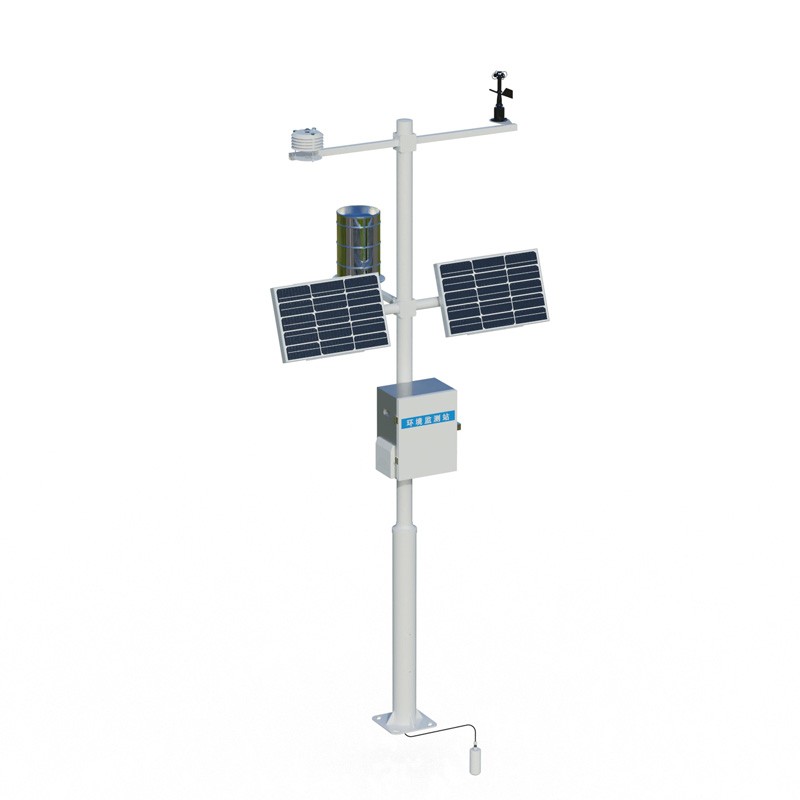
A field weather station is a high-precision meteorological observation device specifically designed for agriculture. It consists of five parts: sensors, a data logger, a solar power system, a pole support, and a cloud platform. It can monitor parameters such as air temperature and humidity, soil temperature and humidity, wind speed and direction, etc. It requires no debugging and can be quickly installed, making it widely used in meteorology, agriculture, forestry, and other fields.
The field weather station is a meteorological monitoring device specifically designed for agriculture. Through sensors, a data logger, and computer software, it collects environmental parameters such as wind direction, wind speed, temperature and humidity, precipitation, and soil moisture in real time, and aggregates the data to a management platform to assist in agricultural production decisions. This device, composed of meteorological sensors, a data logger, a solar power system, a pole support, and a cloud platform, is a highly integrated, low-power, quickly installable, and easy-to-use high-precision meteorological observation device for field monitoring.
The field weather station can monitor common farmland meteorological elements such as air temperature, air humidity, soil moisture, soil temperature, wind speed, wind direction, rainfall, and light intensity. Core monitoring elements typically include air temperature, humidity, wind speed, wind direction, rainfall, light intensity, soil temperature and humidity, and soil conductivity. Climate element sensors can be added selectively based on user needs. The equipment is solar-powered and can be directly installed in agricultural environments without external power supply, solving the problem of power supply in the field. Data is transmitted wirelessly to a cloud platform via GPRS, 4G, etc., and users can view the data in real time via a mobile app.
Applications of field weather stations include intelligent irrigation triggering, pest and disease early warning, and disaster prevention. Based on soil moisture and rainfall data, farmers can accurately control irrigation volume and timing, avoiding over-irrigation that wastes water resources and depletes soil nutrients. When the monitoring system indicates low soil moisture, farmers can irrigate promptly to prevent crops from stunting due to water shortage. Simultaneously, field weather stations can monitor weather changes in real time, providing early warnings of meteorological disasters such as typhoons, heavy rains, droughts, and frosts. Upon receiving warnings, farmers can take timely preventative measures to reduce damage to crops and forestry resources. This equipment is widely used in meteorology, agriculture, forestry, scientific research and other fields, providing data support for precision agriculture.
The fall armyworm, also known as the autumn armyworm, is an agricultural pest native to the tropical and subtropical regions of the Americas. The adult has a wingspan of 32 - 40 mm. The forewings are gray to dark brown, and the hindwings are white with a narrow brown band along the edge. The larvae...
The fiberglass Stevenson Screen consists of a box body, connecting brackets, and a base, all constructed entirely of high-quality fiberglass. It overcomes the shortcomings of traditional wooden Stevenson Screens, offering excellent ventilation, heat insulation, radiation protection, and weathe...
Solar-powered insecticidal lamps are physical pest control devices that utilize the phototaxis, wave attraction, color attraction, and other behavioral characteristics of insects, powered by solar energy. The device consists of a solar panel, controller, battery, and insecticidal lamps. Combin...
Equipped with insect suction technology and leveraging aerodynamic suction alongside IoT-based AI, this intelligent monitoring device automatically traps and tracks small migratory insects around the clock, making it suitable for plant protection monitoring and pest data analysis across various sect...


 Skype
Skype
 whatsapp
 mail
mail