Shandong Fengtu IOT Technology Co., Ltd
Sales Manager:Ms. Emily Wang
Cel,Whatsapp,Wechat:+86 15898932201
Email:info@fengtutec.com
Add:No. 155 Optoelectronic Industry Accelerator, Gaoxin District, Weifang, Shandong, China


Sales Manager:Ms. Emily Wang
Cel,Whatsapp,Wechat:+86 15898932201
Email:info@fengtutec.com
Add:No. 155 Optoelectronic Industry Accelerator, Gaoxin District, Weifang, Shandong, China
time:2026-04-28 10:20:57 source:Weather Station viewed:269 time
BeiDou Environmental Monitoring Station integrates regional short message communication technologies from the BeiDou-2 and BeiDou-3 satellite systems with hydrological and environmental monitoring technologies to achieve 24-hour uninterrupted autonomous operation, real-time data transmission, and intelligent monitoring. Specifically designed for areas with no or weak signal coverage, it is deployed in critical ecological zones such as forests, wetlands, rivers, and lakes.
BeiDou Environmental Monitoring Station is an automated device that combines BeiDou short message communication technology with environmental monitoring capabilities. Its primary function is to resolve the challenges associated with collecting and transmitting environmental data in remote regions where traditional communication networks cannot reach. By leveraging the regional short message communication functions of BeiDou-2 and BeiDou-3, the device operates independently—without relying on terrestrial base stations—and supports the transmission of short messages containing up to 1,000 Chinese characters per instance. It can actively report monitoring data—such as air quality, water quality, and soil moisture—and receive remote commands to adjust monitoring parameters or trigger emergency response measures. The system features autonomous operation, real-time transmission, intelligent monitoring, and precise forecasting capabilities; it conducts 24-hour uninterrupted surveillance of meteorological and environmental changes, thereby effectively resolving the environmental monitoring challenges prevalent in areas with absent or weak signal coverage.
In terms of technical specifications, BeiDou Environmental Monitoring Station offers a water level measurement range of 0.1 to 40 meters with an accuracy of ±5 mm, and a flow velocity measurement range of 0.15 to 15 m/s with a resolution of 0.01 m/s. The device operates within a temperature range of -45°C to 85°C; its solar power system is capable of sustaining continuous operation for up to 30 days during overcast or rainy weather, and the unit boasts a service life of no less than 8 years. The device features a built-in high-capacity lithium battery and solar charging system. Its sensor array employs electrochemical, optical, and physical detection technologies to perform real-time data acquisition for parameters such as PM2.5, PM10, temperature and humidity, wind speed and direction, noise levels, dissolved oxygen, pH, and electrical conductivity. Once calibrated by the device's internal processor, the collected data is uploaded to a cloud platform via BeiDou satellites or 4G/LoRa wireless communication networks.
In terms of application, BeiDou Environmental Monitoring Station is widely utilized across various scenarios, including atmospheric pollution prevention and control, water environment regulation, ecological conservation and restoration, and agricultural environmental monitoring. Deploying monitoring stations within industrial parks and along major transportation arteries enables the real-time tracking of pollutant emission sources, utilizing wind direction data to pinpoint non-compliant enterprises. The deployment of buoy-based monitoring stations across major river basins—such as the Yangtze and Yellow Rivers—facilitates the monitoring of water quality fluctuations and allows for the timely detection of incidents such as oil spills and algal blooms. Furthermore, installing BeiDou monitoring stations within nature reserves enables coordinated monitoring of wildlife activity in conjunction with infrared cameras. Hubei’s water conservancy authorities have successfully established a "5G + BeiDou" dual-channel data transmission system, achieving the real-time acquisition and near-instantaneous transmission of groundwater levels and water temperature data; this has boosted monitoring efficiency by over 90% compared to traditional methods. Featuring an integrated design that combines multi-parameter measurement capabilities with extended battery life, a single device can simultaneously monitor more than ten distinct parameters across three major categories—hydrology, water quality, and meteorology. This design reduces equipment investment costs for users and is well-suited for a wide range of water body monitoring scenarios, including rivers, lakes, reservoirs, and irrigation canals.
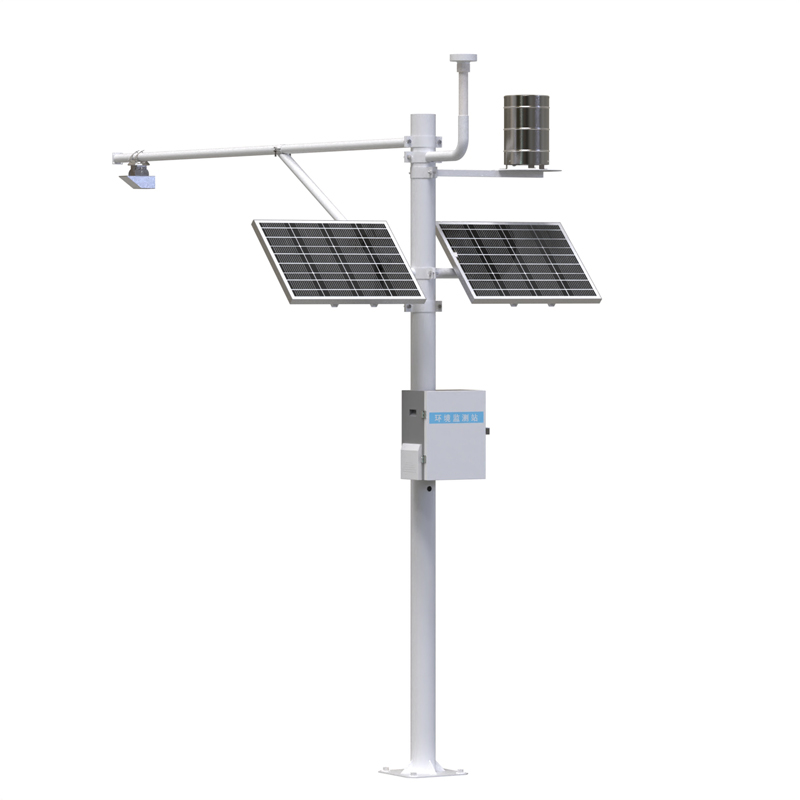
The compact weather station is a dedicated device focused on meteorological data collection. Characterized by easy installation, simple operation, high measurement accuracy, and integration of multiple meteorological elements, it is highly favored by meteorological researchers and has become their p...
These lamps are powered by solar energy and attract mosquitoes with a specific wavelength of light. A built-in fan generates negative pressure airflow, drawing the mosquitoes into a collector where they are dried and dehydrated, thus achieving physical mosquito control. The device requires no...
Air pollution is having an increasingly obvious impact on human health and the environment. Today, we introduce an efficient and convenient on-site air monitor - the FT-BQX8 Portable Weather Station.The FT-BQX8 Portable Weather Station is an on-site air monitoring device that can accurately measure...
Meteorological changes have a crucial impact on numerous fields. In agricultural production, meteorological conditions are directly related to the growth and harvest of crops. Through meteorological monitoring, people can obtain weather information in advance, arrange agricultural activities reasona...


 Skype
Skype
 whatsapp
 mail
mail