Shandong Fengtu IOT Technology Co., Ltd
Sales Manager:Ms. Emily Wang
Cel,Whatsapp,Wechat:+86 15898932201
Email:info@fengtutec.com
Add:No. 155 Optoelectronic Industry Accelerator, Gaoxin District, Weifang, Shandong, China


Sales Manager:Ms. Emily Wang
Cel,Whatsapp,Wechat:+86 15898932201
Email:info@fengtutec.com
Add:No. 155 Optoelectronic Industry Accelerator, Gaoxin District, Weifang, Shandong, China
time:2026-05-06 11:31:16 source:Weather Station viewed:291 time
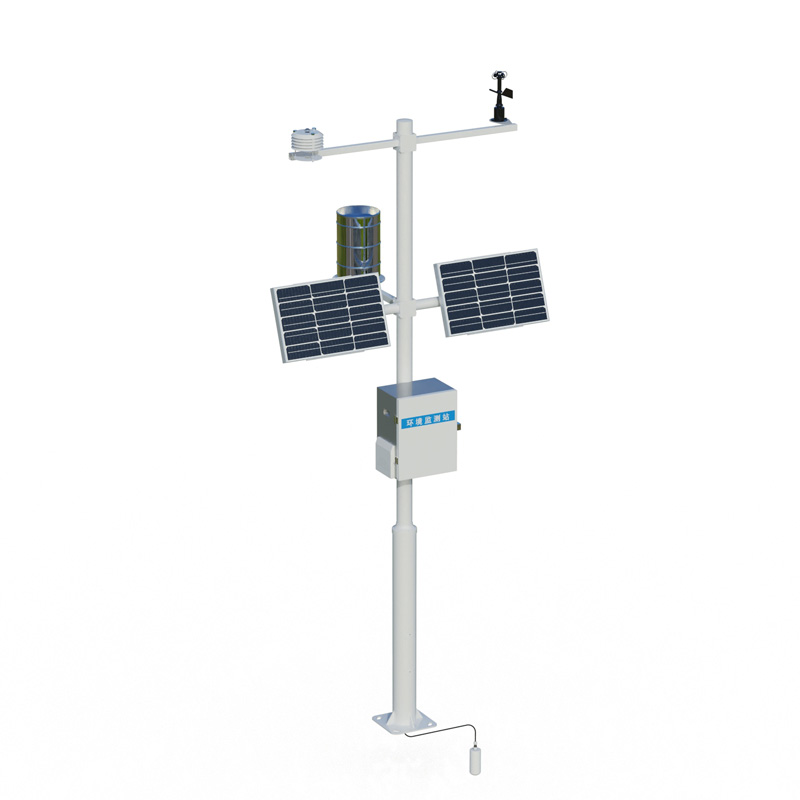
The Field Microclimate Monitoring Station consists of five key components: meteorological sensors, a data collector, a solar power supply system, a mounting pole, and a cloud platform. Designed for rapid, calibration-free installation, it is specifically utilized for meteorological observation in open-field cultivation and smart agricultural parks.
The Field Microclimate Monitoring Station is a meteorological observation device engineered specifically for microclimate monitoring within localized agricultural areas. It comprises five main parts: meteorological sensors, a data collector, a solar power supply system, a mounting pole, and a cloud-based management platform. Adopting a highly integrated, low-power design, the device supports rapid, calibration-free installation, facilitating reliable long-term operation in rugged outdoor environments. It is widely applicable across various agricultural production scenarios, including open-field cultivation, high-standard farmland, and smart agricultural parks. Equipped with high-precision sensing modules, the device provides real-time, all-weather monitoring of critical meteorological parameters within the field—including air temperature, humidity, light intensity, wind speed, wind direction, rainfall, as well as soil temperature and soil moisture.
Regarding power supply and data transmission, the Field Microclimate Monitoring Station employs a hybrid power solution combining solar energy with rechargeable batteries, ensuring stable operation even in field environments where grid electricity is unavailable. Supported by solar charging, the device can operate continuously for over 15 days, guaranteeing uninterrupted 24-hour monitoring. For data acquisition, the device supports the installation of a TF card capable of storing at least 400,000 sensor data records, thereby ensuring the secure and complete preservation of long-term historical data. The collected meteorological data is uploaded via a 4G network to a cloud-based management platform, allowing users to view real-time data and historical trend charts via a mobile app or desktop interface. The system also features an alert function for threshold breaches, automatically sending notifications whenever monitored values exceed pre-configured limits.
In practical agricultural applications, the Field Microclimate Monitoring Station plays an indispensable role. By providing real-time monitoring of soil moisture, the system enables users to accurately determine whether irrigation is required, thereby facilitating the creation of "on-demand" irrigation schedules that prevent resource waste caused by excessive water usage. Furthermore, trends in air temperature and humidity provide essential reference data for field management, assisting users in rationally scheduling critical operations such as ventilation, fertilization, and pest and disease control. Additionally, the acquisition of wind speed and wind direction data offers valuable guidance for selecting optimal operational windows for agricultural plant-protection drones. By analyzing data such as light intensity and accumulated temperature variations, users can further optimize sowing timing and variety selection, thereby facilitating a transition from traditional experience-based cultivation to scientific, data-driven management. As a vital component of smart agriculture infrastructure, field microclimate monitoring stations provide objective and reliable meteorological data support, enabling the precision management of agricultural production and the enhancement of crop yields.
The Negative oxygen ion monitoring station, as the core quantitative tool of a "natural oxygen bar", relies on technological means to transform the abstract air quality into perceivable and verifiable scientific indicators, playing an important supporting role in many fields such as ecolog...
The Visibility Detector is mainly a forward-scattering visibility meter, which is an important instrument for measuring visibility.The transmitter and the receiver are kept at a certain distance and at a certain angle. The receiver only receives the forward-scattering light of the atmosphere. The tr...
The Stainless Steel Tipping Bucket Rain Gauge is the most classic rain gauge. It collects rainwater through an inclined funnel. When the rainwater reaches a certain amount, the tipping bucket below tilts and dumps the water. After the sensor detects this action, the rainfall can be determined.It can...
One of the advantages of the Portable Weather Station is its convenient deployment capability. When natural disasters or emergencies occur, time is critical, and traditional fixed weather stations cannot be quickly transferred to the affected areas. However, the Portable Weather Station is small in...


 Skype
 whatsapp
 mail