Shandong Fengtu IOT Technology Co., Ltd
Sales Manager:Ms. Emily Wang
Cel,Whatsapp,Wechat:+86 15898932201
Email:info@fengtutec.com
Add:No. 155 Optoelectronic Industry Accelerator, Gaoxin District, Weifang, Shandong, China


Sales Manager:Ms. Emily Wang
Cel,Whatsapp,Wechat:+86 15898932201
Email:info@fengtutec.com
Add:No. 155 Optoelectronic Industry Accelerator, Gaoxin District, Weifang, Shandong, China
time:2026-05-11 10:46:36 source:Weather Station viewed:236 time
This fully digital electric field detection and warning platform employs MEMS technology at its core. The electric field measurement range is -100kV/m to 100kV/m, with a resolution of 0.1V/m and a detection radius of 15km. The system acquires electric field changes through the principle of charge induction and issues a three-level alarm before lightning strikes. It is widely used in aerospace, petrochemical, power grid, and oil depot industries to assist hazardous locations in taking preventative protective measures.
The lightning warning system continuously monitors changes in the atmospheric electrostatic field intensity to determine the formation and development trend of thunderclouds. Before a thunderstorm cloud passes, the accumulation of charges in the cloud layer causes significant fluctuations in the atmospheric electric field intensity at the ground. The system captures these changes using electric field sensors deployed in the monitoring area. The sensor's core is based on the principle of charge induction and is developed using MEMS (Micro-Electro-Mechanical Systems) technology. It has no internal moving mechanical parts such as motors, resulting in a small overall size and a weight of approximately 710g. Power consumption is kept low, making it suitable for long-term deployment in locations such as oil and gas depots, substations, and mines. The system has a detection radius of 15km, an electric field measurement range of -100kV/m to 100kV/m, a resolution of 0.1V/m, and an accuracy of ±0.001%F.S.
The lightning warning system's built-in warning algorithm uses an optimized approach combining electric field differentiation and threshold values. Compared to conventional fixed threshold judgment methods, this effectively reduces the risk of false alarms caused by weather conditions such as rain, snow, strong winds, and dust storms. When the electric field data meets the preset warning conditions, the system issues an alarm signal through a three-level audible and visual alarm, and also supports transmitting alarm information to the central control platform via wired network and wireless communication. In the petrochemical industry, this system has been deployed in oil and gas storage bases such as natural gas processing plants. By monitoring the activity of thunderclouds in the area in real time, it alerts workers to stop loading and unloading oil operations and evacuate open-air operating areas in advance. In the power grid sector, the lightning early warning and monitoring system has been put into use in scenarios such as 500kV substations. Connecting to automated control systems, it can cut off power to high-risk lines or adjust operating modes in advance.
The lightning early warning system supports both standalone deployment and local network deployment modes. When large-scale coverage is required, electric field sensors can be deployed at multiple locations. Data from each site is aggregated to a central analysis server via communication links. The server then performs fusion calculations and early warning judgments based on the overall electric field change trends. In extreme situations such as power outages or network disruptions, some models can still maintain local alarm signal output, ensuring continuous transmission of early warning information. From data acquisition and algorithm analysis to alarm issuance, the lightning early warning system has transformed from passively enduring lightning strikes to proactively identifying thunderstorm risks in advance. This helps flammable and explosive sites and relevant responsible departments gain advance warning time, promptly suspending high-risk operations after an alarm is issued, effectively reducing fires, equipment damage, and personnel safety accidents caused by lightning.
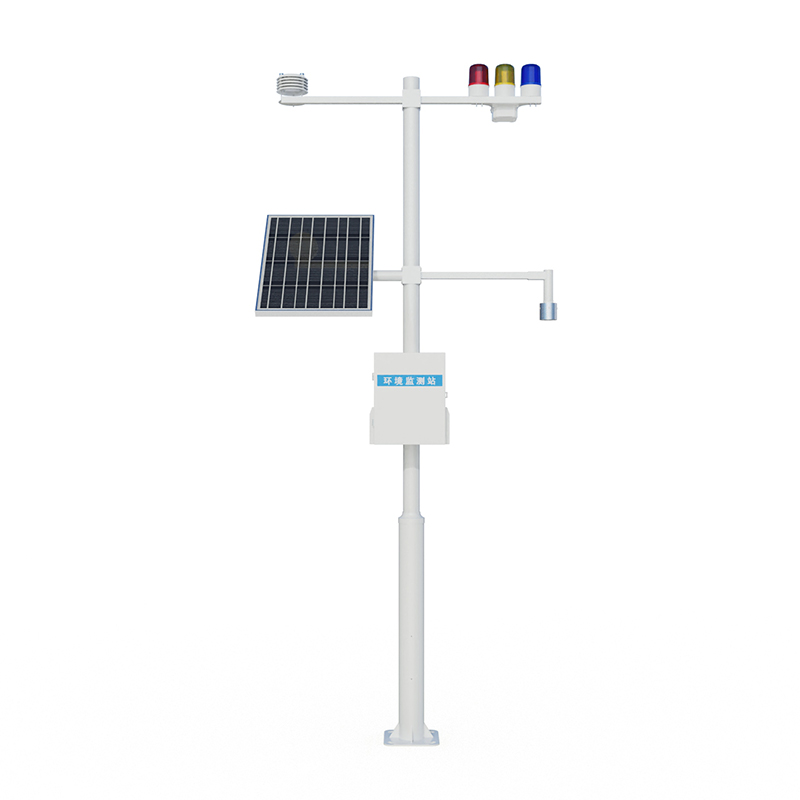
This handheld star array agricultural meteorological and environmental monitoring instrument is an integrated multi-element monitoring terminal. Equipped with industrial sensors and a modular expansion structure, it simultaneously monitors 16 environmental parameters. It can be used in agricul...
The Visibility and Present Weather Sensor is an automatically continuous monitoring sensor, whose main monitoring targets include visibility, precipitation conditions, and specific types of visibility-impairing weather phenomena.This device works based on the forward scattering principle. It activel...
Based on edge computing, this device achieves targeted pest trapping, classifies and statistically analyzes different pest data, and identifies peak occurrence patterns. It supports target photography and remote image transmission, and is widely used in orchards, forest farms, and field fields...
In the process of agricultural development, the construction of unmanned farms has become an important direction for the development of modern agriculture. In this process, Agricultural meteorological stations, by providing refined meteorological services combined with mobile applications, make farm...


 Skype
Skype
 whatsapp
 mail
mail