Shandong Fengtu IOT Technology Co., Ltd
Sales Manager:Ms. Emily Wang
Cel,Whatsapp,Wechat:+86 15898932201
Email:info@fengtutec.com
Add:No. 155 Optoelectronic Industry Accelerator, Gaoxin District, Weifang, Shandong, China


Sales Manager:Ms. Emily Wang
Cel,Whatsapp,Wechat:+86 15898932201
Email:info@fengtutec.com
Add:No. 155 Optoelectronic Industry Accelerator, Gaoxin District, Weifang, Shandong, China
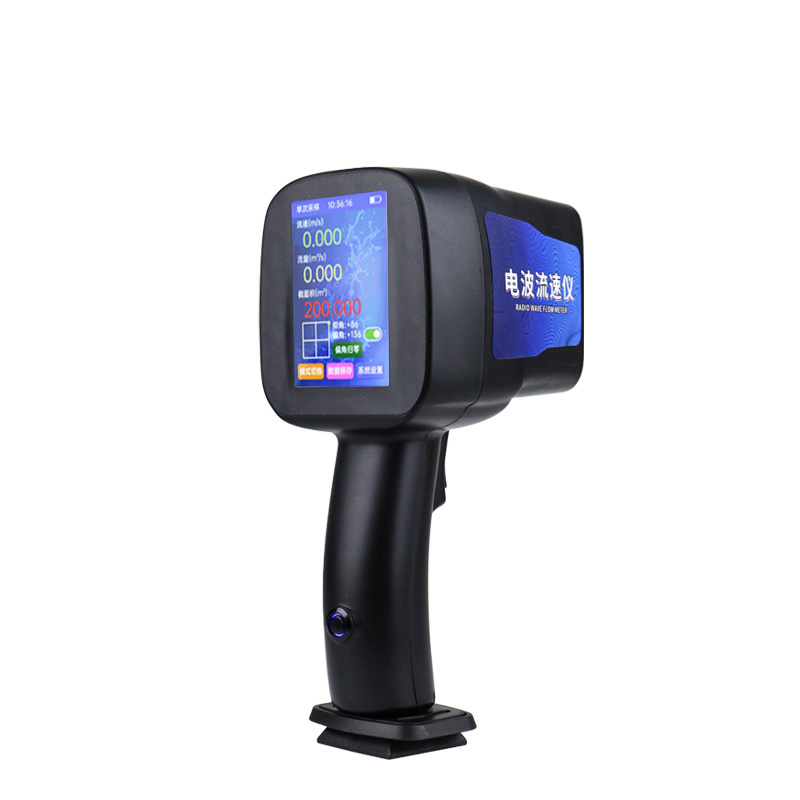
Model:FT-LS5+
Brand:fengtu
1.Product introduction of hand-held radar current meter :
Handheld radio wave (radar) flow meter, which uses K-band radar to measure non-contact flow rates in rivers, sewage, mud, and oceans.It has the characteristics of compact size, handheld operation, battery power supply and easy use.It is not corroded by sewage or disturbed by sediment during use, and can perform non-contact measurement within a measurement range of less than or equal to 100 meters, ensuring the safety of the measurer.The instrument includes a highly sensitive planar narrow-band radar probe and goniometer.Without any settings, one-button operation can realize automatic correction of horizontal and vertical angles and corrected measurement of flow velocity.It is very convenient to use.
2.Application fields of hand-held radar current meter:
Channel flow speed monitoring, river flow speed monitoring, sewage flow speed monitoring, ocean flow speed monitoring, railway bridge construction flow speed monitoring; flood control and flood control on-site emergency monitoring, sewage discharge monitoring, and other occasions that require on-site measurement, etc.
3.Main features of hand-held radar current meter:
1.For single use, the instrument weighs less than 1kg and can be measured by hand or placed on a tripod (standard configuration);
2.Screen 3.5 inches, full touch operation; ☆
3.Chinese and English interface, guided operation, simple to use and convenient to manage;☆
4.Non-contact operation, not affected by sediment or water corrosion;
5.Multiple measurement modes, which can be used for single measurement; continuous measurement, which can last for 30 minutes; and a stand-alone flow estimation mode, which can estimate the flow of rivers with regular cross-sections;
6.Built-in rechargeable lithium battery, can be used continuously for more than 10 hours;
7.Built-in angle sensor, which can automatically correct vertical and horizontal angles;
8.The instrument shell is made of ABS resin material and aluminum alloy frame, which has impact resistance, heat resistance, low temperature resistance, corrosion resistance and electrical insulation, which protects the personal safety of measurement personnel during thunderstorm weather;
4.Technical indicators of hand-held radar current meter:
1.Measuring range: 0.1~30m/s
2.Measurement accuracy: ±3%, ±0.01m/s☆
3.Radio wave emission angle: 24°x12° (radio wave longitudinal emission angle x transverse emission angle)☆
4.Data storage: 10,000 measurement results☆
5.Battery capacity: 3600mAh☆
6.Radio wave emission standard power: 10mW
7.Radio wave transmission power: 18dBm
8.Radio frequency: 24GHz
9. Measurement Distance: ≤100 meters
10. Angle Compensation: Automatic vertical angle compensation
11. Operating Temperature Range: -30~+70℃
12. Relative Humidity Range: 20%~80%
13. Storage Temperature Range: -30~+70℃
The BeiDou Ecological Environment Monitoring Station integrates BeiDou-3 regional short message communication with meteorological sensing technology to achieve continuous 24-hour automatic monitoring of meteorological elements in areas with no or weak signal coverage. The equipment uses an int...
For a long time, agricultural production has largely relied on experience and the observation of the weather. When it comes to sowing, irrigation and dealing with extreme weather conditions, decisions often depend on traditional wisdom passed down orally. Nowadays, agricultural meteorological statio...
The Insect Monitoring Light integrates modern optoelectronic, numerical control, and other technologies in its working principle. It utilizes a specific light source, typically a 20W blacklight tube with a main wavelength of 365nm, which emits light highly attractive to pests, causing them to approa...
A Portable Weather Station for firefighting is a lightweight and multi-functional weather monitoring device specially designed for fire rescue scenarios. It is mainly used to monitor the meteorological conditions at the fire scene in real-time, helping firefighters assess the development trend of th...


 Get a Free Quote
 Skype
Skype
 whatsapp
 mail
mail