Shandong Fengtu IOT Technology Co., Ltd
Sales Manager:Ms. Emily Wang
Cel,Whatsapp,Wechat:+86 15898932201
Email:info@fengtutec.com
Add:No. 155 Optoelectronic Industry Accelerator, Gaoxin District, Weifang, Shandong, China


Sales Manager:Ms. Emily Wang
Cel,Whatsapp,Wechat:+86 15898932201
Email:info@fengtutec.com
Add:No. 155 Optoelectronic Industry Accelerator, Gaoxin District, Weifang, Shandong, China
time:2025-06-24 09:42:06 source:Weather Station viewed:616 time
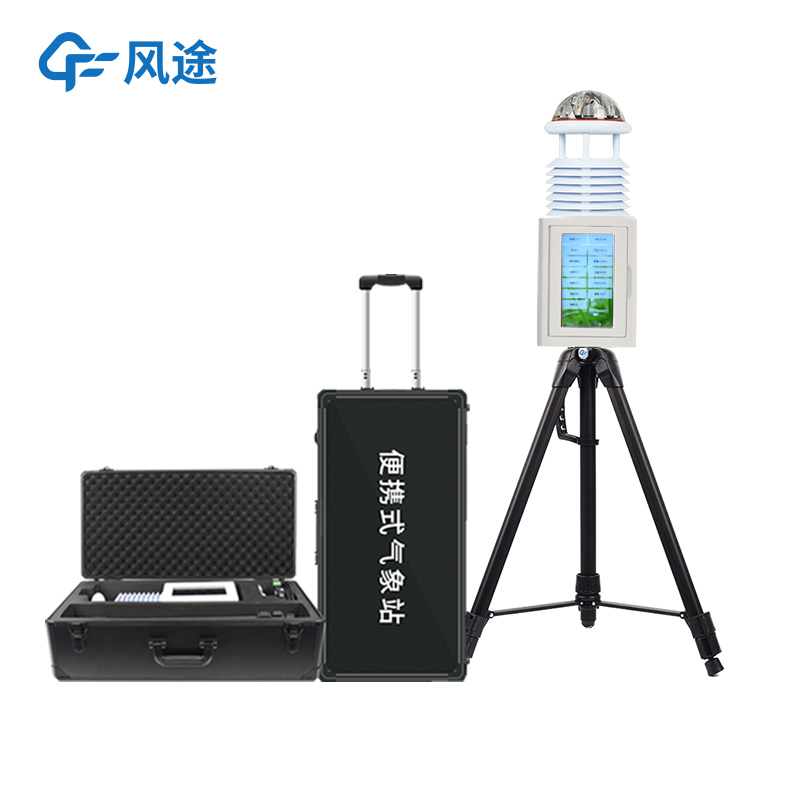
In various emergency projects, the Portable Weather Station plays a vital role. Its importance stems from the complex and changeable meteorological conditions during disasters, which affect the safety and effectiveness of rescue operations. The Portable Weather Station can quickly provide accurate meteorological data, offering scientific support for emergency decision-making.
Diverse Functions for Real-time Monitoring
The Portable Weather Station is equipped to monitor multiple meteorological parameters in real time, including basic elements like temperature, humidity, air pressure, wind speed, and wind direction. During flood rescue operations, air pressure and humidity data help predict precipitation trends, buying precious time for disaster relief efforts.
Key Advantages: Rapid Response and Mobile Deployment
Instant Operation: Thanks to its integrated design, the station requires no complicated installation or debugging—just unpack and use. Rescue teams can obtain meteorological data within minutes of arriving at the disaster area.
Portability: Lightweight and compact, it can be carried to areas with disrupted transportation, ensuring monitoring coverage across the entire disaster zone.
Multi-parameter Synchronization: The system integrates core meteorological sensors and uses high-precision analog-to-digital conversion technology to collect multiple parameters simultaneously. Data collection intervals can be flexibly adjusted based on the disaster severity.
Applications in Emergency Scenarios
Disaster Rescue Command: In earthquakes, floods, and other disasters with harsh weather, the station provides real-time meteorological maps for rescue headquarters.
Route Safety Assessment: By monitoring real-time weather changes along disaster-area roads—especially rainfall in landslide-prone zones—it warns of secondary disaster risks, enabling headquarters to adjust march routes dynamically.
Aerial Rescue Support: For airdrops and helicopter rescues, it supplies precise low-altitude meteorological data to ensure flight safety.
Temporary Settlement Planning: Meteorological data helps evaluate the suitability of settlement locations, avoid unfavorable areas, and guide scientific tent layout by monitoring the microclimate of the settlement area.
Industrial Accident Response: In chemical plant explosions or oil/gas leaks, wind direction and speed data simulate the diffusion range of toxic gases, assisting in defining warning zones and evacuation routes.
Outdoor Event Safety: For marathons, cross-country races, and other outdoor activities, it monitors real-time risks of high temperatures or heavy rain to protect participants.
Geological Exploration: It issues early warnings for mountain floods, debris flows, and other disasters during geological surveys.
The Portable Weather Station serves as the "eyes" of emergency rescue, enabling responders to grasp meteorological information promptly and make scientific decisions.
Scenic Area Lightning Warning System utilizes deployed atmospheric electric field meters to detect real-time fluctuations in electric field intensity. By integrating data from weather radar and lightning location systems, it enables localized, short-term warnings regarding lightning activity....
The Four-Element Miniature Agricultural Weather Instrument uses high-precision sensors to monitor temperature, humidity, air pressure, and light intensity in real time. Data is wirelessly transmitted to a cloud platform via the Internet of Things (IoT), allowing users to view it anytime. It fe...
The fiberglass Stevenson Screen consists of a box body, connecting brackets, and a base, all constructed entirely of high-quality fiberglass. It overcomes the shortcomings of traditional wooden Stevenson Screens, offering excellent ventilation, heat insulation, radiation protection, and weathe...
Underwater Night Vision Goggle utilizes a high-performance third-generation image intensifier and is an electro-optical device specifically designed for observation and search in low-light or no-light underwater environments. It can effectively penetrate dark environments and accurately capture underwater details. Its main applications include underwater rescue in fire and emergency situations, underwater reconnaissance by armed police forces, underwater facility inspection for power companies, forest fire water source exploration, underwater evidence searching for police and public security, and underwater ecological monitoring for forestry and environmental protection....


 Skype
Skype
 whatsapp
 mail
mail