Shandong Fengtu IOT Technology Co., Ltd
Sales Manager:Ms. Emily Wang
Cel,Whatsapp,Wechat:+86 15898932201
Email:info@fengtutec.com
Add:No. 155 Optoelectronic Industry Accelerator, Gaoxin District, Weifang, Shandong, China


Sales Manager:Ms. Emily Wang
Cel,Whatsapp,Wechat:+86 15898932201
Email:info@fengtutec.com
Add:No. 155 Optoelectronic Industry Accelerator, Gaoxin District, Weifang, Shandong, China
time:2026-11-11 10:22:01 source:Weather Station viewed:4 time
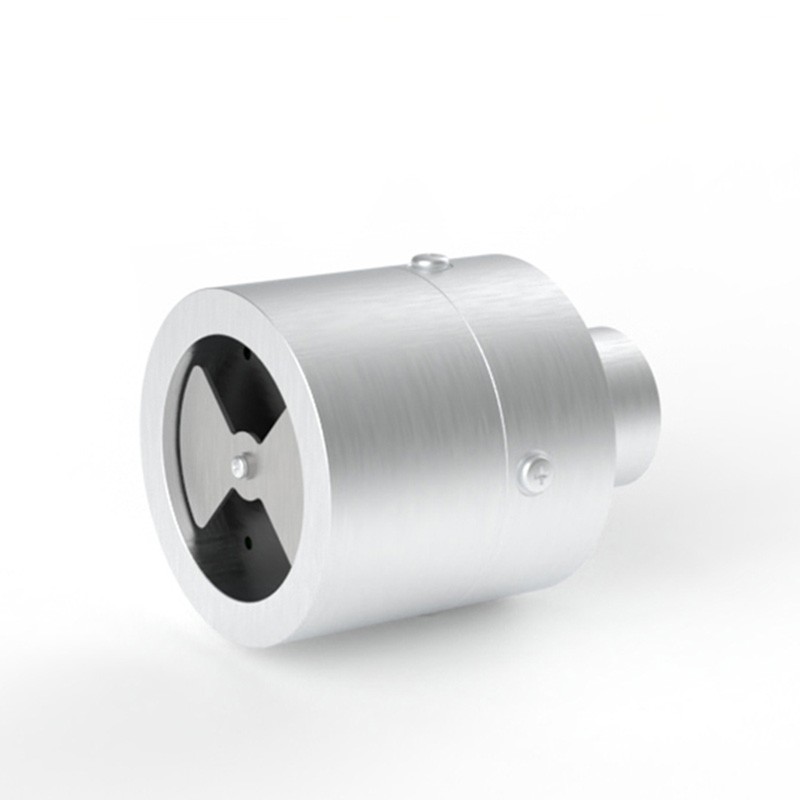
An atmospheric electric field monitor is a device designed to measure the intensity and fluctuations of the atmospheric electric field near the ground. Its primary function is to detect anomalies in the atmospheric electric field during the nascent stages of a thunderstorm, providing observational evidence for lightning warnings well before the onset of precipitation or actual lightning strikes. By continuously collecting electric field data, the device can identify electrification signals before a thunderstorm has fully developed, thereby extending the lead time for early warnings.
Technically, an atmospheric electric field monitor uses sensing plates to measure the vertical atmospheric electric field; the signals are then amplified and processed to produce a quantitative value for electric field intensity. When the intensity exceeds a preset threshold or the rate of change becomes anomalous, the system triggers an alert. This mechanism shifts the focus of monitoring from relying on electromagnetic pulses generated by lightning strikes to capturing the earlier phase of charge accumulation. For meteorological stations, data from continuously operating electric field monitors can be integrated with radar echoes and lightning location data to assess the development trends and potential impact range of lightning activity, providing localized observational support for forecasting and early warning efforts.
In practical deployment, the value of atmospheric electric field monitors is most evident in two types of settings. The first includes areas with high population density or outdoor operations, such as mining sites, tourist attractions, and regions where natural resources (like *Cordyceps*) are harvested. For instance, at a phosphate mine in Yuan'an, Hubei, electric field monitors provide 24-hour surveillance of subtle local electric field fluctuations. By capturing early-stage electrification signals, the system sends targeted alerts to safety personnel, guiding them to secure equipment and ensure the safety of workers. Similarly, Mount Tai (Taishan) utilizes these monitors to establish a high-precision, 0–2-hour early warning capability, which supports both tourism safety and forest fire prevention. The second category involves industrial facilities sensitive to lightning, such as petrochemical plants, telecommunications base stations, and power infrastructure. Deploying electric field monitors around these sites allows for alerts to be triggered as the electric field intensity approaches dangerous thresholds, providing a critical window of time to halt outdoor operations or adjust the operational status of equipment. The technical specifications of the atmospheric electric field monitor include a measurement range of -100 to +100 kV/m, an accuracy of 0.1% of the full scale, and a response time of three seconds; the enclosure is constructed from 6061 aluminum alloy. These parameters enable the device to detect minute fluctuations in electric field intensity and rapidly reflect changing trends as a thunderstorm approaches. It should be noted that the monitor provides threshold-based early warning signals. The lead time for these warnings depends on the development rate of the thunderstorm and the level of environmental interference at the site; therefore, the device is typically used in conjunction with other observation methods to reduce the rate of false alarms. For fixed locations vulnerable to lightning strikes, integrating electric field monitoring into an existing lightning protection system can help address gaps in coverage—specifically during the initial electrification phase—that may exist with lightning location systems and radar detection.
The Portable Visibility Detector is an atmospheric visibility monitoring device system that can be flexibly moved and is convenient to carry. Its working principle is mainly based on the optical scattering principle, and the visibility is calculated by measuring the optical properties of the atmosph...
Highway visibility monitoring is a crucial part of ensuring road traffic safety. With the development of mobile Internet technology, the Road Weather Information System has achieved a functional leap from the computer terminal to the mobile phone terminal.The traditional computer - based monitoring...
Soil moisture sensors utilize the Frequency Domain Reflectometry (FDR) principle, achieving an accuracy range of ±2% to ±3%. Certain models support the simultaneous measurement of soil temperature, moisture, and electrical conductivity across multiple soil profile layers, making them suitabl...
Portable Weather Station FT-BQX8. This is a high-precision automatic weather observation device produced by Fengtu Technology. It is highly integrated, low power consumption, and can be quickly installed, making it particularly suitable for field monitoring.It can simultaneously observe eight key en...


 Skype
 whatsapp
 mail