Shandong Fengtu IOT Technology Co., Ltd
Sales Manager:Ms. Emily Wang
Cel,Whatsapp,Wechat:+86 15898932201
Email:info@fengtutec.com
Add:No. 155 Optoelectronic Industry Accelerator, Gaoxin District, Weifang, Shandong, China


Sales Manager:Ms. Emily Wang
Cel,Whatsapp,Wechat:+86 15898932201
Email:info@fengtutec.com
Add:No. 155 Optoelectronic Industry Accelerator, Gaoxin District, Weifang, Shandong, China
time:2026-11-10 10:01:58 source:Weather Station viewed:5 time
Crop monitoring systems—comprising a mounting mast, a camera, a solar power supply, and a cloud-based platform—provide round-the-clock video surveillance of crop growth and potential damage. Integrated with meteorological and soil moisture sensors, these systems allow managers to monitor field conditions remotely, guide irrigation and fertilization based on the specific needs of different growth stages, and reduce the frequency of manual field inspections.
The primary function of a crop monitoring system is to eliminate the need for frequent manual visits to the field to assess crop development. A complete system typically consists of a three-meter carbon-steel mast, a high-definition PTZ (pan-tilt-zoom) camera, a solar power unit, and a cloud management platform. The camera, mounted at the top of the mast, covers a wide area of the field; it captures color images during the day and switches to infrared-illuminated black-and-white footage at night, ensuring continuous visual data transmission. The combination of solar panels and rechargeable batteries overcomes the challenge of accessing power in remote fields, allowing the system to operate for several days even during periods of persistent rain or overcast weather.
In practice, managers can access the cloud platform via a smartphone or computer to view live video feeds or retrieve previously captured images. Some systems allow for remote control of the camera’s pan, tilt, and zoom functions, enabling users to zoom in on specific areas where crops may be struggling. Image data is automatically uploaded at set intervals, creating a continuous record of crop growth that facilitates the comparison of conditions over time. Beyond video, the system can integrate sensors for air temperature, humidity, and soil moisture, allowing visual information to be cross-referenced with quantitative data. If the platform detects low canopy coverage or abnormal sensor readings, it sends an alert to the linked account, prompting personnel to visit the site for further inspection.
When deploying crop monitoring equipment, it is essential to ensure a stable foundation for the mast—especially in open agricultural fields where wind loads can be significant; the structure must be sufficiently wind-resistant. Regular cleaning of the camera lens is a fundamental maintenance task, as the accumulation of dust or water spots can directly compromise image clarity. Additionally, since battery capacity may decrease in cold winter temperatures, it is important to account for this when selecting the power system components. For agricultural operations covering large areas, where the reach of a single device is limited, equipment can be strategically deployed across different plots. By integrating these units under a unified cloud platform, operators can manage them centrally, thereby reducing the time and effort spent on physical inspections. In essence, the value of crop monitoring equipment lies in its ability to transform sporadic, in-field observations into a traceable visual record—enabling a shift in cultivation decision-making from reliance on subjective experience toward management adjustments based on tangible, visible data.
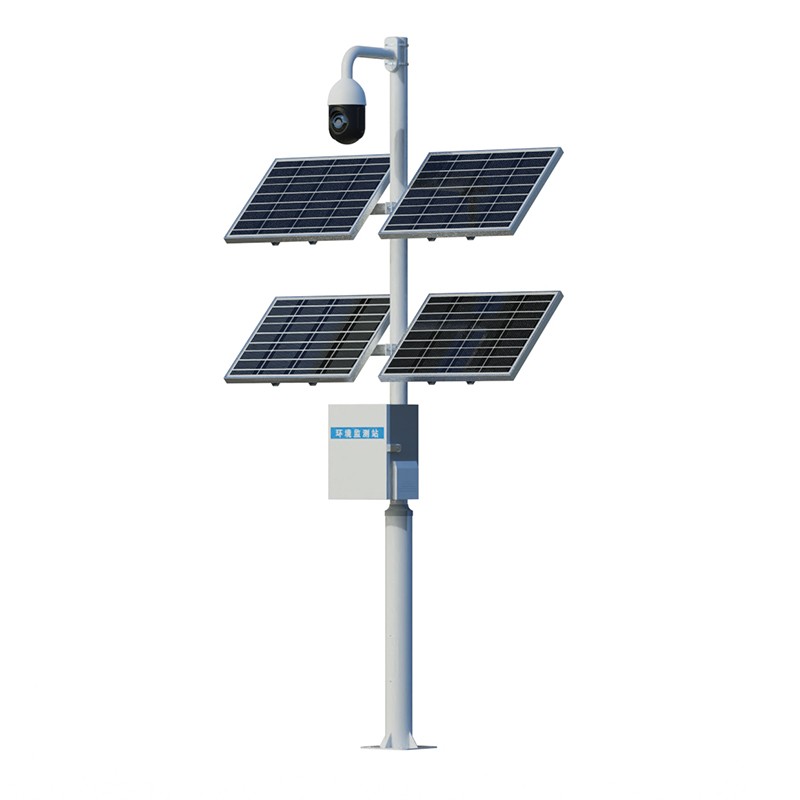
A farmland meteorological monitoring station is a highly integrated, low-power, and rapidly deployable high-precision meteorological observation device. It consists of five parts: meteorological sensors, a data logger, a solar power system, a pole support, and a cloud platform. It is widely us...
In the process of agricultural development, the construction of unmanned farms has become an important direction for the development of modern agriculture. In this process, Agricultural meteorological stations, by providing refined meteorological services combined with mobile applications, make farm...
These sensors are atmospheric electric field monitoring devices based on the principle of electric field induction. They have a measurement range of -100kV/m to 100kV/m, an accuracy of ±0.001%F.S., and a response time of 3 seconds. Utilizing Modbus-485 communication, the devices can monitor c...
The 50KM Visibility sensor is a measuring instrument in industries such as road traffic and meteorology. It uses the forward scattering method to measure the total extinction coefficient of the air and thus obtain accurate visibility data.This sensor uses an aluminum shell, which is anodized and pai...


 Skype
 whatsapp
 mail