Shandong Fengtu IOT Technology Co., Ltd
Sales Manager:Ms. Emily Wang
Cel,Whatsapp,Wechat:+86 15898932201
Email:info@fengtutec.com
Add:No. 155 Optoelectronic Industry Accelerator, Gaoxin District, Weifang, Shandong, China


Sales Manager:Ms. Emily Wang
Cel,Whatsapp,Wechat:+86 15898932201
Email:info@fengtutec.com
Add:No. 155 Optoelectronic Industry Accelerator, Gaoxin District, Weifang, Shandong, China
time:2026-05-08 10:26:54 source:Weather Station viewed:257 time
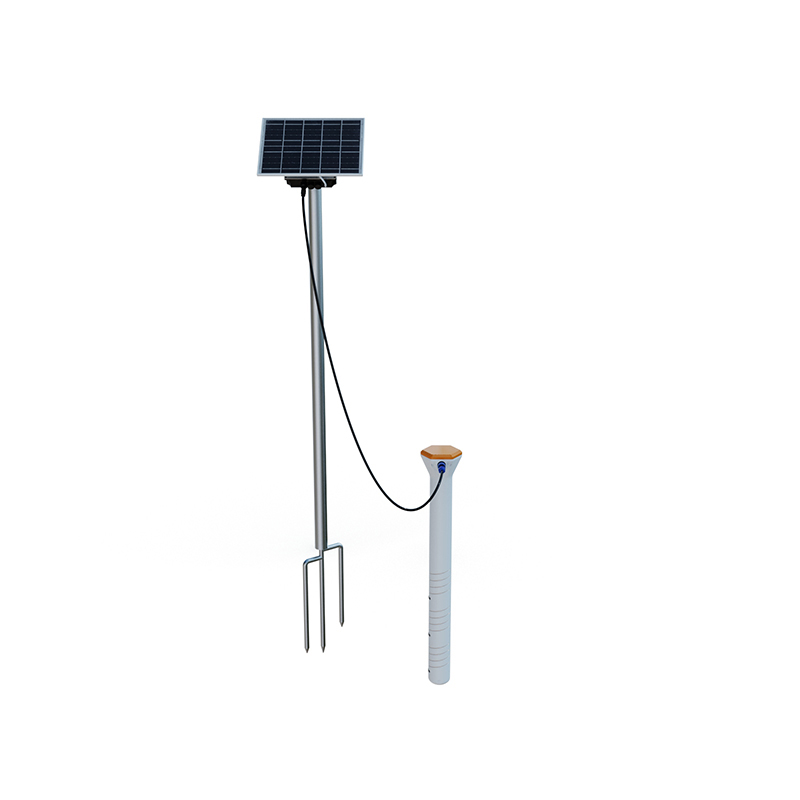
Soil moisture sensors utilize the Frequency Domain Reflectometry (FDR) principle, achieving an accuracy range of ±2% to ±3%. Certain models support the simultaneous measurement of soil temperature, moisture, and electrical conductivity across multiple soil profile layers, making them suitable for a wide range of applications—including smart greenhouses, orchard irrigation management, and scientific research experiments.
Common brands of soil moisture sensors available on the market include Shandong Fengtu and Shandong Tianqiong. Different brands vary in terms of product positioning and core technical specifications; therefore, users should base their purchasing decisions on their specific application scenarios. Shandong Fengtu's soil moisture monitoring equipment is characterized primarily by its integrated tubular structure, which enables simultaneous measurements across multiple soil depths. The Fengtu tubular soil monitoring station integrates sensors for soil temperature, moisture, and electrical conductivity into a single unit. With a sensor power consumption of just 0.26W, it is ideally suited for long-term, unattended monitoring in remote field environments. The device covers a soil moisture measurement range of 0% to 100% with an accuracy of ±3%, while its soil electrical conductivity measurement range spans from 0 to 20,000 µS/cm. The system can be powered via a combination of solar panels and rechargeable batteries; it features communication interfaces and supports remote data access via a cloud-based platform. A single tubular sensor can simultaneously measure soil parameters at multiple depths, allowing for independent readings of temperature, moisture, and conductivity at each specific layer, all within an IP67-rated waterproof enclosure.
When selecting a soil moisture sensor, several core factors should be taken into consideration. First is accuracy: products offering a moisture accuracy of ±2% generally outperform those with ±3% accuracy, making them more suitable for applications where data quality is of critical importance. Second is the range of measurement parameters: while some devices measure only soil moisture, more advanced "3-in-1" (or multi-parameter) units can simultaneously capture data on soil temperature and electrical conductivity. Third is the method of deployment: portable handheld instruments are ideal for rapid, multi-point spot checks, whereas tubular online monitoring stations are designed for long-term, fixed-location deployment. Users must also consider the device's data transmission capabilities; systems that support wireless data uploading and cloud-based management are best suited for scenarios requiring remote monitoring. During installation and deployment, it is essential to maintain a minimum spacing of 3 meters between sensors to prevent electromagnetic interference from compromising measurement accuracy. Finally, soil type is another factor that can influence measurement results; in soils with high organic matter content or high clay content, the instrument may require specific calibration to ensure accurate readings. Users are advised to compare the specific technical specifications of various brands and models, weighing them against their own specific site requirements, budgetary constraints, and desired levels of measurement accuracy.
In an era when tourism is booming, tourists are no longer satisfied with just beautiful scenery. They are paying increasing attention to the environmental quality of scenic spots, especially the air quality. Thus, the negative oxygen ion monitoring system has become an indispensable part of modern s...
The quotations of agrometeorological stations are comprehensively affected by multiple factors such as equipment configuration and functions.In terms of equipment configuration, the configuration of meteorological sensors determines the price. If only basic temperature and humidity, wind speed and d...
The Agricultural monitoring system is a comprehensive agricultural informatization system integrating the monitoring of crop growth, soil moisture, meteorological conditions, and plant diseases and insect pests. Due to its precise monitoring capabilities, it is vividly known as the "clairvoyant...
The Portable Weather Station is a professional device specifically designed for environmental observation. It is not only easy to install and operate with straightforward instructions, but also delivers highly accurate measurement data. As a reliable observation system, it can simultaneously monitor...


 Skype
Skype
 whatsapp
 mail
mail