Shandong Fengtu IOT Technology Co., Ltd
Sales Manager:Ms. Emily Wang
Cel,Whatsapp,Wechat:+86 15898932201
Email:info@fengtutec.com
Add:No. 155 Optoelectronic Industry Accelerator, Gaoxin District, Weifang, Shandong, China


Sales Manager:Ms. Emily Wang
Cel,Whatsapp,Wechat:+86 15898932201
Email:info@fengtutec.com
Add:No. 155 Optoelectronic Industry Accelerator, Gaoxin District, Weifang, Shandong, China
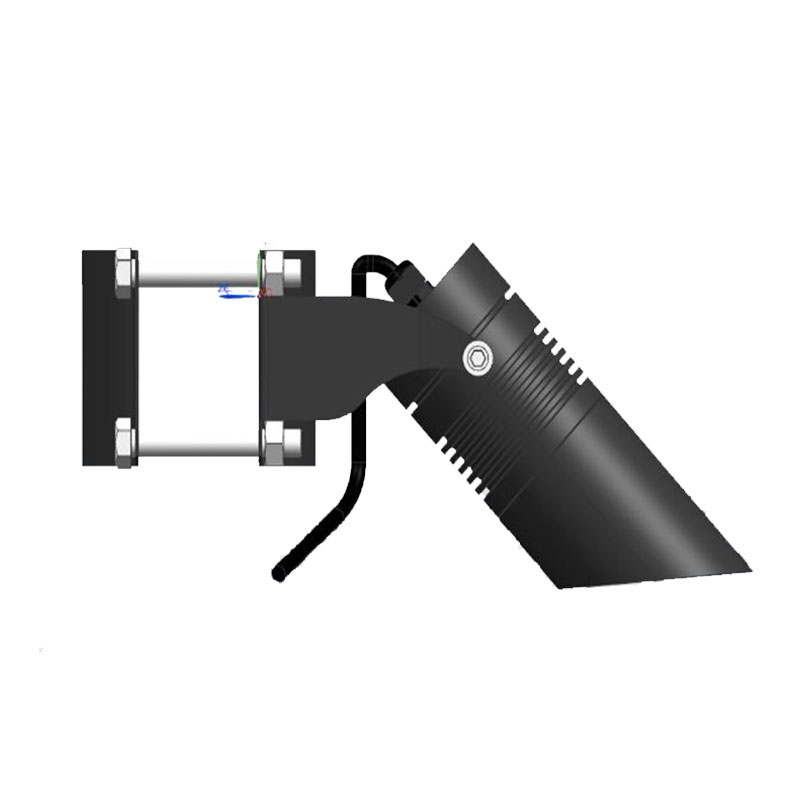
Model:FT-HW1
Brand:fengtu
Road Surface Temperature Sensor Product Introduction
Road Surface Temperature Sensor is an integrated infrared thermometer. The optical system and electronic circuitry are integrated within a metal housing. The protective cover is easy to install, and the 90° adjustable bracket allows for installation and uninterrupted measurement under various field conditions.
Internally, the Road Surface Temperature Sensor consists of a thermopile and a thermistor. All objects continuously emit infrared radiation energy into the surrounding space. By measuring the infrared energy emitted by an object, its surface temperature can be accurately determined; this is the principle of non-contact infrared thermometry. The infrared thermometer can calculate the surface temperature of an object without any contact with the target, by measuring the intensity of the infrared radiation emitted by the target—this is its greatest advantage.
Road Surface Temperature Sensor Applications
Long-distance measurement of highway pavement temperature
Bridge deck temperature monitoring
Plant canopy temperature monitoring
Grass temperature, soil surface temperature, or snow surface temperature monitoring
Road Surface Temperature Sensor Technical Specifications
Measurement Range: -40℃—125℃
Measurement Accuracy: ±1% or ±1℃
View Angle: D:S=11:1
Display Resolution: 0.01℃
Response Time: 1 second
Operating Wavelength: 8—14um
Output Method: RS485
Communication Protocol: ModBus RTU
Operating Conditions: -40—85℃; 0—100%RH
Power Supply: DC12-24V
Power Consumption: <5W
Wildfire dynamics are highly influenced by on-site meteorological conditions: wind speed and direction determine the fire’s spread path, while temperature affects both fire intensity and rescue safety. Real-time and accurate meteorological data serve as the "lifeline" for emergency respon...
Agrometeorological stations are small automatic weather stations deployed in farmlands, orchards, greenhouses and other areas. They automatically monitor climate and environmental factors closely related to agricultural production activities, helping farmers and researchers grasp field environmental...
The solar automatic weather station uses solar energy to generate electricity. Because it is equipped with a solar panel, it can operate in the field for a long time without being affected by the power supply. Moreover, it is fully automatic and realizes remote weather monitoring. Users only need to...
In today's booming tourism industry, the installation of scenic weather stations in scenic areas has become a crucial measure to enhance the level of operation management and the tourist experience.From the perspective of enhancing the tourist experience, the weather warning function of the scen...


 Get a Free Quote
 Skype
Skype
 whatsapp
 mail
mail