Shandong Fengtu IOT Technology Co., Ltd
Sales Manager:Ms. Emily Wang
Cel,Whatsapp,Wechat:+86 15898932201
Email:info@fengtutec.com
Add:No. 155 Optoelectronic Industry Accelerator, Gaoxin District, Weifang, Shandong, China


Sales Manager:Ms. Emily Wang
Cel,Whatsapp,Wechat:+86 15898932201
Email:info@fengtutec.com
Add:No. 155 Optoelectronic Industry Accelerator, Gaoxin District, Weifang, Shandong, China
time:2026-11-17 09:59:04 source:Weather Station viewed:5 time
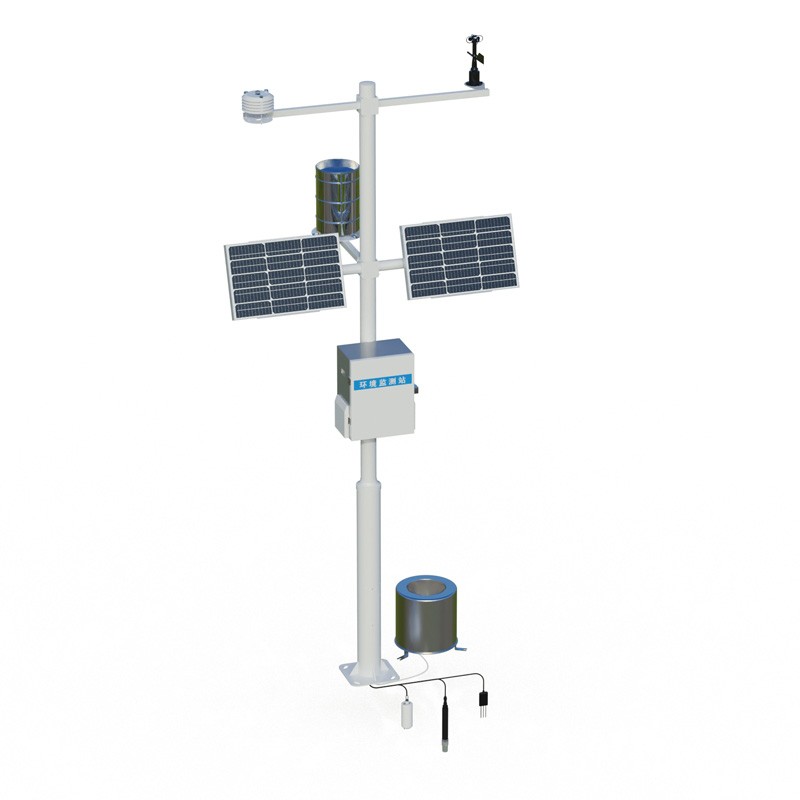
An agricultural microclimate monitoring station is a high-precision meteorological observation system designed for outdoor agricultural environments. It integrates sensors, data loggers, a solar power supply, and a cloud platform. The system can be rapidly deployed to provide continuous monitoring of parameters such as wind speed and direction, air temperature and humidity, atmospheric pressure, solar radiation, rainfall, and soil temperature and moisture—offering a data-driven foundation for agricultural decision-making.
The core value of an agricultural microclimate monitoring station lies in its ability to translate field environmental conditions into readable data records. The system utilizes a low-power data logger—with static power consumption kept to a minimal level—paired with a solar power supply and Maximum Power Point Tracking (MPPT) charge management, allowing it to operate independently for extended periods in fields far from the power grid. It features a three-meter carbon steel mast assembled via threaded connections and a stainless-steel protective enclosure with an IP66 waterproof rating. Requiring no complex on-site calibration, the system is well-suited for rapid deployment in crop cultivation areas, forestry sites, or agricultural research plots.
In terms of monitoring capabilities, these stations cover a wide range of meteorological dimensions critical to agricultural production. They simultaneously collect data on wind speed and direction, air temperature and humidity, atmospheric pressure, total solar radiation, rainfall, and evaporation. Additionally, buried sensors capture soil temperature and moisture data, reflecting the hydrothermal conditions within the crop root zone. A 7-inch Android touchscreen interface allows for on-site viewing and operation, while the data logger supports the Modbus 485 protocol, enabling the addition of further sensor types based on specific requirements. Data is transmitted via a 4G network to a cloud platform, allowing users to remotely access trends and reports. The system can also send SMS alerts to designated mobile phones if parameters exceed set thresholds, thereby reducing the need for manual field inspections.
Regarding application scenarios, agricultural microclimate monitoring stations primarily serve the need for refined, site-specific agrometeorological services. By deploying these stations across large-scale cultivation areas, local meteorological departments can obtain real-time, field-level data—valuable for determining optimal irrigation timing, issuing early warnings for pest and disease risks, and guiding the strategic selection and layout of crop varieties. Unlike macro-scale meteorological forecasts, observations of a field’s microclimate reflect the actual conditions within a specific plot. The localized variations—shaped by factors such as terrain, crop canopy, and soil conditions—provide essential data for guiding field management. While the equipment itself does not generate decisions directly, the continuous observational records it provides offer a traceable set of environmental parameters that can serve as a reference for activities like fertilization, irrigation, and pesticide application.
Agricultural production has been closely linked to the weather since ancient times. Farmers need to arrange their farming activities according to the changes in the weather. However, the weather is unpredictable, and extreme weather events such as heavy rain, drought, blizzards, and hailstorms occur...
Agricultural Environment Monitoring System is a field environmental monitoring equipment composed of five parts: meteorological sensors, data collector, solar power supply system, pole support, and cloud platform. This system features easy installation and rapid deployment, automatically collecting and remotely transmitting environmental data such as temperature and humidity. It is widely used in agriculture, forestry, and scientific research....
Atmospheric visibility refers to the maximum horizontal ground distance at which a person with normal vision can clearly see the outline of a target under current weather conditions. As a crucial basis for judging atmospheric environmental conditions, it directly influences our assessments of atmosp...
In recent years, extreme weather events have occurred frequently. Urban waterlogging caused by heavy rainfall and mountain flood disasters have become important hidden threats to public safety. According to statistics, the average annual economic losses caused by floods globally are as high as tens...



 Skype
 whatsapp
 mail