Shandong Fengtu IOT Technology Co., Ltd
Sales Manager:Ms. Emily Wang
Cel,Whatsapp,Wechat:+86 15898932201
Email:info@fengtutec.com
Add:No. 155 Optoelectronic Industry Accelerator, Gaoxin District, Weifang, Shandong, China


Sales Manager:Ms. Emily Wang
Cel,Whatsapp,Wechat:+86 15898932201
Email:info@fengtutec.com
Add:No. 155 Optoelectronic Industry Accelerator, Gaoxin District, Weifang, Shandong, China
time:2024-11-14 09:51:23 source:Weather Station viewed:650 time
Agrometeorology is of great significance to agricultural production. It is related to the yield of field crops, affects the prevalence of pests and diseases, water supply and fertilization amount, etc., determines the types of crops to be planted and sowing time. Most agricultural techniques also depend on favorable meteorological conditions. For example, precision irrigation is related to rainfall, and soil sun - drying requires high temperature. However, public agricultural weather data often do not match the actual situation in the fields, which may lead to heavy losses for farmers when severe weather strikes suddenly.
Therefore, growers should use carefully - compiled agricultural weather forecasts for their own fields. The data sources include weather stations, sensors and satellites. Farmers usually use short - term forecasts of 1 - 7 days, while medium - term (within one month), long - term (within one year) and hazardous weather forecasts are also very helpful for planning field activities, enabling farmers to prepare for severe weather and reduce or eliminate its hazards.
Climate change and agriculture are intertwined. Rising temperatures may cause farmers to change the crops they plant, but overly high temperatures will affect agricultural production, and it may be more challenging to plant crops in the original way and location.
Farmland Weather Station is indispensable for crop cultivation. It can provide accurate meteorological information. Elements such as temperature, humidity, light, wind speed, wind direction, and rainfall can all be monitored in real - time. Temperature affects the growth and development of crops. For example, the tillering stage of rice has temperature requirements. The accurate temperature monitoring of the weather station enables farmers to take countermeasures when the temperature is abnormal. Humidity is related to diseases. High humidity easily causes wheat rust. Timely humidity information can guide farmers to ventilate to prevent diseases.
Farmland Weather Station is helpful for arranging farming activities. Light is important for photosynthesis, and its monitoring results can guide the planting density of sun - loving crops such as sunflowers. Rainfall data can be used for irrigation decision - making. When there is much rain, irrigation can be reduced, and during drought, plans can be made in advance. Wind speed and wind direction are significant for pesticide spraying. Under suitable conditions, the control effect can be improved and hazards can be avoided.
It can also conduct disaster warning and prevention. Before a rainstorm, an alarm can be issued, and farmers can clean the drainage system and reinforce greenhouses. When a frost is predicted, smoking and covering measures can be taken. In windy weather, farmers can be reminded to reinforce crop supports.
Farmland Weather Station provides long - term data accumulation to assist agricultural planning. Analyzing meteorological data over many years can determine the suitable crop varieties for planting. In areas with less precipitation, drought - tolerant millet can be planted, and in humid areas, rice can be planted. These data can also evaluate the impact of climate change, and farmers can adjust the planting pattern and time accordingly.
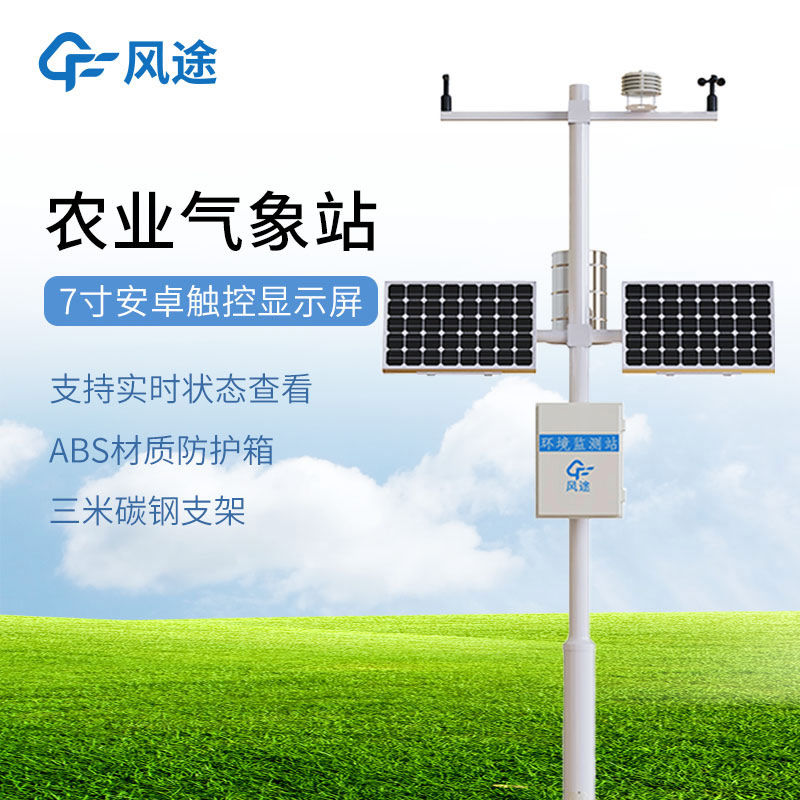
As a key hardware product of the agricultural meteorological information monitoring system, theFarmland Weather Stationis the core equipment for real-time online monitoring of agricultural meteorological elements. It is of great significance for improving the monitoring capacity of agric...
In docks and harbors, a Water Level Monitoring System with water - level sensors plays a vital role. It is a solid shield for the safety of ships and personnel.During maritime activities, weather and water level are unpredictable, like beasts lurking in the dark, threatening the safety of ships and...
Beidou Meteorological Station is an automated monitoring device that integrates multiple meteorological sensors and utilizes the BeiDou satellite short message function for data transmission. It can collect environmental data such as temperature, humidity, wind speed, wind direction, air pressure, and rainfall in real time in areas without terrestrial network coverage and autonomously transmit it to the monitoring center. It is suitable for disaster early warning and meteorological observation in remote areas....
Under the conditions of sufficient water vapor, gentle breezes, and a relatively stable atmosphere, once the air close to the ground cools down to a certain degree, the water vapor in it will condense into extremely tiny water droplets. These small droplets will then suspend in the air one after ano...


 Skype
Skype
 whatsapp
 mail
mail