Shandong Fengtu IOT Technology Co., Ltd
Sales Manager:Ms. Emily Wang
Cel,Whatsapp,Wechat:+86 15898932201
Email:info@fengtutec.com
Add:No. 155 Optoelectronic Industry Accelerator, Gaoxin District, Weifang, Shandong, China


Sales Manager:Ms. Emily Wang
Cel,Whatsapp,Wechat:+86 15898932201
Email:info@fengtutec.com
Add:No. 155 Optoelectronic Industry Accelerator, Gaoxin District, Weifang, Shandong, China
time:2025-07-29 09:27:31 source:Weather Station viewed:559 time
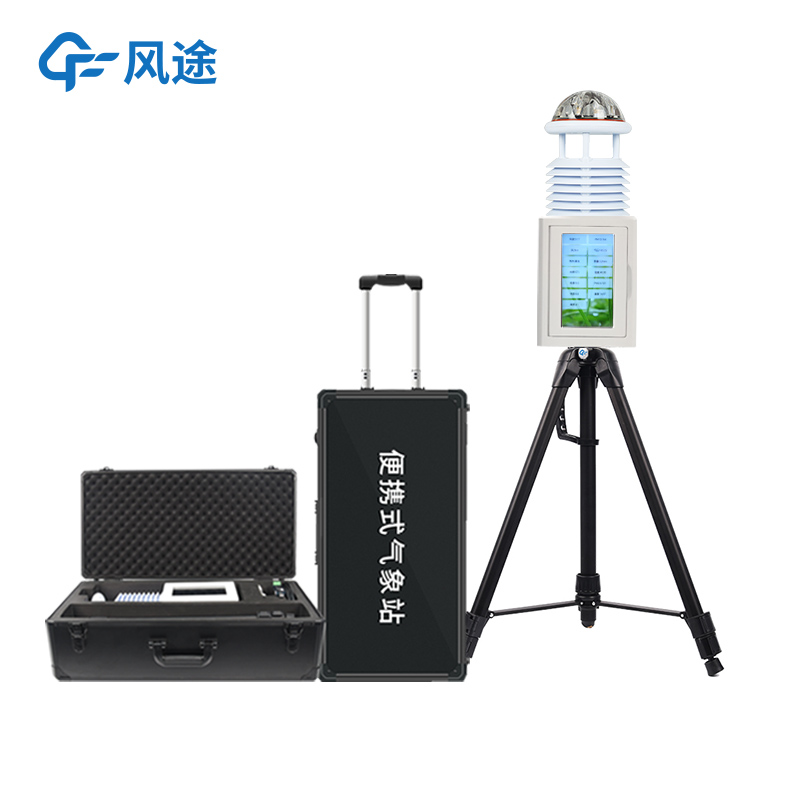
In the aviation field, meteorological conditions have a direct impact on flight safety and efficiency. Portable Weather Stations are used to provide meteorological services for airports. Such equipment adopts a highly integrated design, integrating multiple meteorological monitoring functions into one, and can comprehensively detect the meteorological environment in the low-altitude area of the airport. Equipped with high-precision sensors, it can quickly detect various meteorological parameters, complete information analysis through the built-in data processing module, and transmit them in real time to the airport operation management system with the help of wireless communication technology, forming a complete "observation-analysis-transmission" service chain.
In the daily operation of the airport, Portable Weather Stations can be flexibly deployed in key areas such as around runways and aprons to fill the coverage blind spots of fixed meteorological observation stations. When the airport encounters sudden meteorological changes, the equipment can respond quickly and start monitoring, providing real-time data support for flight dispatch. For example, before the arrival of short-term severe convective weather, the system can detect early warning signals such as sudden changes in air pressure and sudden increase in wind speed in advance, allowing the airport command department to have sufficient time to adjust flight plans.
For the safety guarantee during the take-off and landing phases of flights, the continuous meteorological data provided by the Portable Weather Station can be directly connected to the tower command system, helping controllers grasp real-time weather dynamics. Under complex meteorological conditions, these data can assist in judging the actual operating status of the runway, provide a scientific basis for flight release decisions, and reduce flight delays caused by meteorological uncertainties.
The historical data storage function of the equipment provides valuable materials for airport meteorological research. By analyzing the long-term accumulated meteorological data, the meteorological laws in specific areas of the airport can be summarized, and the design of flight procedures can be optimized. At the same time, these data can also be used to verify meteorological forecast models, improve the accuracy of short-term weather forecasts, and provide data support for airports in formulating emergency plans.
The advantages of the equipment are more obvious in emergency support scenarios. When fixed meteorological facilities fail or are damaged by extreme weather, the equipment can be quickly deployed to restore meteorological monitoring capabilities. The lightweight structural design is convenient for transportation and installation, and temporary observation points can be established in a short time to ensure uninterrupted meteorological services.
In the realm of tunnel operation management, ensuring driving safety and air quality is of paramount importance. The Tunnel Visibility Detector, as a specialized monitoring device, provides robust support for tunnel safety by accurately measuring carbon monoxide (CO) and visibility (VI).Poor v...
Agricultural Environment Monitoring System is a professional device developed for greenhouse and similar scenarios. It integrates meteorological sensors, a data logger, a solar power system, a pole support, and a cloud platform. It can monitor air temperature and humidity, light intensity, CO₂...
Water and Rain Monitoring SystemWater and rain conditions are important hydrological reference materials and are of great significance in regional water resources allocation and management. It refers to the water and rain conditions, and the specific index parameters are water level, flow rate, flow...
In the marine navigation field, accurate meteorological monitoring is directly related to navigation safety and efficiency. The FT-Y66 in 1 Weather Sensor launched by Fengtu Technology is a piezoelectric six-element sensor specifically designed for marine environments. Through a highly integrated st...



 Skype
Skype
 whatsapp
 mail
mail