Shandong Fengtu IOT Technology Co., Ltd
Sales Manager:Ms. Emily Wang
Cel,Whatsapp,Wechat:+86 15898932201
Email:info@fengtutec.com
Add:No. 155 Optoelectronic Industry Accelerator, Gaoxin District, Weifang, Shandong, China


Sales Manager:Ms. Emily Wang
Cel,Whatsapp,Wechat:+86 15898932201
Email:info@fengtutec.com
Add:No. 155 Optoelectronic Industry Accelerator, Gaoxin District, Weifang, Shandong, China
time:2025-12-29 10:12:44 source:Weather Station viewed:528 time
Lightning Warning System, based on atmospheric electric and magnetic field detection technology, can monitor changes in the atmospheric electrostatic field in real time and issue warnings before lightning strikes, enabling localized short-term lightning activity warnings.
Lightning Warning System is a specialized device designed to detect changes in the atmospheric electric field in a local area and provide early warnings of lightning activity. This system continuously monitors the electrostatic and magnetic fields in a specific area, analyzing abnormal changes in electric field strength to issue warnings before lightning strikes, providing valuable time for implementing safety measures.
Its core technology lies in the precise measurement of the atmospheric electric field. Under clear weather conditions, the atmospheric electric field near the ground maintains a relatively stable baseline level. When thunderstorm clouds form and develop, the separation and accumulation of charges within the clouds cause significant and rapid changes in the electric field strength at the ground below. Lightning Warning System continuously captures these dynamic changes in electric field strength through electric field sensor instruments installed on the ground. Some systems also simultaneously monitor low-frequency magnetic field changes caused by discharge processes within the clouds as supplementary judgment criteria.
The system typically consists of distributed detection sensor stations, a data processing center, and a warning information release platform. The sensor stations are responsible for collecting raw electric and magnetic field data and transmitting it in real time to the data processing center via wired or wireless networks. The central server runs professional analysis algorithms to process the massive amount of data, identifying typical electric field change patterns that characterize the charging process of thunderstorm clouds and may lead to lightning strikes. When the monitored electric field change curve exceeds a preset risk threshold or satisfies a specific warning algorithm model, the system automatically generates warning signals of different levels.
Warning information can be disseminated through various channels, such as triggering audible and visual alarms in the control room, sending text messages or app push notifications to designated personnel, displaying warning information on public display screens in protected areas, or directly linking with relevant equipment to activate protection procedures. The entire process, from monitoring the anomaly to issuing a warning, can be completed within tens of seconds to a few minutes, achieving effective short-term near-term warning.
The application scenarios of Lightning Warning System mainly focus on areas requiring advance protection against direct or induced lightning strikes. In flammable and explosive environments such as petrochemical plants and hazardous chemical storage facilities, this system can promptly trigger alarms, urging personnel to stop outdoor operations and activate emergency plans to prevent fires and explosions caused by lightning strikes. In the power industry, early warning information can help power grid dispatchers prepare in advance and alert field line maintenance personnel to take emergency precautions. Furthermore, in large outdoor events (such as sports events and performances), construction sites, ports and docks, non-core areas of airports, and tourist attractions, this system provides crucial localized lightning activity awareness, assisting in safety management decisions.
Unlike warning systems based on radar, satellites, or long-baseline lightning location networks, this localized system focuses on directly sensing the charged state of the cloud layer above the protected area. Its warning does not depend on lightning having already occurred. It provides a warning that "lightning may be about to occur," while lightning location networks provide real-time monitoring of "lightning that has already occurred." The two systems are complementary in function. The effective warning range of this system is typically several kilometers to twenty kilometers in radius, centered on the sensor, making it ideal for targeted deployment in key areas.
By continuously monitoring electric field data, the system can also record complete electric field evolution curves during thunderstorms, accumulating valuable localized data for scientific research and climate analysis. With continuous advancements in sensor technology, algorithmic models, and IoT integration capabilities, this system will play an increasingly critical role in improving public safety and industrial production safety.
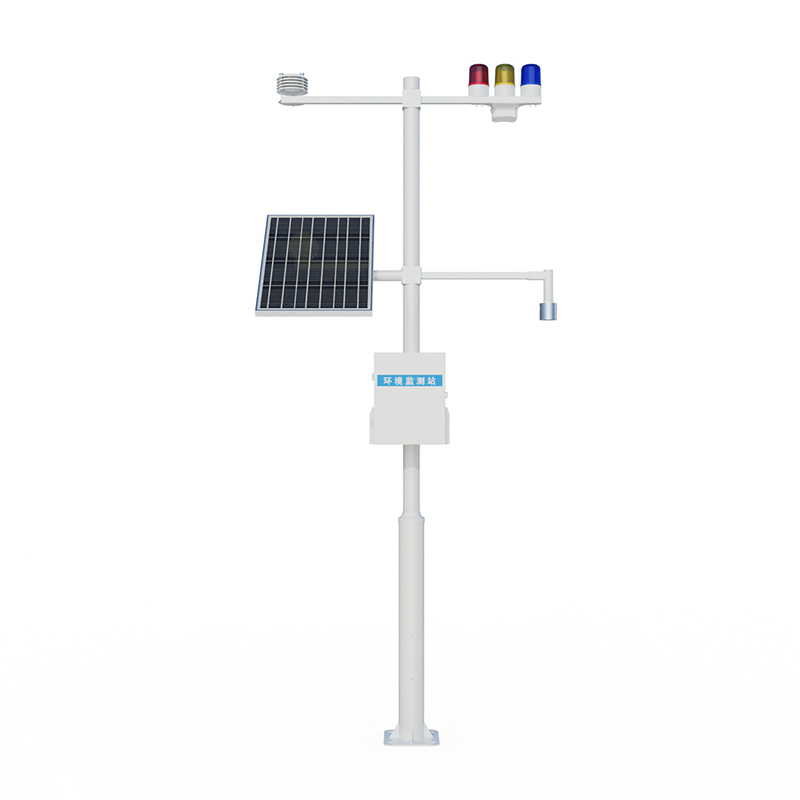
Weather Instrument Shelter consists of three main components—the housing body, connecting brackets, and base—all fabricated from premium fiberglass. This design effectively overcomes the inherent drawbacks of traditional wooden Stevenson screens, such as susceptibility to rot and cracking, a...
The Wireless Weather Station not only enables high-precision meteorological monitoring but also flexibly adapts to different application scenarios. Its core highlight lies in the integrated composite meteorological sensor it is equipped with. This sensor has undergone professional calibration and op...
Meteorological visibility refers to the maximum horizontal distance at which a person with normal vision can see and identify a target object against the sky background under current weather conditions (usually measured in meters or kilometers).Transportation is the industry that needs visibility da...
Recommend a Handheld visibility detector, model FT-SN10.It has several highlights.Firstly, it adopts a special testing method. It sucks air into a closed sampling chamber, which can not only ensure real-time exchange with the outside air but also enable normal measurement in a narrow room.Secondly,...


 Skype
Skype
 whatsapp
 mail
mail