Shandong Fengtu IOT Technology Co., Ltd
Sales Manager:Ms. Emily Wang
Cel,Whatsapp,Wechat:+86 15898932201
Email:info@fengtutec.com
Add:No. 155 Optoelectronic Industry Accelerator, Gaoxin District, Weifang, Shandong, China


Sales Manager:Ms. Emily Wang
Cel,Whatsapp,Wechat:+86 15898932201
Email:info@fengtutec.com
Add:No. 155 Optoelectronic Industry Accelerator, Gaoxin District, Weifang, Shandong, China
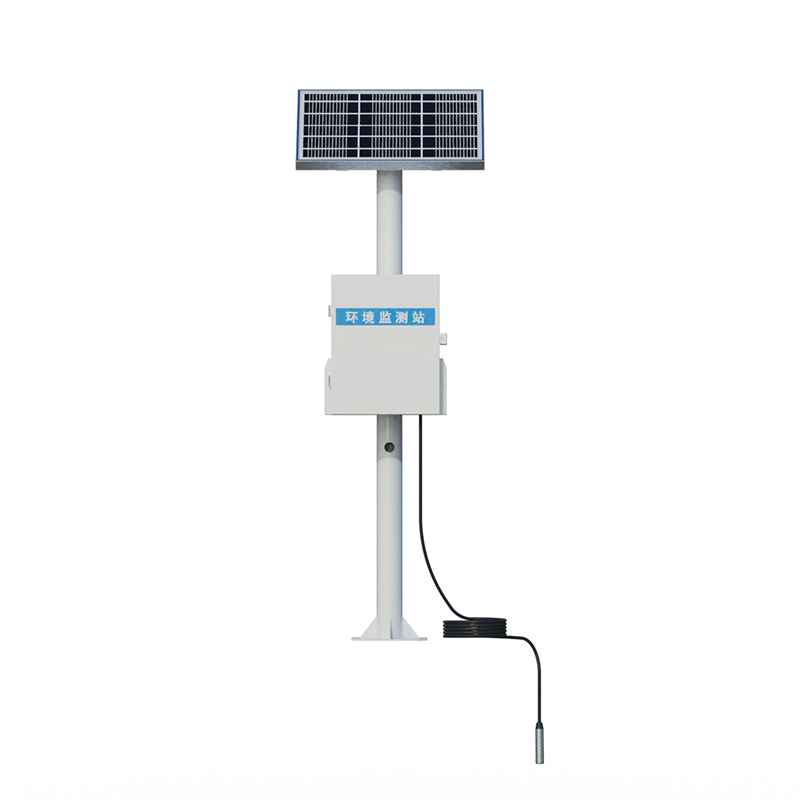
Model:FT-SY1
Brand:fengtu
1、Osmotic pressure monitoring Product Introduction
Osmotic pressure monitoring (SY1) is used to monitor seepage pressure in real time within different geological layers of a landslide. Its main components are constructed of specialized steel, making it suitable for use in harsh environments. With improved cable protection, it can be buried directly in roller-compacted concrete, which places high demands on the instrument.
Monitoring data is transmitted to the monitoring and early warning cloud service platform via various communication methods, including Netcom, GPRS, and Beidou satellite.
2、Osmotic pressure monitoring Product Features
Integrated structure, compact size, no integration required, and easy installation
Supports multiple power supply modes
Automatically identifies communication card numbers and uploads them to the backend server
Alarm thresholds can be set remotely and locally
RS485 and RS232 interfaces
Supports data transmission via various communication methods, including Netcom, GPRS, and Beidou satellite
CS architecture software platform, supports direct observation via mobile phones and PC browsers, without the need for additional software installation.
Supports multiple accounts and multiple devices to log in
Supports real-time data display and historical data dashboards
Cloud server and cloud data storage, stable and reliable, easily scalable, and load balancing.
Supports map display and device information viewing.
Supports data curve analysis
Supports data export in table format
Supports data forwarding, including HJ-212, TCP, and HTTP protocols.
Supports data post-processing
Supports external JavaScript script execution
3、Osmotic pressure monitoring Product Parameters
| Device Name | Technical Specifications | Technical Specifications |
| Piezoresistive sensor | Measuring medium | Water and non-corrosive liquids |
| Range | 0-1000KPa | |
| Overload pressure | 1.5 times the maximum range | |
| Stable drift | 0.01%F.S/C | |
| Work environment | -40-120°C, a measurement environment that does not corrode stainless steel | |
| Accuracy | 0.5-grade accuracy | |
| Power supply system | Solar panel | Monocrystalline silicon 30W (customizable based on site conditions) |
| Battery | 20AH (customizable based on site conditions) | |
| Protective box | Material | Stainless steel corrosion-resistant material, used to protect internal equipment. |
| Integrated mounting bracket | Selection | Carbon steel bracket |
| Acquisition terminal | Supports RS485/RS232/GPRS interfaces, etc. | |
The FT-Y1S metal piezoelectric rain gauge is a high-precision rainfall measurement device suitable for various field monitoring scenarios. It utilizes a PVDF piezoelectric film as its core sensing component, capable of accurately detecting the physical signals generated by raindrop impacts. The sens...
The Integrated IoT Data Acquisition System for Agricultural Microclimates consists of five key components: meteorological sensors, a data collector, a solar power supply system, a pole-mounted bracket, and a cloud platform. It provides real-time monitoring of parameters such as air temperature...
The measurement of weather visibility plays a crucial role in many fields such as transportation and meteorological research. Currently, there are mainly two ways to measure visibility, namely manual measurement and equipment measurement. Since manual measurement has relatively large errors and is e...
Power transmission line online monitoring system is a device specifically developed for monitoring the local meteorological environment of power transmission line corridors. Installed on power transmission towers, it monitors parameters such as wind speed, temperature, and humidity in real time, transmitting data wirelessly to support the safe operation of the power grid....


 Get a Free Quote
 Skype
Skype
 whatsapp
 mail
mail