Shandong Fengtu IOT Technology Co., Ltd
Sales Manager:Ms. Emily Wang
Cel,Whatsapp,Wechat:+86 15898932201
Email:info@fengtutec.com
Add:No. 155 Optoelectronic Industry Accelerator, Gaoxin District, Weifang, Shandong, China


Sales Manager:Ms. Emily Wang
Cel,Whatsapp,Wechat:+86 15898932201
Email:info@fengtutec.com
Add:No. 155 Optoelectronic Industry Accelerator, Gaoxin District, Weifang, Shandong, China
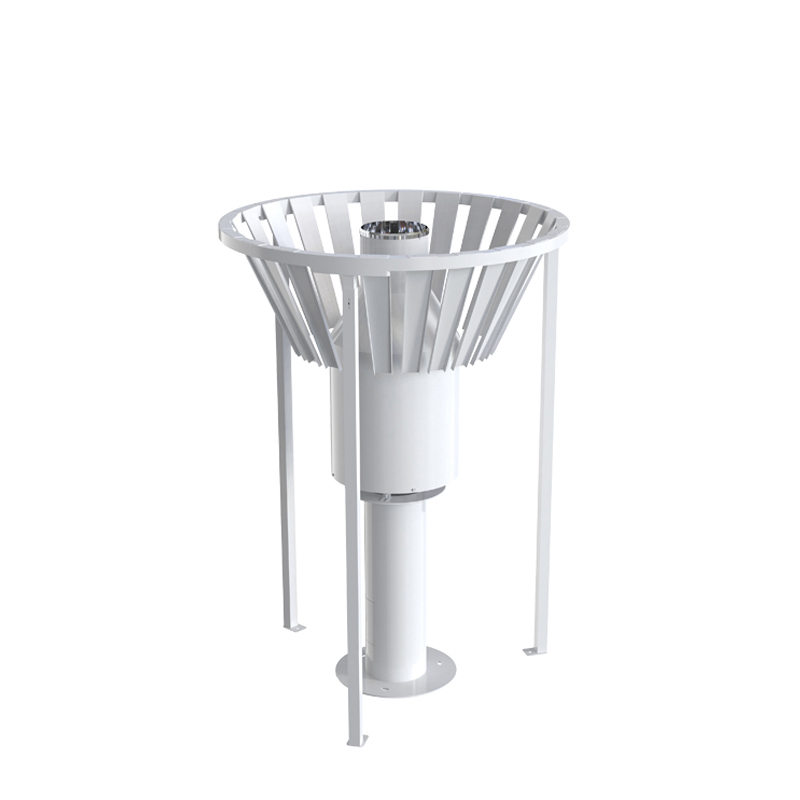
Model:FT-YX3
Brand:fengtu
How does the Weighing Rain Gauge work?
The Weighing Rain Gauge is based on the weighing principle technology and uses a high-precision weighing sensor to measure the "precipitation increment". It can monitor all types of precipitation, including solid (snowfall), liquid (rainfall) and solid-liquid mixed (sleet, freezing rain).
Hardware configuration: The Weighing Rain Gauge is mainly composed of a main control device, a rain inlet, a water collector, a drainage device, a weighing sensor, a protective shell, a mounting base, a windproof ring, etc.
In line with national standards:
SL/T 811.4-2021 "Weighing Rain Gauge" standard for the water conservancy industry issued by the Ministry of Water Resources of the People's Republic of China.
QX/T 320-2016 "Weighing Rain Gauge" is the meteorological industry standard issued by the Meteorological Administration of the People's Republic of China.
Power supply: 10~30V DC
Average power consumption:
High-cold type: 30W (equipped with heating module, power supply DC12V)
Weighing Rain Gauge communication method:
Pulse type: The user obtains the pulse on and off times of the rain gauge and calculates the rainfall in different time periods according to the corresponding resolution of the rain gauge.
RS485 type: The rain gauge uses Modbus-RTU protocol, the device has its own clock, and has a variety of pre-defined rainfall programs preset inside, including "precipitation on the day", "precipitation in minutes", "precipitation yesterday", "total rainfall", "rainfall intensity" and other parameters. Users can directly read the above rainfall data through 485.
Resolution: 0.1mm/0.2mm/0.5mm/1mm
Rainfall intensity range: 6~1800mm/h
Typical accuracy:
When the precipitation is ≤10mm, the maximum allowable error is ±0.2mm;
When the precipitation is greater than 10 mm, the maximum allowable error is ±2%;
Working environment: -35℃~+65℃, 0%RH~95%RH non-condensing
Main control device:
Collect real-time data from load cells.
The acquired weight information is converted into pulse and RS485 output signal.
When the water volume reaches the set threshold, the drainage device is controlled to drain water automatically.
The temperature on site is low, so control the heating equipment to avoid rain, snow and ice.
Chengyukou:
The inner wall depth of the rain receiving port is greater than 100mm, which can ensure that the rainfall entering the rain receiving port will not splash out of the rain receiving port.
Inner diameter of rain outlet φ200+0.6mm
Blade edge angle 40°~45°
Water collector:
The water collector is located below the rain inlet and collects precipitation. It is a cylindrical structure made of stainless steel.
The default water collector capacity is 28L, and it supports linkage with the main control device to control automatic drainage.
Drainage device:
When the water volume reaches 80% of the collector capacity, the drainage device starts to control automatic drainage.
The drainage process of the drainage device lasts about 1 minute. The rainfall is not measured during the drainage period. After the drainage is completed, about 1-2L of liquid will remain in the water collector.
Because antifreeze mixes with precipitation, some antifreeze will be discharged during the process. If drainage occurs in winter, be sure to replace the antifreeze.
Evaporation-inhibiting oil floats on the surface of the liquid due to its low density and will not be automatically discharged with the liquid.
Load Cell:
The weighing component uses a piezoelectric weighing sensor to sense pressure changes and convert the precipitation increment into the corresponding precipitation output.
The weighing sensor adopts a closed structure and a load-bearing weighing method.
Protective housing:
The protective shell can protect the precipitation weighing unit, the precipitation data processing unit and other parts.
The protective shell is made of stainless steel and the surface is sprayed with white matte anti-salt spray corrosion coating.
The shell is designed in a "convex" shape, which can protect against wind, reduce evaporation and increase precipitation capture.
Mounting Base:
The installation base is convenient for loading and unloading, and plays a certain protective role for the weighing sensor, drainage device and main control device.
The installation base should be firm and reliable, and should have vibration reduction and leveling functions.
Made of stainless steel, the surface is sprayed with white matte anti-salt spray corrosion coating.
Windproof ring:
The windshield is composed of a circular keel, a T-shaped frame, and a single windshield piece, and the surface is sprayed with a white matte anti-salt spray corrosion coating.
In sites where solid precipitation monitoring is required, a windbreak should be installed on the installed Weighing Rain Gauge.
The Negative Oxygen Ion Monitoring System FT-FZ5 is equipped with a full - color display screen, bringing users a more convenient, intuitive data display and interactive experience.This full - color screen uses an LED backlight with a lifespan of up to 50,000 hours. It is not only environmentally fr...
In the modern meteorological monitoring system, the Visibility sensor has achieved functional expansion and upgrade. It can not only accurately monitor visibility but also identify various weather phenomena, so it is called a visibility weather phenomenon instrument.This instrument is mainly based o...
Agricultural conditions refer to various situations presented by crops during their growth and development, encompassing multiple aspects such as soil fertility and moisture content of cultivated land, seedling conditions, growth trends, pest and disease situations of crops, as well as agricultural...
In docks and harbors, a Water Level Monitoring System with water - level sensors plays a vital role. It is a solid shield for the safety of ships and personnel.During maritime activities, weather and water level are unpredictable, like beasts lurking in the dark, threatening the safety of ships and...


 Get a Free Quote
 Skype
Skype
 whatsapp
 mail
mail